
Attenuation
The key number, given in dB/100 m. It increases with frequency. 3 dB is half the power; 10 dB a tenth. The same RG-58 loses 0.9 dB at 10 MHz, and Hyperflex 10 3.1 dB at 1296 MHz.
Home / Guide / Coaxial cables
From RG-58 at 3.51 PLN/m to 7/8‑inch Heliax. A comparison of 32 cables from manufacturers’ datasheets, prices, the main Messi & Paoloni cables, connectors from the Bakelite PL-259 to 7/16 DIN, installation and choosing by band.
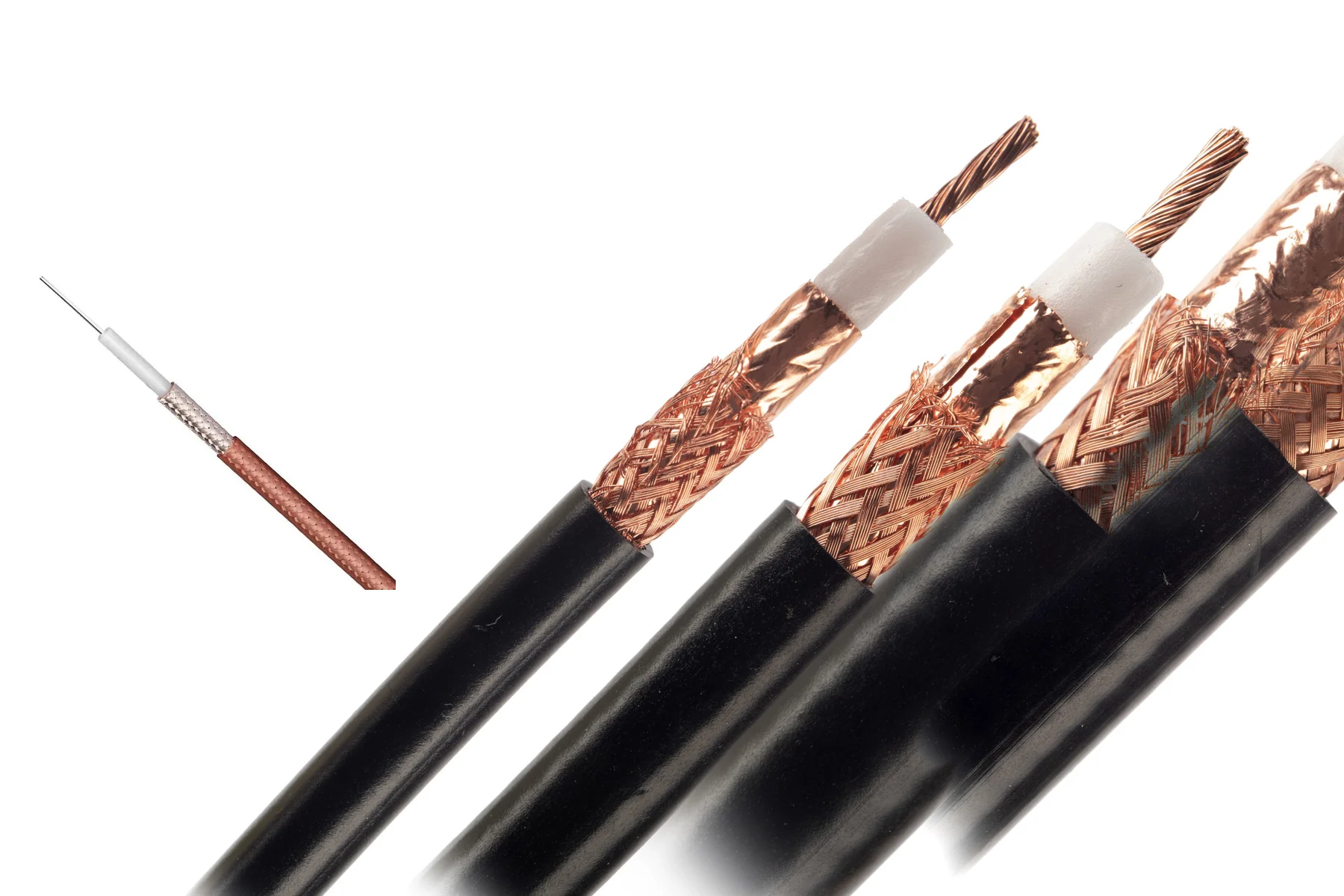
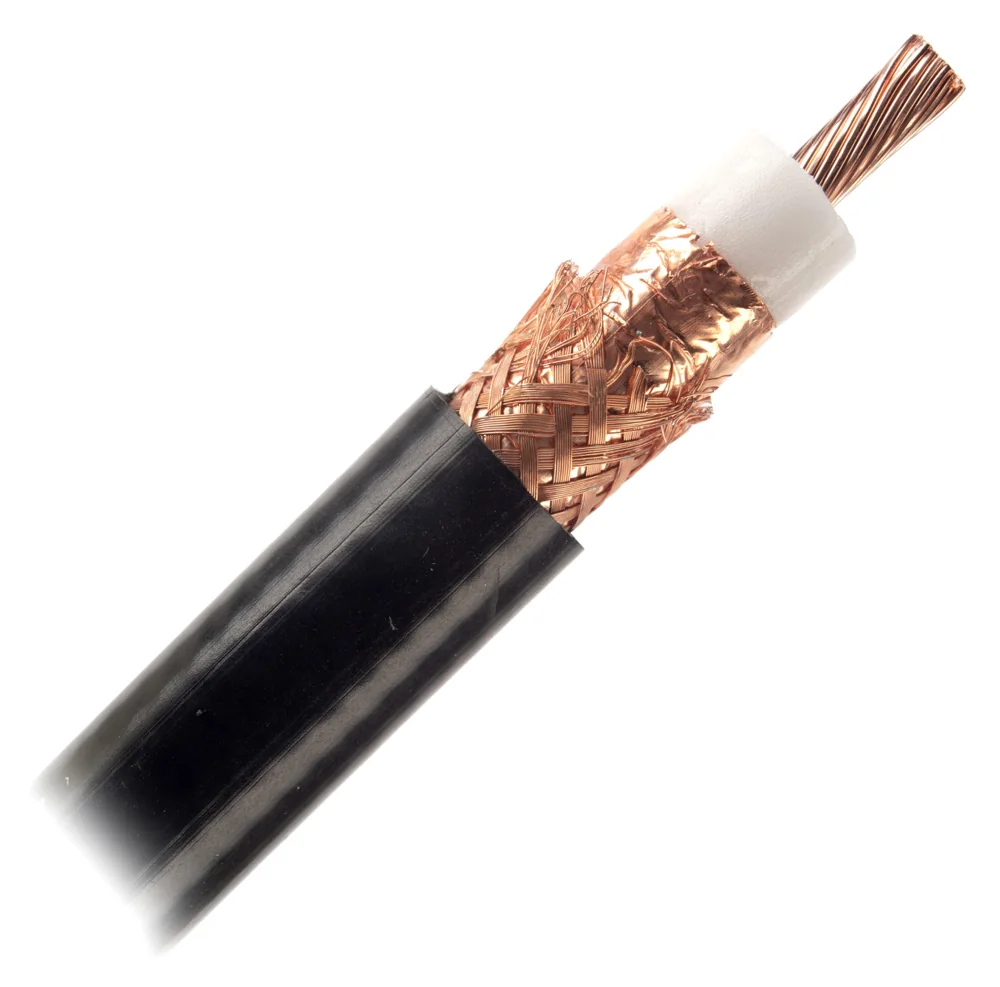
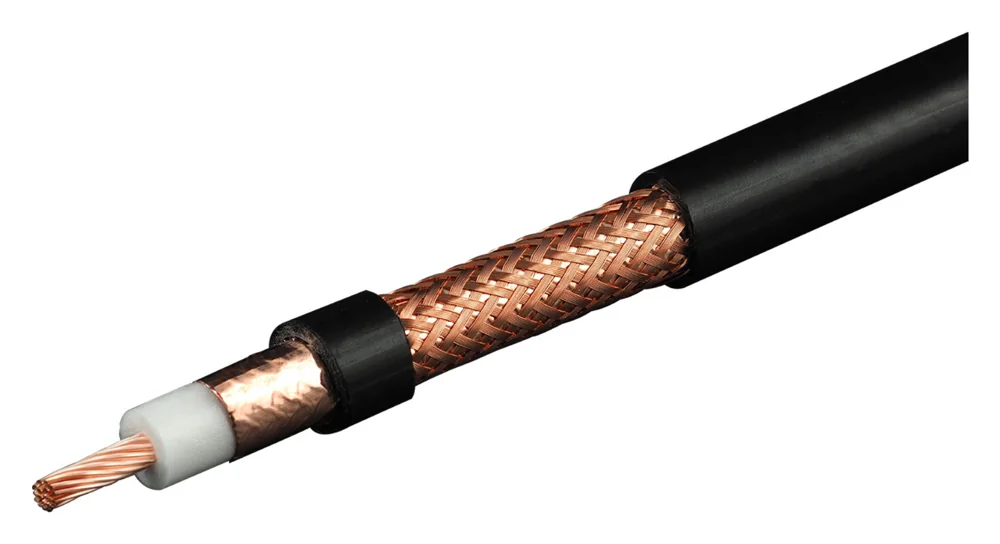
The signal travels between the inner conductor and the screen. Their diameters and the material between them determine the 50 Ω impedance and the attenuation.
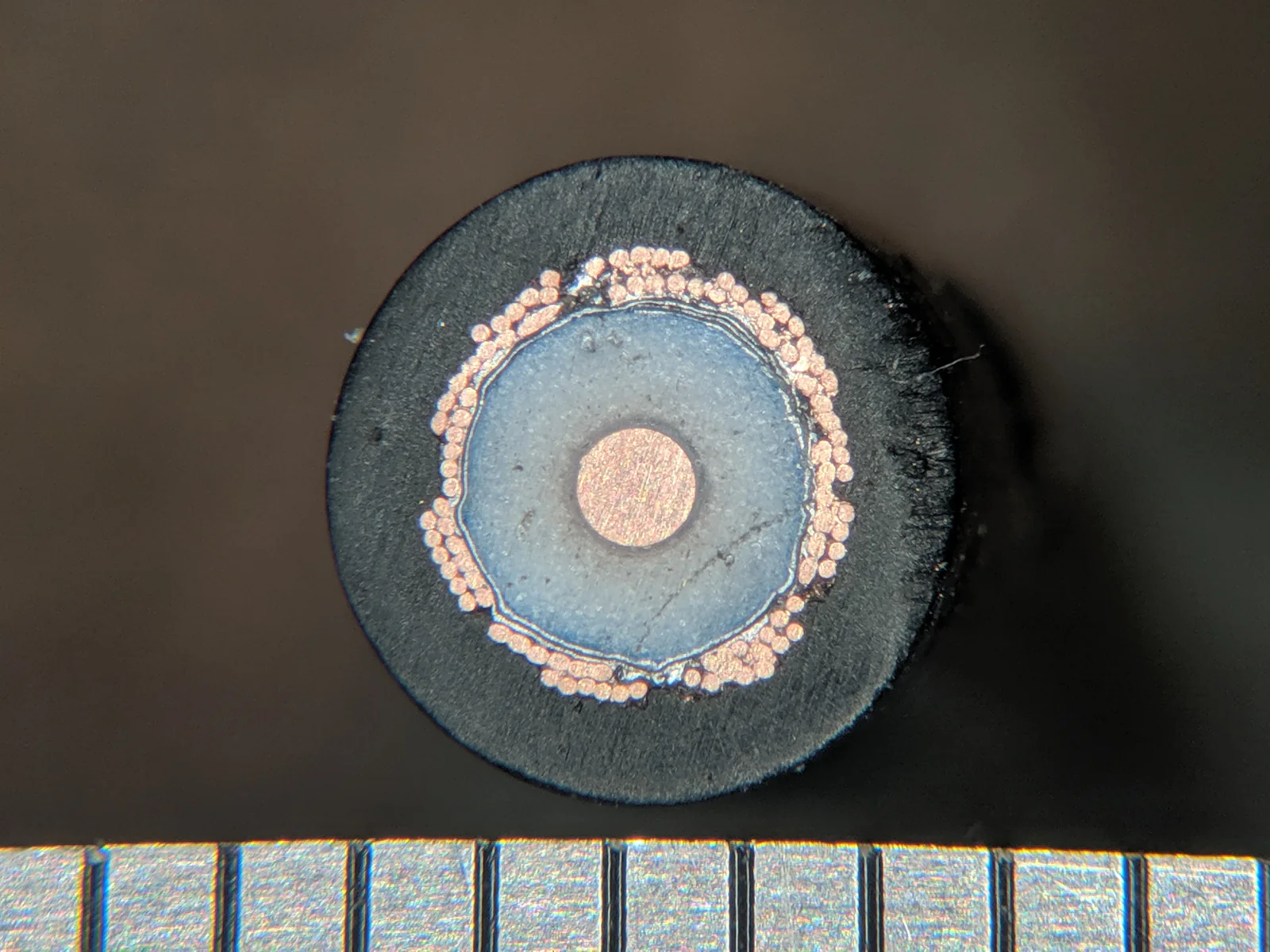
Five numbers that determine your choice of cable.
The key number, given in dB/100 m. It increases with frequency. 3 dB is half the power; 10 dB a tenth. The same RG-58 loses 0.9 dB at 10 MHz, and Hyperflex 10 3.1 dB at 1296 MHz.
It tells you how fast the wave travels in the cable. Useful for chokes, quarter‑wave sections and length measurements. RG-213 is 0.66; Hyperflex 10 is 0.87.
Important with weak signals, SDR and interference. Datasheets quote from about 52 dB (RG-174) up to over 105 dB (Messi & Paoloni).
Datasheets distinguish single and repeated bends. RG-213 MIL has 51.5 and 103 mm, and 7/8‑inch Heliax has 127 mm for a one‑off bend.
It falls with frequency because the cable heats: 2,286 W at 10 MHz, but 195 W at 1296 MHz. A connector may have a lower limit than the cable.
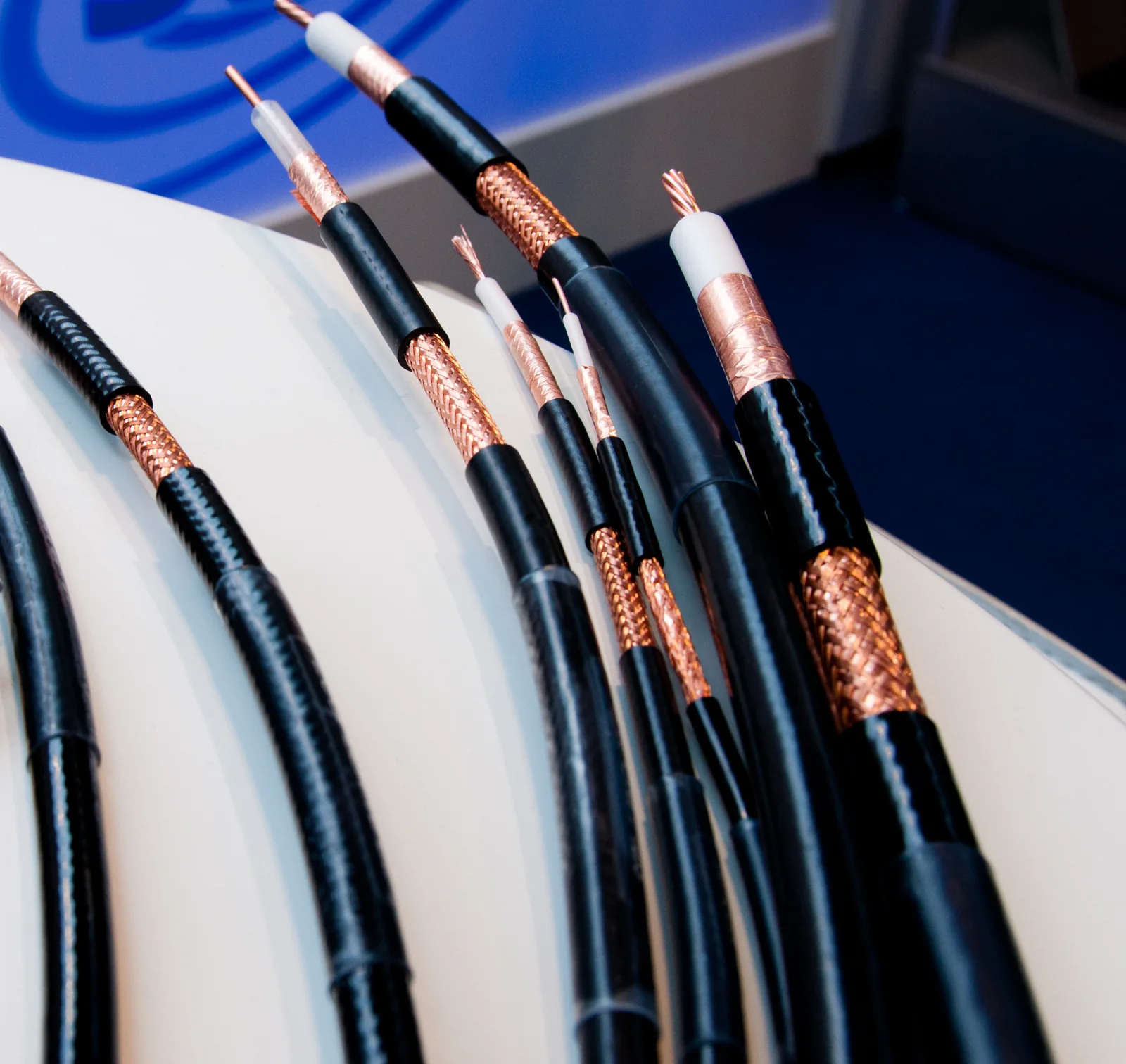
Attenuation is mainly metal resistance and dielectric loss. Both rise with frequency, but at different rates.
RF current does not fill the whole conductor. It concentrates in a thin layer at the surface, and at the skin depth δ its density falls to about 37%. The higher the frequency, the thinner the layer and the higher the resistance. In a coax this applies to the surface of the conductor and the inner side of the screen.
From about 7 MHz upwards, four times the frequency is roughly twice the loss. Hyperflex 10 has 1.1 dB at 7 MHz and 2.0 dB at 28 MHz, and 3.9 dB at 100 MHz and 8.3 dB at 400 MHz. Below that the datasheet shows a smaller increase: 0.8 dB at 1.8 MHz.
Dielectric losses rise faster, directly with frequency. That’s why on VHF the result comes out a little over twice, and a good dielectric matters more there.
For comparison, the Hyperflex 10 conductor is Ø 2,900 µm. Calculated from δ = √(ρ / π f μ₀), ρ = 1.72·10⁻⁸ Ω·m.
A conductor of aluminium clad with copper is lighter, and RF current flows mainly near the surface. Airborne 10 (solid CCA) has 4.2 dB/100 m at 144 MHz, Broad Pro 50C (solid Cu) 4.4 dB, although they also differ in braid and VF. At 1.8 MHz both have 0.6 dB in the datasheets, even though the CCA conductor has higher resistance: 4.4 versus 3 Ω/km. The permissible power at 144 MHz is lower: 970 versus 1,682 W.
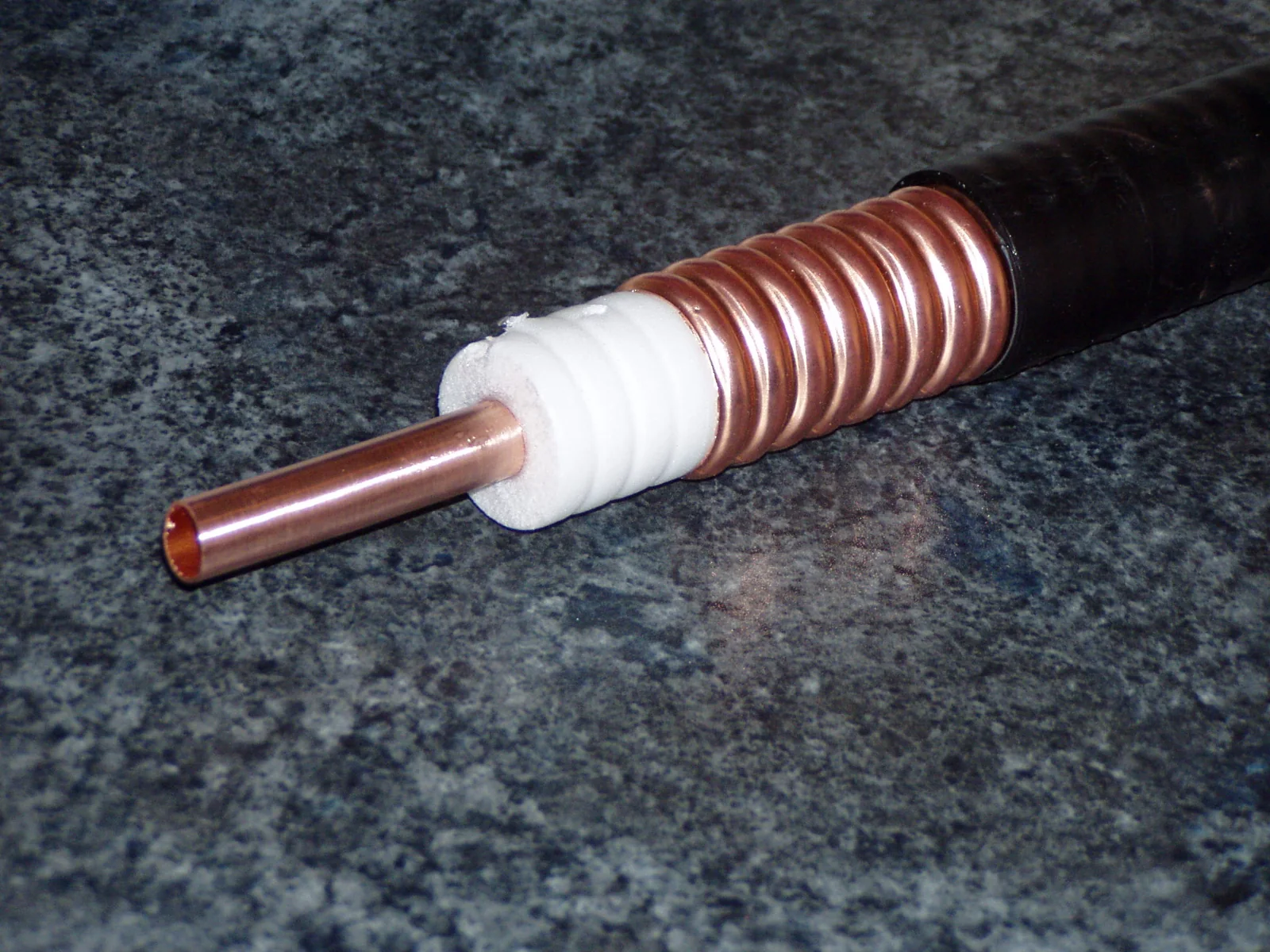
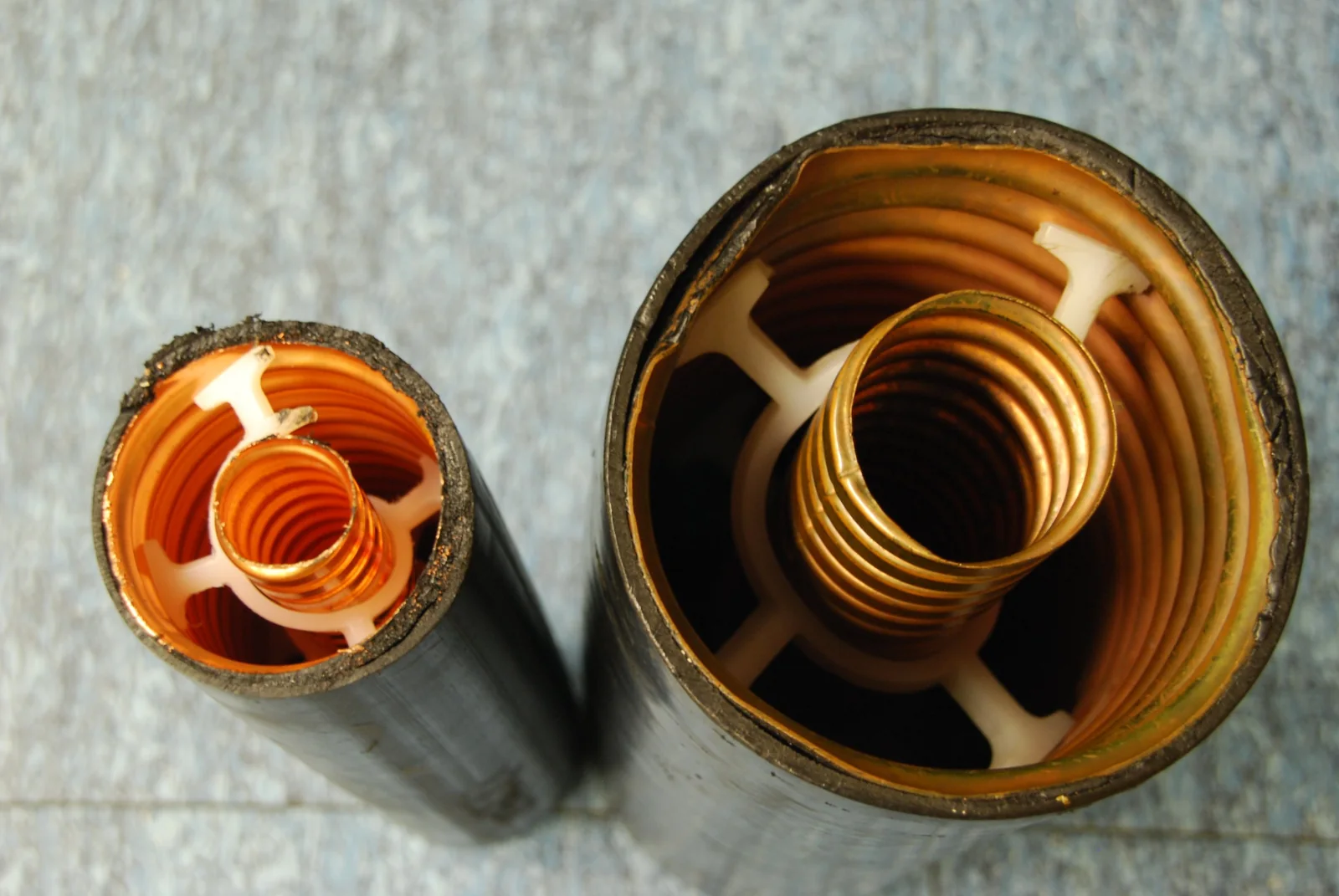
The centre of a thick conductor carries almost no current, so you can leave it out. That’s why Heliax 7/8" has an inner conductor made from a copper tube 8.7 mm in diameter, saving weight and cost. The low loss here comes chiefly from the large diameter: at 1296 MHz about 4.8 dB/100 m (interpolated from the datasheet), while Hyperflex 10 is 15.4 dB.
Copper‑clad steel fares worse on the low bands because the current layer is thicker there. Messi & Paoloni warns about this for antenna wire. At 1.8 MHz δ is about 49 µm, and about 98% of the current sits within roughly 200 µm. At 1296 MHz δ is about 1.8 µm, so the condition of the very surface is what matters.
Stranding tempts with a larger surface area of the strands, but the surfaces inside the bundle hardly count. The strands touch without insulation, so current flows mainly on the outside of the bundle, which is uneven and has gaps. Hence slightly higher loss.
Stranded isn’t Litz. In Litz wire each strand is insulated and specially transposed, and it helps up to about 1 MHz. Ordinary stranded in coax doesn’t work like that.
Use solid for fixed installs and long VHF/UHF runs. Use stranded on a rotator, for portable work and anywhere the cable is coiled often, because solid can crack with repeated bending. “Flex” in the name doesn’t mean stranded: H-2000 Flex has a 2.62 mm solid conductor.
| From M&P datasheets | Broad Pro 50C | Ultraflex 10 C |
|---|---|---|
| Inner conductor | solid Cu Ø 2.76 | stranded Cu 7×1.0, Ø 2.9 |
| Braid | Cu 71%, 144 wires | Cu 71%, 144 wires |
| Inner conductor resistance, Ω/km | 3 | 3.2 |
| 10 MHz, dB/100 m | 1.2 | 1.2 |
| 144 MHz, dB/100 m | 4.4 | 4.6 |
| 430 MHz, dB/100 m | 7.8 | 8.5 |
| 1296 MHz, dB/100 m | 14.1 | 15.3 |
| Power at 144 MHz, W | 1682 | 1226 |
| Radius, up to 15 bends | 103 mm | 80 mm |
| Radius, single bend | 65 mm | 40 mm |
On HF the difference is at most 0.1 dB per 100 m. It grows on VHF/UHF, but over 30 m at 430 MHz it’s 2.34 and 2.55 dB, i.e. about 0.2 dB. The conductors also differ in diameter, and VF is 0.85 and 0.87, so this is a comparison of the cables, not a pure measurement of stranding alone.
Choose band, length and power. The bar shows how much power remains after the run with a matched antenna; the best cables are at the top.
The result does not include connector losses or additional mismatch loss. More in the coax loss calculator.
Gold‑coloured names link to the manufacturer’s datasheet. Indicative per‑metre prices from a Polish shop, 8.11.2026; “—” means the cable wasn’t in that offer.
| Cable | Ø mm | VF | conductor | 10 MHz | 144 MHz | 430 MHz | 1296 MHz | PLN/m |
|---|---|---|---|---|---|---|---|---|
| Thin: up to 3 mm and special types | ||||||||
| RG-174 | 2.8 | 0.66 | stranded | 9.5 | ≈31.7 | ≈57.4 | — | 5.50 |
| RG-316 (PTFE) | 2.5 | 0.69 | stranded | 9.0 | ≈33.8 | ≈55.5 | — | 22–24 |
| RG-142 (PTFE) | 5.0 | 0.69 | solid | — | — | ≈28.7 | ≈53.4 | 35.01 |
| Around 5 mm: short runs, mobile, portable | ||||||||
| RG-58 C/UData: Messi & Paoloni | 5.0 | 0.66 | stranded | 4.7 | 19.3 | 34.9 | 63.0 | 3.51–12 |
| RG-8X (Mini-8) | 6.2 | 0.82 | stranded | 3.0 | ≈12.4 | ≈22.6 | — | 11.50 |
| RF-5 | 5.4 | 0.78 | stranded | 2.8 | ≈10.7 | ≈18.8 | ≈34.5 | 7.50 |
| H-155Belden; H-155 equivalents: 6.40–8 PLN/m | 5.4 | 0.80 | stranded | ≈3.4 | ≈10.8 | ≈18.7 | ≈34.1 | 13–15.01 |
| Airborne 5 | 5.0 | 0.85 | solid | 3.4 | 11.1 | 19.0 | 34.2 | 11.50 |
| Aircell 5 | 5.0 | 0.85 | solid | 2.8 | 10.8 | 19.0 | 33.9 | 13.51 |
| Hyperflex 5Crystal: 20 PLN/m | 5.4 | 0.87 | stranded | 2.6 | 9.6 | 17.0 | 30.5 | 15.01 |
| Around 7 mm: the sweet spot | ||||||||
| RF-7 | 7.3 | 0.84 | stranded | 2.0 | ≈7.7 | ≈13.1 | ≈29.1 | 13.00 |
| Aircell 7 | 7.3 | 0.85 | stranded | 2.1 | 7.2 | 12.9 | 23.6 | 19.68 |
| Ultraflex 7ExtraFlex 7: 24 · POTA-Flex 7: 24 · Stealth-Flex 7: 25.01 | 7.3 | 0.83 | stranded | 1.9 | 6.9 | 12.3 | 22.3 | 22.00 |
| Around 10 mm: base‑station class | ||||||||
| RG-213/U (MIL) | 10.3 | 0.66 | stranded | 1.8 | ≈7.9 | ≈14.2 | ≈27.6 | 15.01–17.22 |
| Airborne 10 | 10.3 | 0.87 | solid | 1.2 | 4.2 | 7.6 | 13.6 | 21.00 |
| Contest-Flex 10 | 10.3 | 0.87 | stranded | 1.3 | 5.4 | 10.5 | — | 22.50 |
| RF-10 | 10.3 | 0.84 | solid | 1.2 | ≈4.5 | ≈8.0 | ≈14.8 | 24.00 |
| Broad Pro 50C | 10.3 | 0.85 | solid | 1.2 | 4.4 | 7.8 | 14.1 | 25.01 |
| Hyperflex 10 | 10.3 | 0.87 | stranded | 1.3 | 4.7 | 8.6 | 15.4 | 30.00 |
| Hyperflex 10 Sahara FT8White jacket, Cu braid | 10.3 | 0.87 | stranded | 1.3 | 4.7 | 8.6 | 15.4 | 33.00 |
| Ultraflex 10 CExtraFlex 10: 28.50 PLN/m | 10.3 | 0.87 | stranded | 1.2 | 4.6 | 8.5 | 15.3 | 30.00 |
| H-1000 | 10.3 | 0.83 | solid | 1.3 | ≈5.2 | ≈9.5 | ≈17.9 | 34.00 |
| H-2000 Flex | 10.3 | 0.83 | solid | ≈1.2 | ≈4.8 | ≈8.7 | ≈16.3 | — |
| Ecoflex 10 | 10.2 | 0.85 | stranded | 1.1 | 4.7 | 8.5 | 15.7 | — |
| LMR-400 | 10.3 | 0.84 | solid | — | ≈4.9 | ≈8.7 | ≈15.5 | — |
| From 13 mm: mast, QRO, long runs | ||||||||
| Hyperflex 13 | 12.7 | 0.86 | stranded | 1.0 | 3.6 | 6.4 | 11.7 | 40.00 |
| Ultraflex 13 | 12.7 | 0.86 | stranded | 1.0 | 3.6 | 6.4 | 12.0 | — |
| Airborne 13 | 12.7 | 0.87 | solid | 1.0 | 3.4 | 6.0 | 10.9 | — |
| Ecoflex 15 | 14.6 | 0.85 | stranded | 0.9 | 3.4 | 6.1 | 11.4 | — |
| LMR-600 | 15.0 | 0.85 | solid | — | ≈3.1 | ≈5.5 | ≈10.0 | — |
| Heliax 1/2" LDF4-50A | 15.9 | 0.88 | solid | 0.7 | ≈2.6 | ≈4.6 | ≈8.4 | — |
| Heliax 7/8\" LDF5-50ADiscontinued; successor: AVA5-50 | 26.2 | 0.89 | tube | 0.4 | ≈1.4 | ≈2.6 | ≈4.8 | — |
≈ is a value not given explicitly on the datasheet. I calculate it using the formula a·√f + b·f from two neighbouring points on the same sheet. I treat the 144 and 432 MHz points as the 144 and 430 MHz columns. Attenuation at 20 °C, for LMR and RG-142 at 25 °C. The Satec RF-5 and RF-7 sheets have uneven measurement points, so their ≈ values at 1296 MHz should be treated as indicative. RG-58 has Messi & Paoloni data (10 PLN/m), while the cheaper RG-58s in the shop have no sheets. For RG-213, RG-8X, RG-174, RG-316 and RG-142 the price refers to the shop’s cable of that type, and the sheet may be from a different manufacturer. That matters, because the same type has different figures: RG-58 at 100 MHz is 13.9 dB in the koax24 sheet, 15.8 dB at Messi & Paoloni and 17 dB in SSB’s table. Ultraflex 10 C is the Competition version; the M&P summary gives 16.4 dB for Ultraflex 10 at 1296 MHz. I left out HRF-300 because I couldn’t find its sheet.
An expensive cable doesn’t always pay off. On HF and over a short length the extra spend gives little; on 70 cm and 23 cm it makes all the difference.
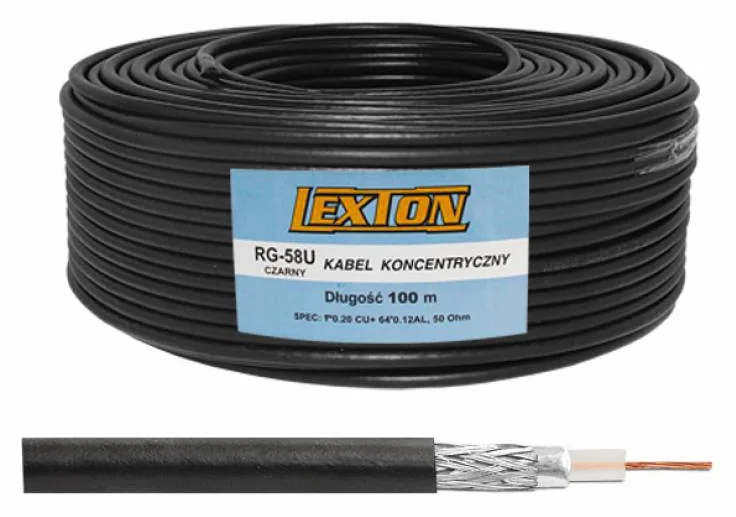
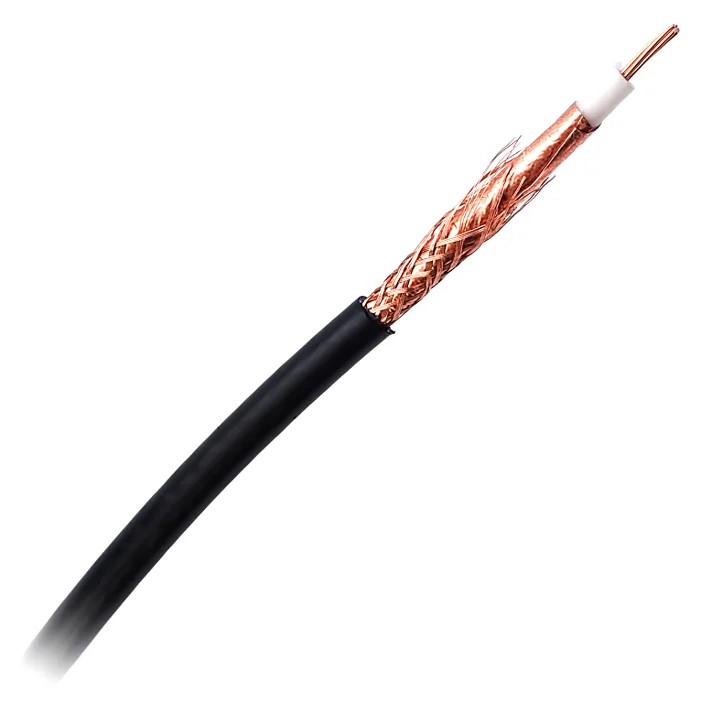
3.51–12 PLN/m
Mobile, CB, short interconnects and HF. According to the Messi & Paoloni sheet, 20 m of RG-58 loses 0.9 dB at 10 MHz but 7.0 dB on 70 cm, so only 20% of the power remains. The cheapest variants have no sheets.
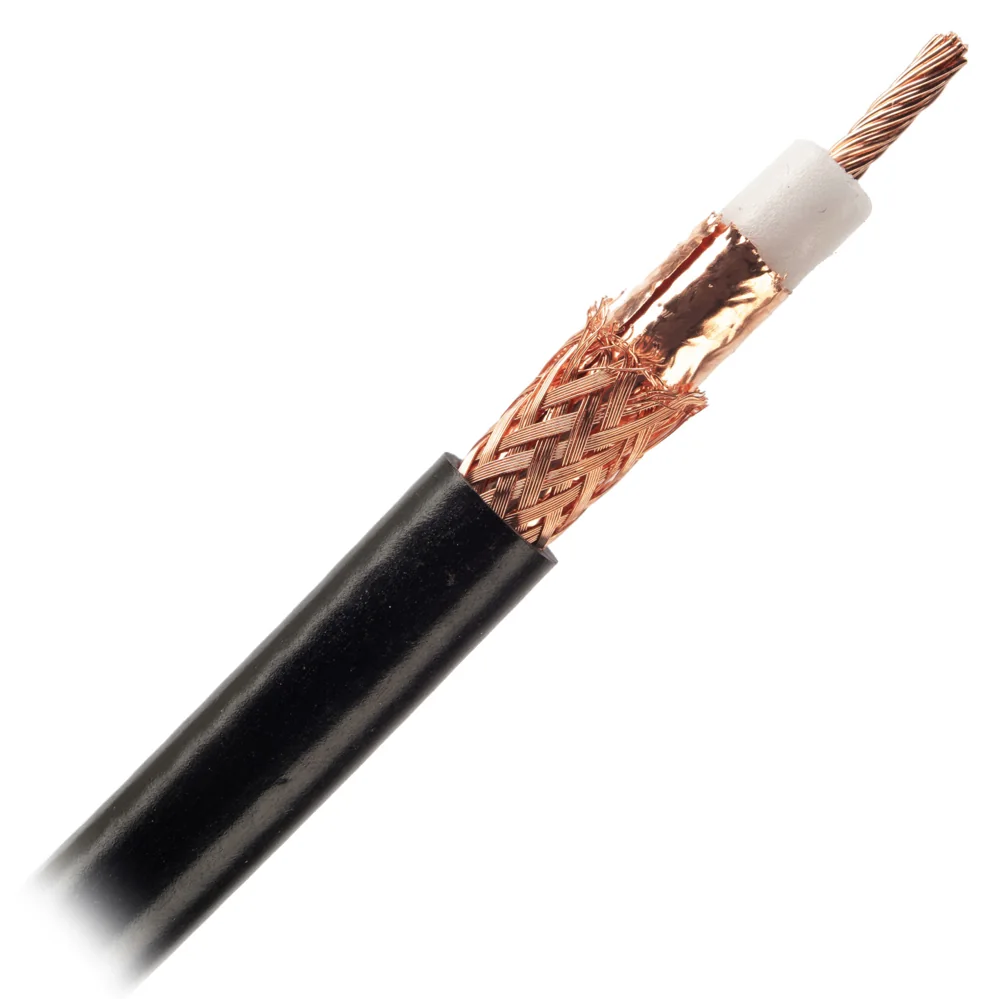
7.50–15.01 PLN/m
Almost the same thickness as RG-58, and at 430 MHz losses are nearly half. A good choice for a balcony and a short run up to 10 m.
13–22 PLN/m
Around 7 mm, still flexible. At 430 MHz about 12–13 dB/100 m, i.e. better than RG-213 at roughly half its mass.
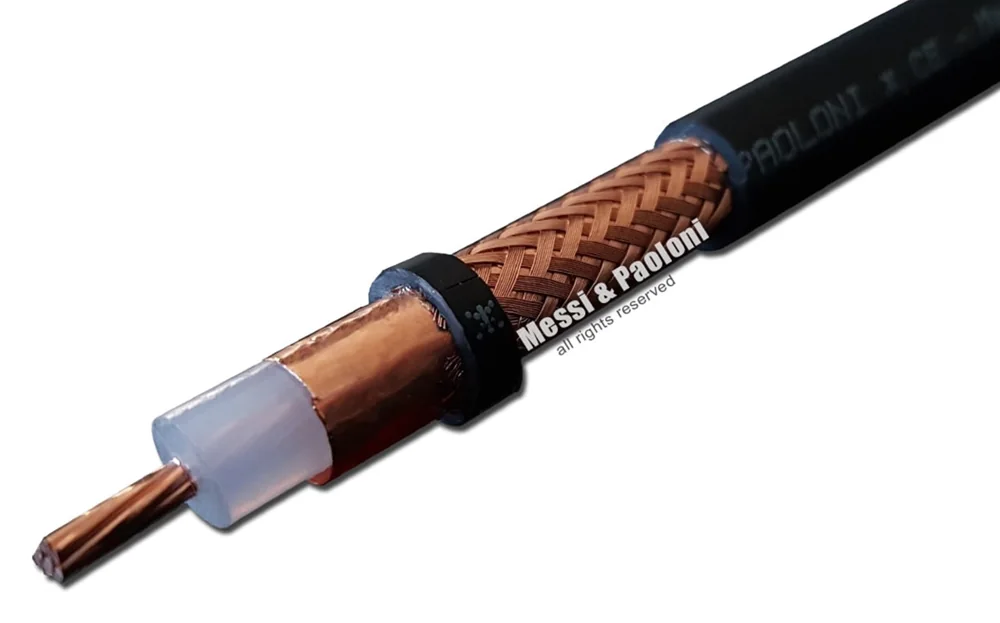
15.01–24 PLN/m
RG-213 has a solid dielectric, 97% braid and a VF of 0.66. RF-10 has a foamed dielectric and loses noticeably less at 430 MHz.
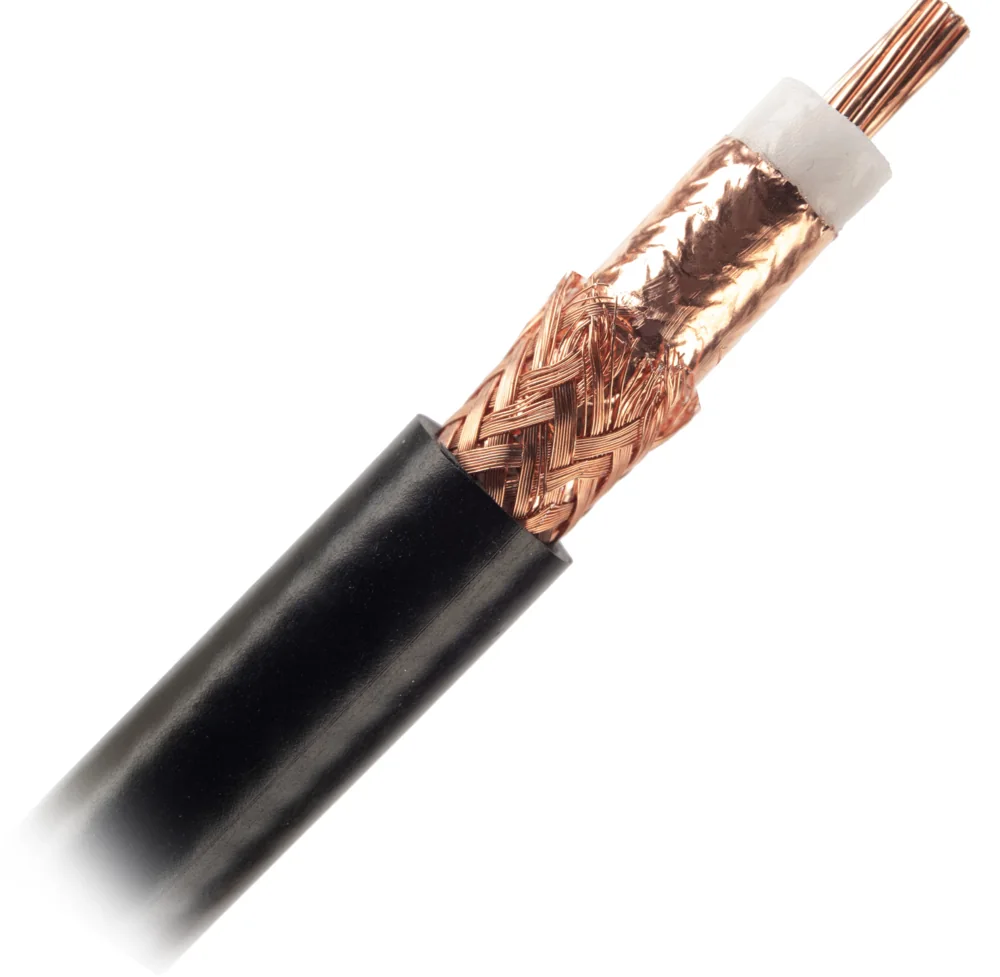
from 30 PLN/m
The rooftop standard. At 430 MHz 8–9 dB/100 m, so over 20 m it’s 1.7 dB instead of 7.0 dB with RG-58.
from 40 PLN/m
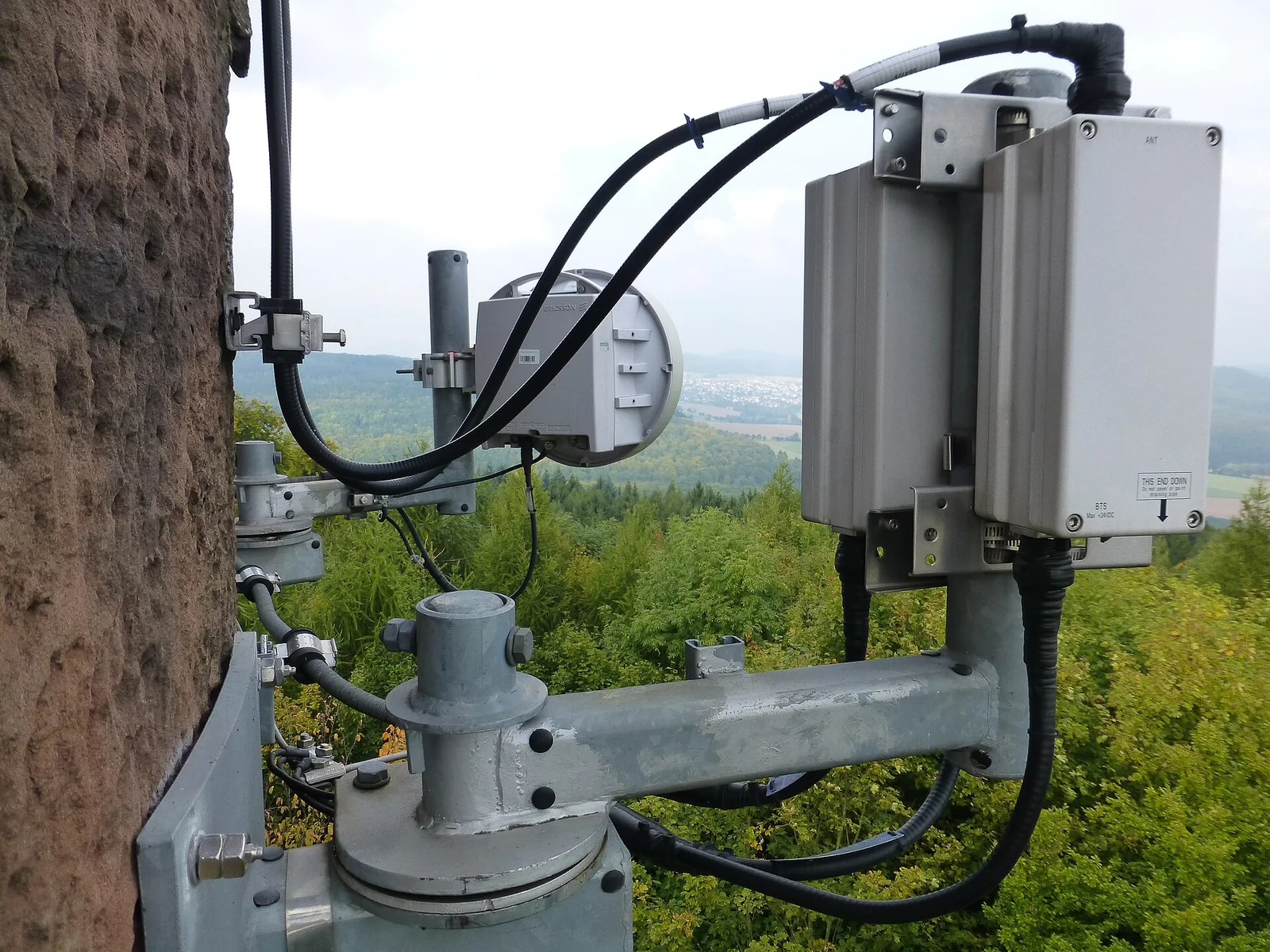
Long runs, masts and 23 cm. Heliax 7/8" loses 4.8 dB/100 m at 1296 MHz, but has a corrugated screen, weighs 49 kg/100 m and requires dedicated connectors.
Cable and connector brands mentioned in this guide. Trademarks belong to their owners.
The Italian manufacturer has a cable for almost every application, so it’s easy to get lost. Attenuation in dB/100 m from current datasheets.
| Cable | Ø mm | conductor | screen | jacket | kg/100 m | 144 MHz | 430 MHz | PLN/m |
|---|---|---|---|---|---|---|---|---|
| Airborne 5lightest: 2.3 kg/100 m | 5.0 | solid Cu | AlMg 84% + foil | PE | 2.3 | 11.1 | 19.0 | 11.50 |
| Airborne 10for light masts, can be buried | 10.3 | solid CCA | CCA 85% + foil | PE | 7.1 | 4.2 | 7.6 | 21.00 |
| Airborne 13longer runs, stiff | 12.7 | solid CCA | CCA 88% + foil | PE | 11.9 | 3.4 | 6.0 | — |
| Hyperflex 5flexible for short runs | 5.4 | stranded Cu | Cu 88% + foil | PVC | 4.4 | 9.6 | 17.0 | 15.01 |
| Hyperflex 10all-rounder for the station | 10.3 | stranded Cu | CCA 85% + foil | PVC | 11.6 | 4.7 | 8.6 | 30.00 |
| Hyperflex 10 Sahara FT8sun, long FT8 transmissions | 10.3 | stranded Cu | Cu 85% + foil | white PVC | 11.2 | 4.7 | 8.6 | 33.00 |
| Hyperflex 13QRO and long runs | 12.7 | stranded Cu | CCA 82% + foil | PVC | 18.0 | 3.6 | 6.4 | 40.00 |
| Ultraflex 77 mm sweet spot | 7.3 | stranded Cu | Cu 83% + foil | PVC | 6.9 | 6.9 | 12.3 | 22.00 |
| Ultraflex 10 Ccopper braid, higher power | 10.3 | stranded Cu | Cu 71% + foil | PVC | 13.0 | 4.6 | 8.5 | 30.00 |
| Ultraflex 13QRO and long runs | 12.7 | stranded Cu | CCA 75% + foil | PVC | 17.5 | 3.6 | 6.4 | — |
| Contest-Flex 10datasheet: recommended 1–467 MHz | 10.3 | stranded Cu | CCA 85% + foil | PVC | 11.6 | 5.4 | 10.5 | 22.50 |
| POTA-Flex 7field use, 100-bend test on Ø126 mm drum | 7.7 | stranded Cu | CCA 83% and 80% + foil | reflective | 5.4 | 6.9 | 12.3 | 24.00 |
| Stealth-Flex 7discreet installation | 7.7 | stranded Cu | CCA 83% and 80% + foil | PVC | 6.6 | 6.9 | 12.3 | 25.01 |
| ExtraFlex 7 (Bury)for direct burial | 7.3 | stranded Cu | Cu 83% + foil | PE | 6.0 | 6.9 | 12.3 | 24.00 |
| ExtraFlex 10 (Bury)for direct burial | 10.3 | stranded Cu | CCA 85% + foil | PE | 11.6 | 4.6 | 8.5 | 28.50 |
| Broad Pro 50Cthick conductor, 1,682 W at 144 MHz | 10.3 | solid Cu | Cu 71% + foil | PVC | 13.0 | 4.4 | 7.8 | 25.01 |
POTA-Flex 7 and Stealth-Flex 7 have the same electrical data as Ultraflex 7, but a double CCA braid. ExtraFlex 7 differs in the jacket. Hyperflex 5 Crystal is Hyperflex 5 with a transparent jacket. I quote power figures from the current datasheets, because older M&P documents have different values (Hyperflex 10 at 144 MHz: 956 W in the sheet, 1460 W in the summary). The 13 mm cable sheets note a 2500 MHz ±15 MHz band, unusable due to the cable’s dimensions. Hyperflex 7 is not in the 2026 catalogue. The range also includes RG-214, Service-Flex 7, Contest-Flex 5, ExtraFlex 13, Ultraflex 10 EVO and Outpost, plus Sahara and LSZH versions.
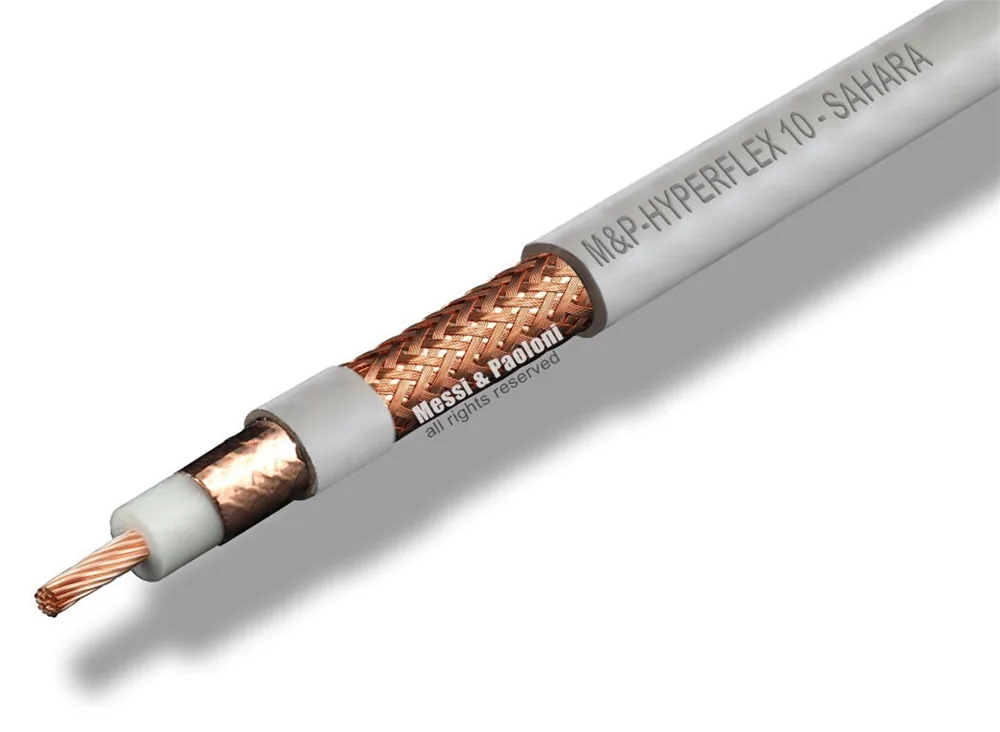
Hyperflex 10 for sun and long duty cycles. It differs from the black version not only in colour: it has a copper braid (216 strands instead of 192 CCA). Screen resistance is 6 Ω/km instead of 12 Ω/km, and the datasheet lists power at 144 MHz of 1460 rather than 956 W. Attenuation is the same in both sheets.
UV: the sheet states white PVC “UV-resistant”, but the black Hyperflex 10 says the same, and the manufacturer admits the white UV filter may be less effective. White is meant to reduce solar heating, but M&P do not state how much cooler the white cable is. Their general chart shows that at 60 °C, the upper limit in the sheet, attenuation is about 7% higher than at 20 °C. The series page also says, without numbers, that during many hours of continuous 1 kW FT8 carrier the operating temperature clearly dropped.
Check the version: the FT8 sheet is from 2021. Manufacturer documents from May and November 2026 describe the white 10.3 mm Sahara differently: 7×1.0 stranded centre, Cu braid 71%, and the URL for this cable on messi.it today shows the name Ultraflex 10 C Sahara. Before buying, check the jacket printing and the cable’s construction.
| From M&P datasheets | Hyperflex 10 | Hyperflex 10 Sahara FT8 | Ultraflex 10 C Sahara |
|---|---|---|---|
| Jacket | black PVC | white PVC | white PVC |
| Inner conductor | stranded Cu 19×0.59 | stranded Cu 19×0.59 | stranded Cu 7×1.0 |
| Braid | CCA 85%, 192 strands | Cu 85%, 216 strands | Cu 71%, 144 wires |
| Screen resistance, Ω/km | 12 | 6 | 9.2 |
| Attenuation at 144 MHz, dB/100 m | 4.7 | 4.7 | 4.6 |
| Power at 14 MHz, W | 3013 | 4483 | 3875 |
| Power at 144 MHz, W | 956 | 1460 | 1226 |
| Weight, kg/100 m | 11.6 | 11.2 | 13 |
Figures from datasheets: Hyperflex 10 Sahara FT8 from 2021, Ultraflex 10 C Sahara from November 2026. The 11.2 kg weight is from the FT8 sheet, while the package weights in the 2026 catalogue indicate about 13 kg per 100 m for Hyperflex 10 Sahara.
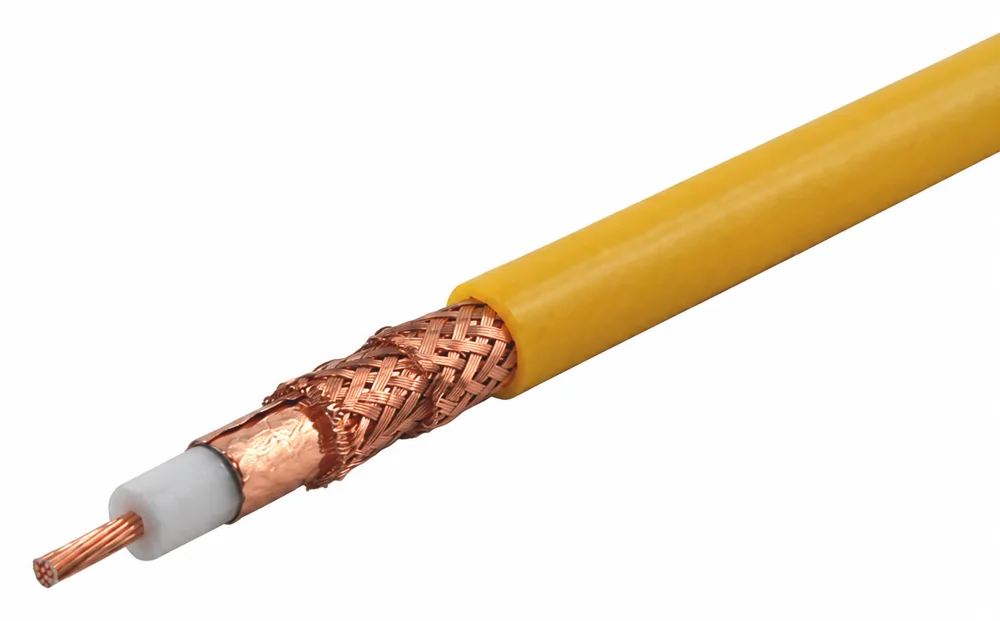
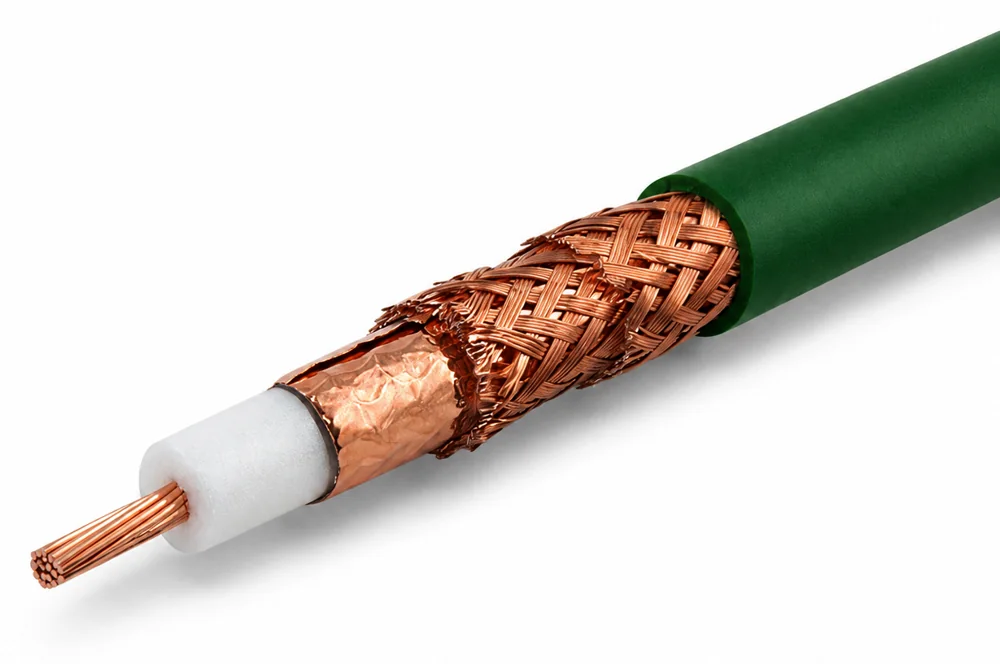
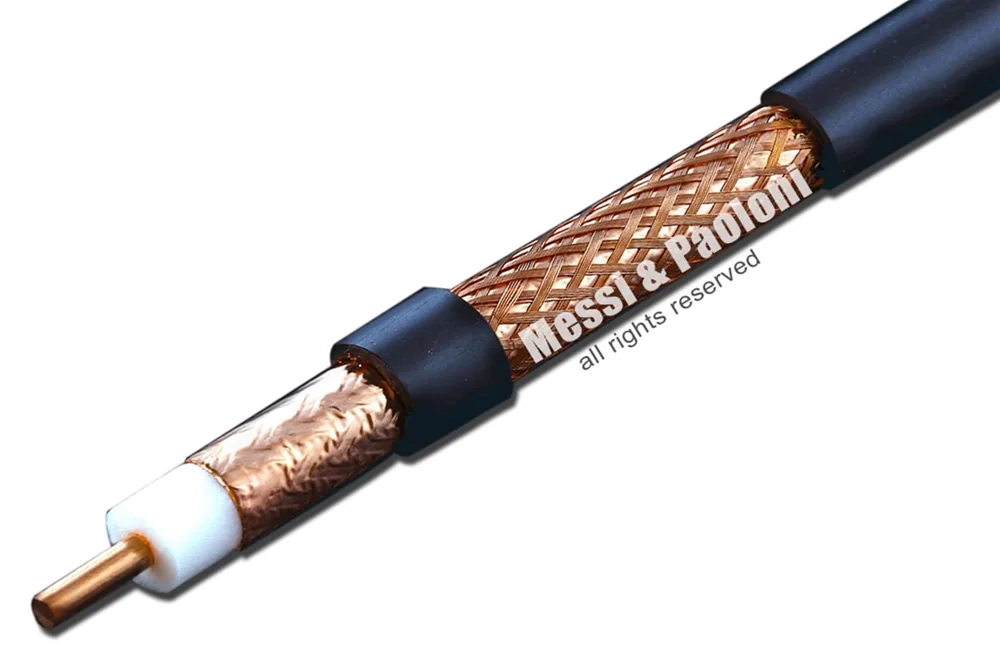
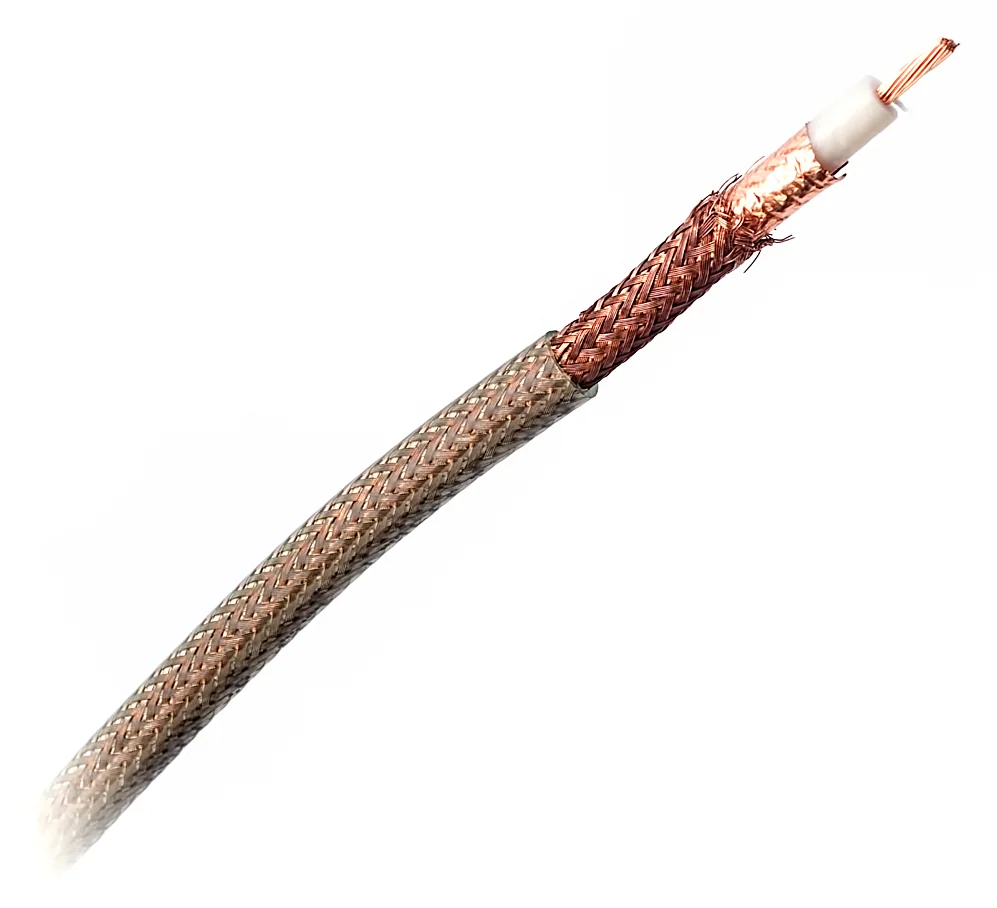
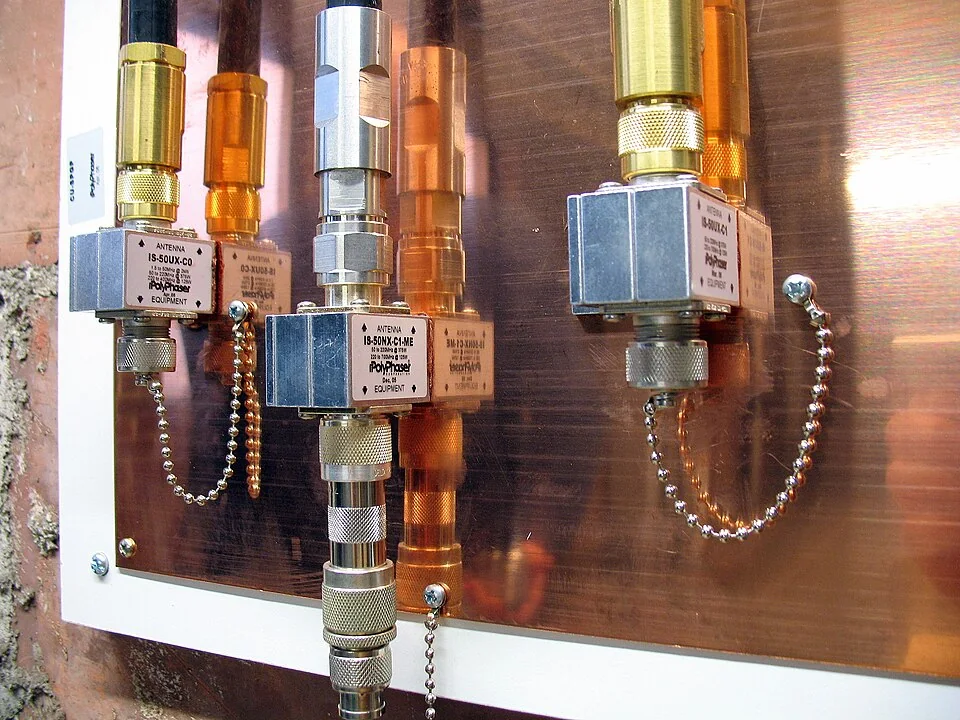
The connector also has its limits and can ruin even an expensive cable.
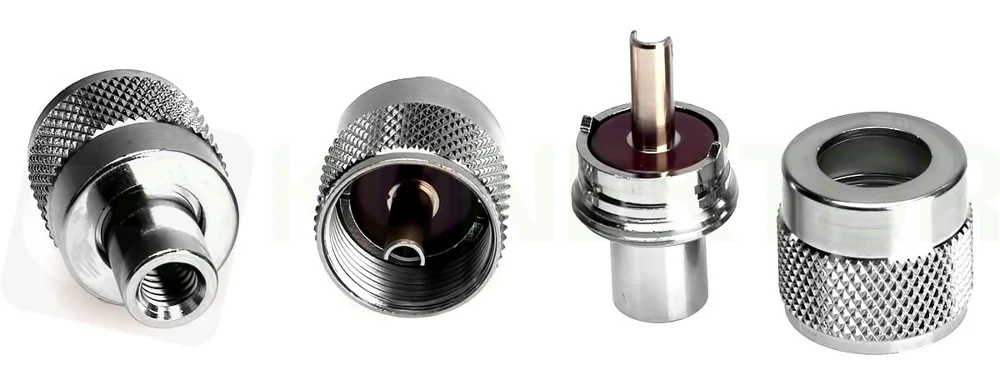
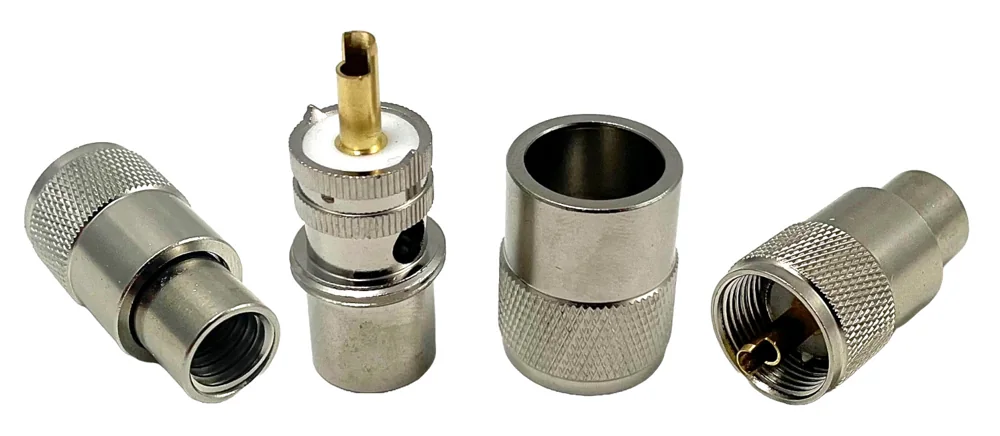
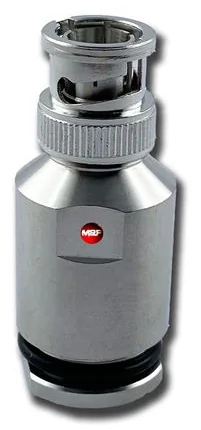
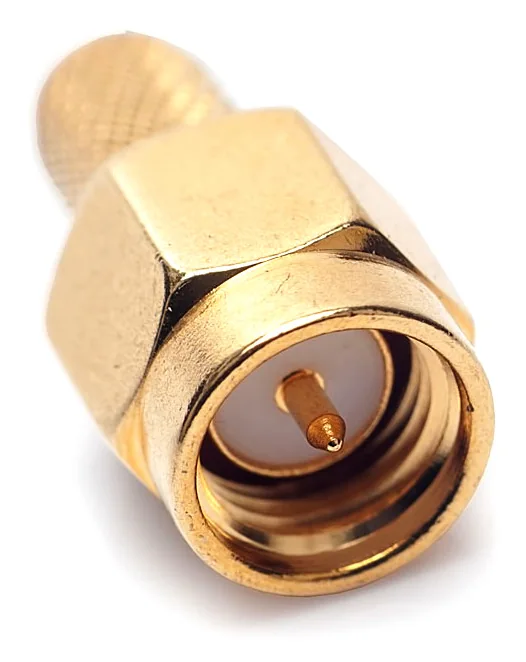
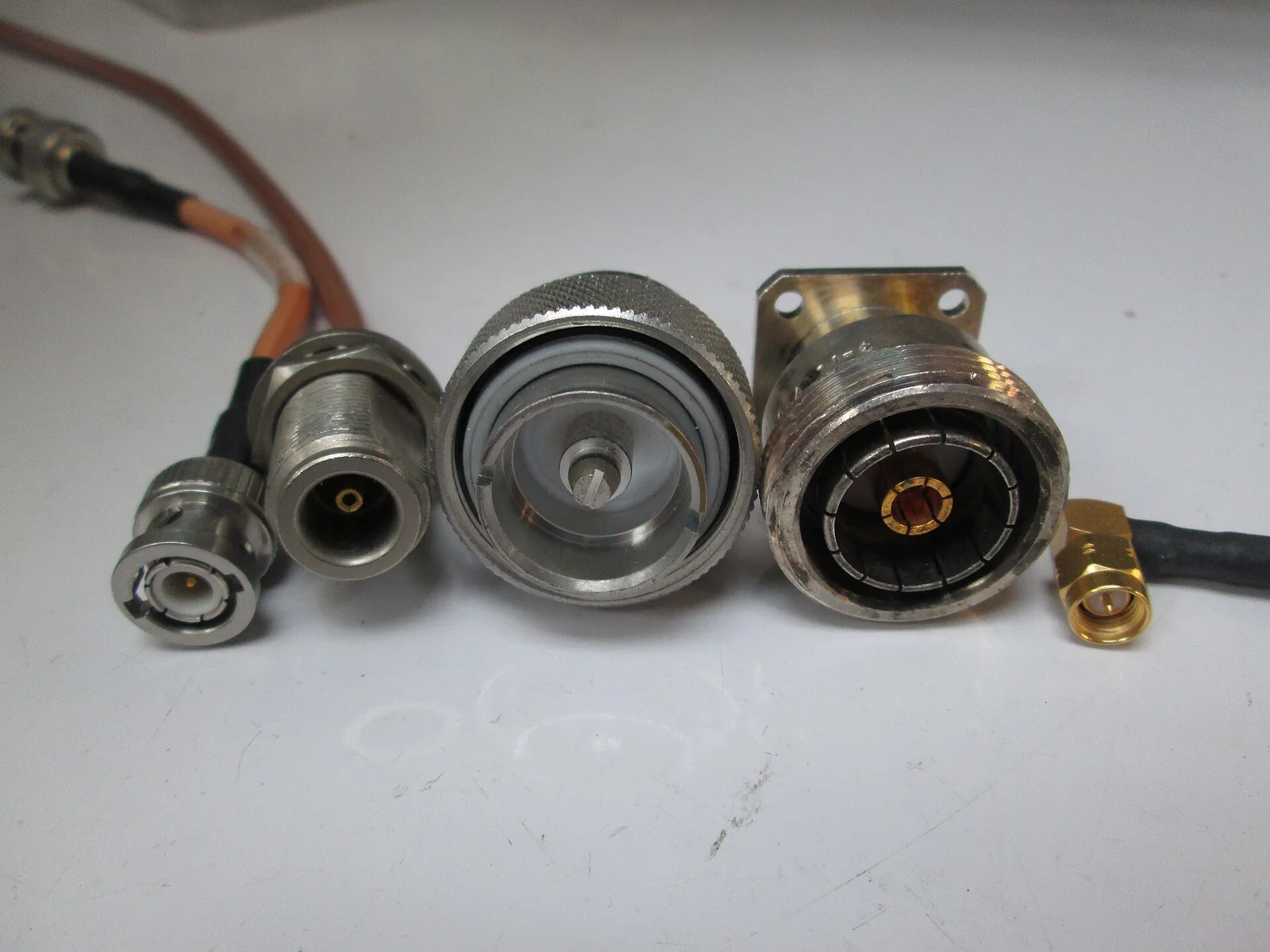
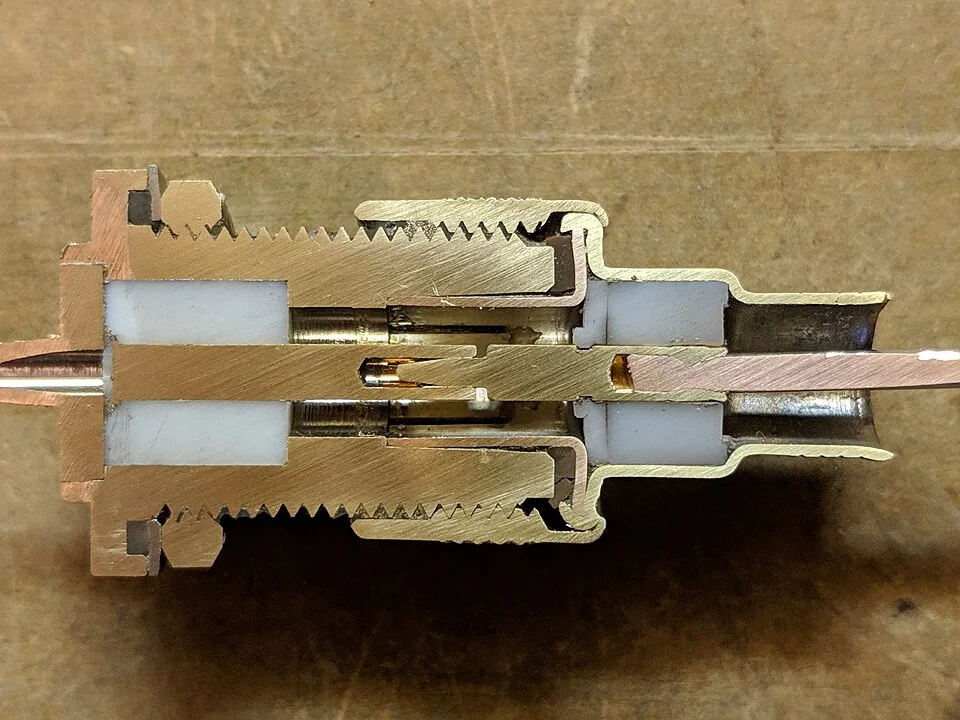
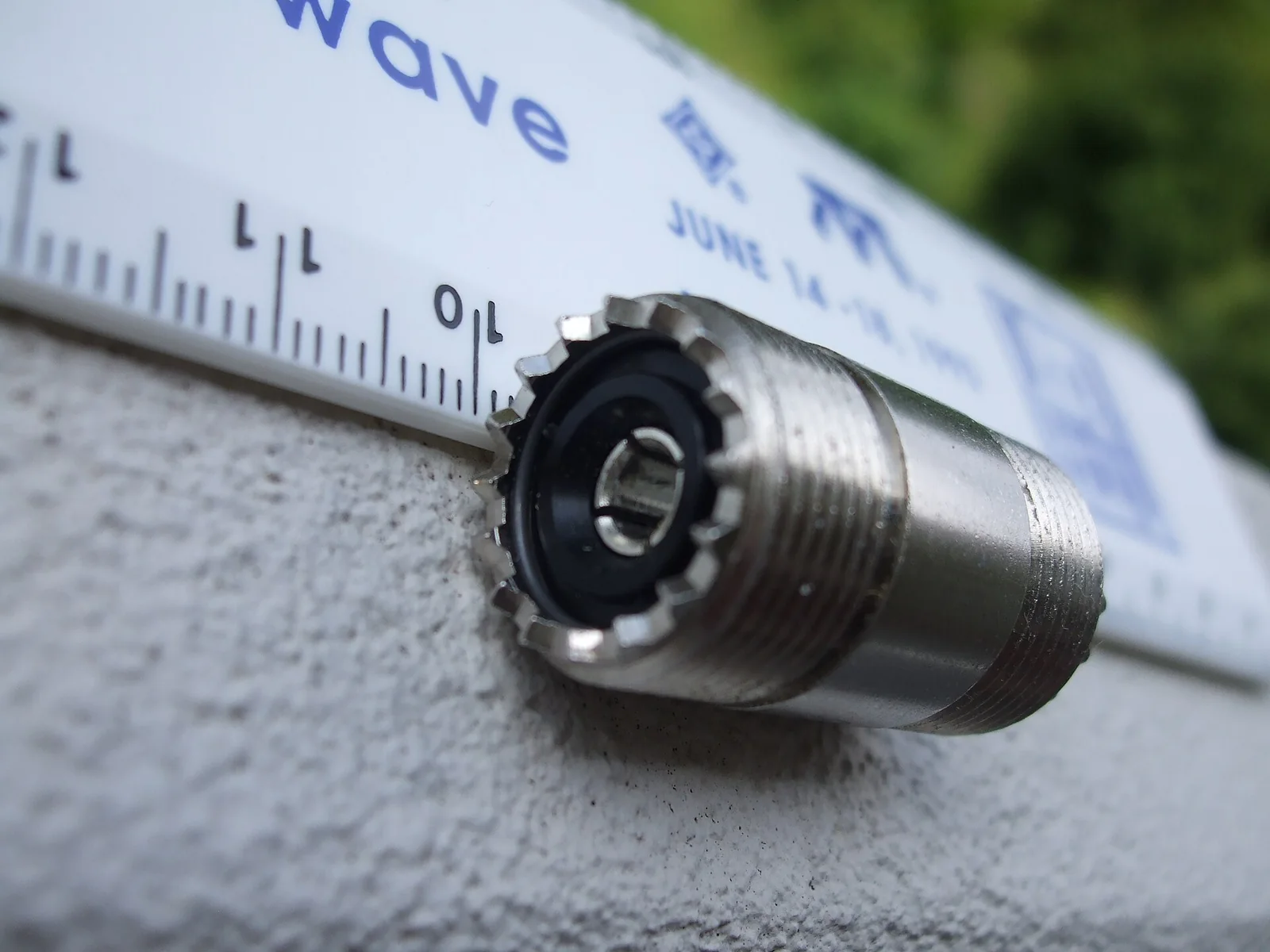
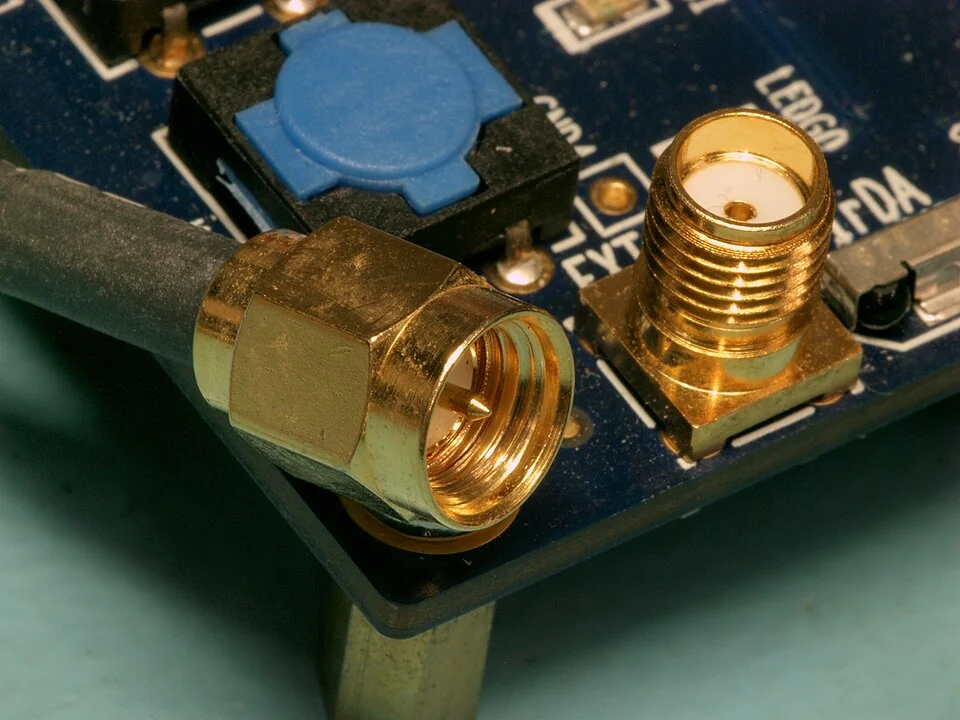
| Connector | frequency range | impedance | power | durability | plug price, PLN |
|---|---|---|---|---|---|
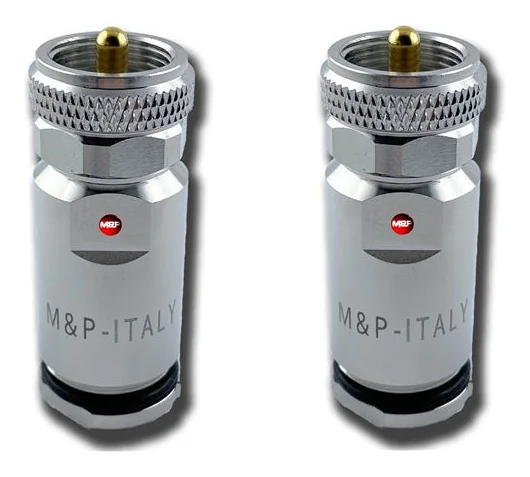
| UHF (PL-259 / SO-239) | up to 200–300 MHz according to catalogues | no fixed value | no data | no data | 10.50–23 · M&P 18.70–75 |
| BNC | up to 4 GHz | 50 Ω | 80–100 W up to 1 GHz | ≥500 cycles | crimp 16.49–17.99 · screw-on 13.51–60 |
| TNC | up to 11 GHz (AR: 18 GHz) | 50 Ω | 250 W at 18 GHz | ≥500 cycles | 17.99–25 · screw-on 60 |
| SMA | up to 18 GHz | 50 Ω | 70 W at 26.5 GHz (precision) | approx. 500 cycles | crimp 16–18 · screw-on 50–70 |
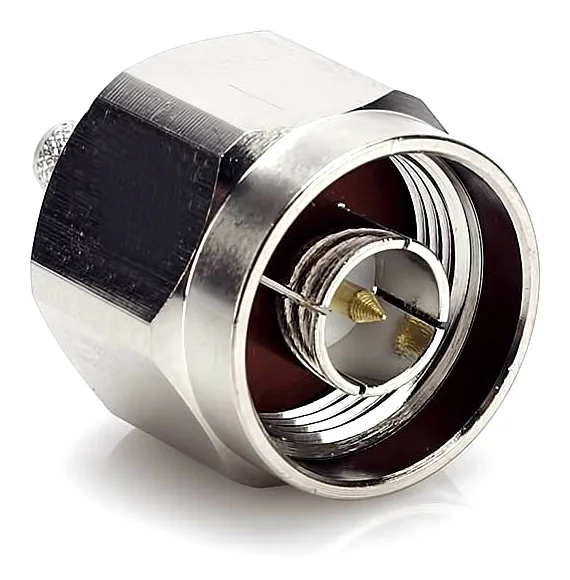
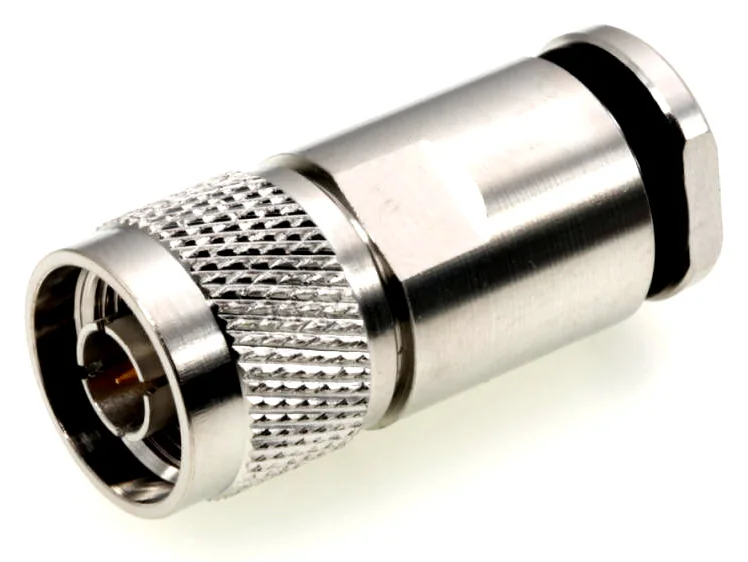
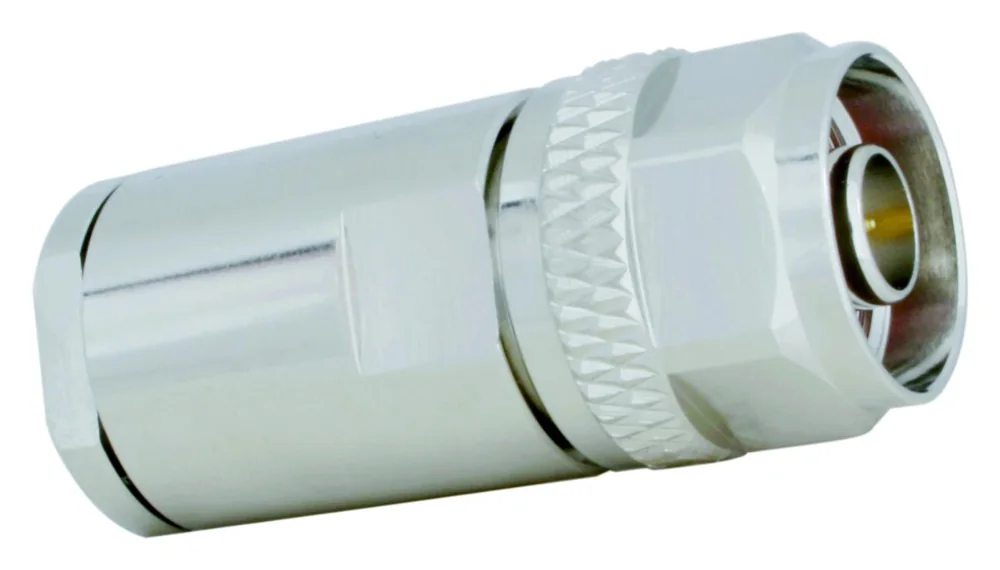
| N | up to 11 GHz | 50 Ω | approx. 2300 W at 100 MHz | ≥500 cycles | crimp 20–25 · screw-on 25–75 |
| FME | up to 2–3 GHz according to the manufacturer | 50 Ω | no data | 500 cycles | socket 15.01 |
| 7/16 DIN | up to 7.5 GHz | 50 Ω | approx. 5500 W at 100 MHz | ≥500 cycles | not available |
| 4.3-10 | up to 6–12 GHz | 50 Ω | 700 W at 1 GHz | ≥100 cycles | not available |
Frequency range and power from the Huber+Suhner 2020, TE and Amphenol catalogues and the AR note. Power for N and 7/16 is read off the H+S graph at SWR 1.0 (accuracy approx. ±10%), 4.3-10 from Wikipedia, FME range from coax-connectors and Fairview datasheets. Power values come from different frequencies, so don’t compare them directly: the AR note gives N at 11 GHz as 150 W. Connector prices indicative, 8.11.2026. M&P list prices: PL-259 EVO for 10 mm €7.24, N for 13 mm €11.90.
The UHF connector dates back to the 1930s, when “UHF” meant anything above 30 MHz. It has no fixed impedance: W0QE calculates a section of about 33–36 Ω in a plug–socket pair. Measured SWR of a PTFE pair is 1.02 at 30 MHz, 1.06 at 100 MHz and 1.28 at 500 MHz.
Sources give different values, in MHz:
On HF and 2 m PL-259 is perfectly adequate. On 70 cm it works, but the N connector is more reliable. On 23 cm only N or better.
A Bakelite plug costs from 10.50 PLN, a PTFE/Gold one 12–18 PLN, so for a permanent installation I’d go PTFE. 7/16 DIN is SWR 1.04 at 1 GHz. 4.3-10 is smaller, has IP68 and −166 dBc intermodulation. Data from the Huber+Suhner catalogue.
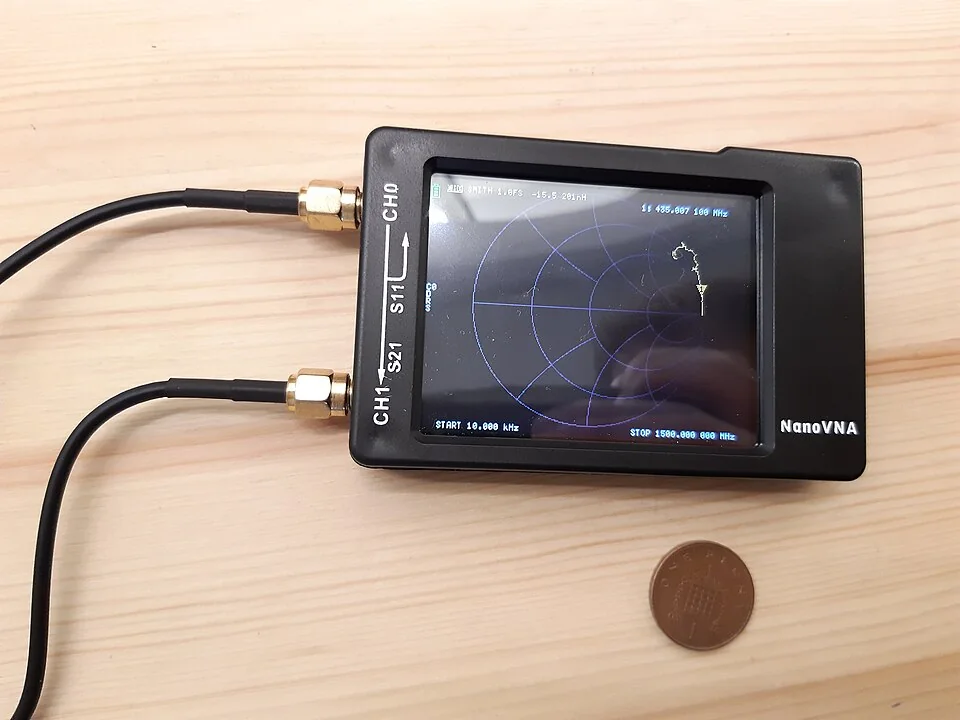
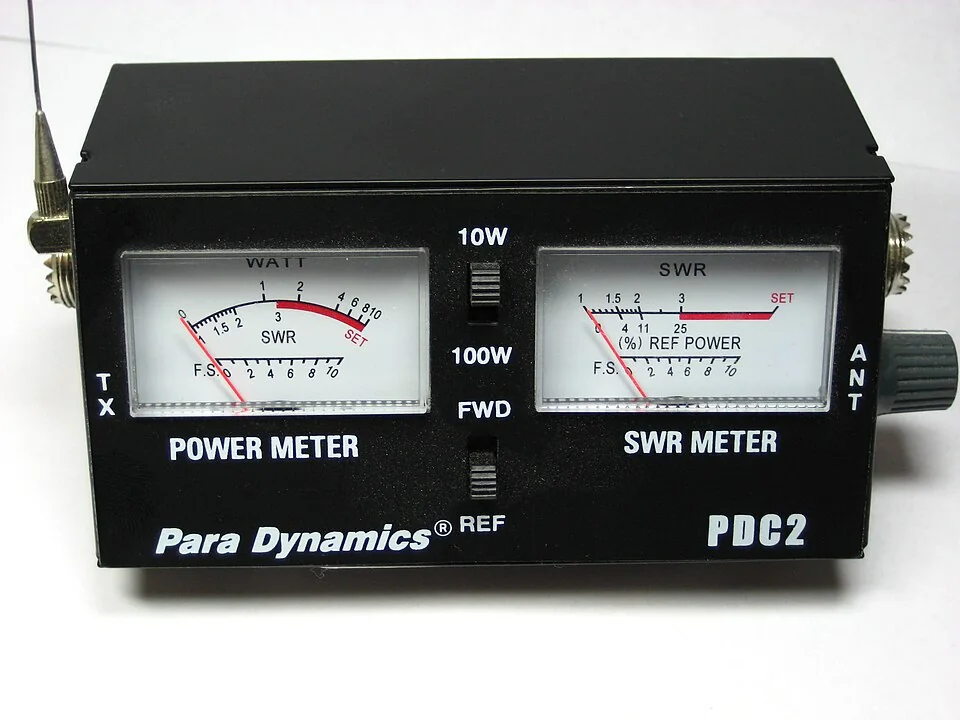
The simplest is with an analyser: measure SWR and loss on an open end. I describe the method in the guide Antenna before winter, and you can compute SWR in the SWR calculator.
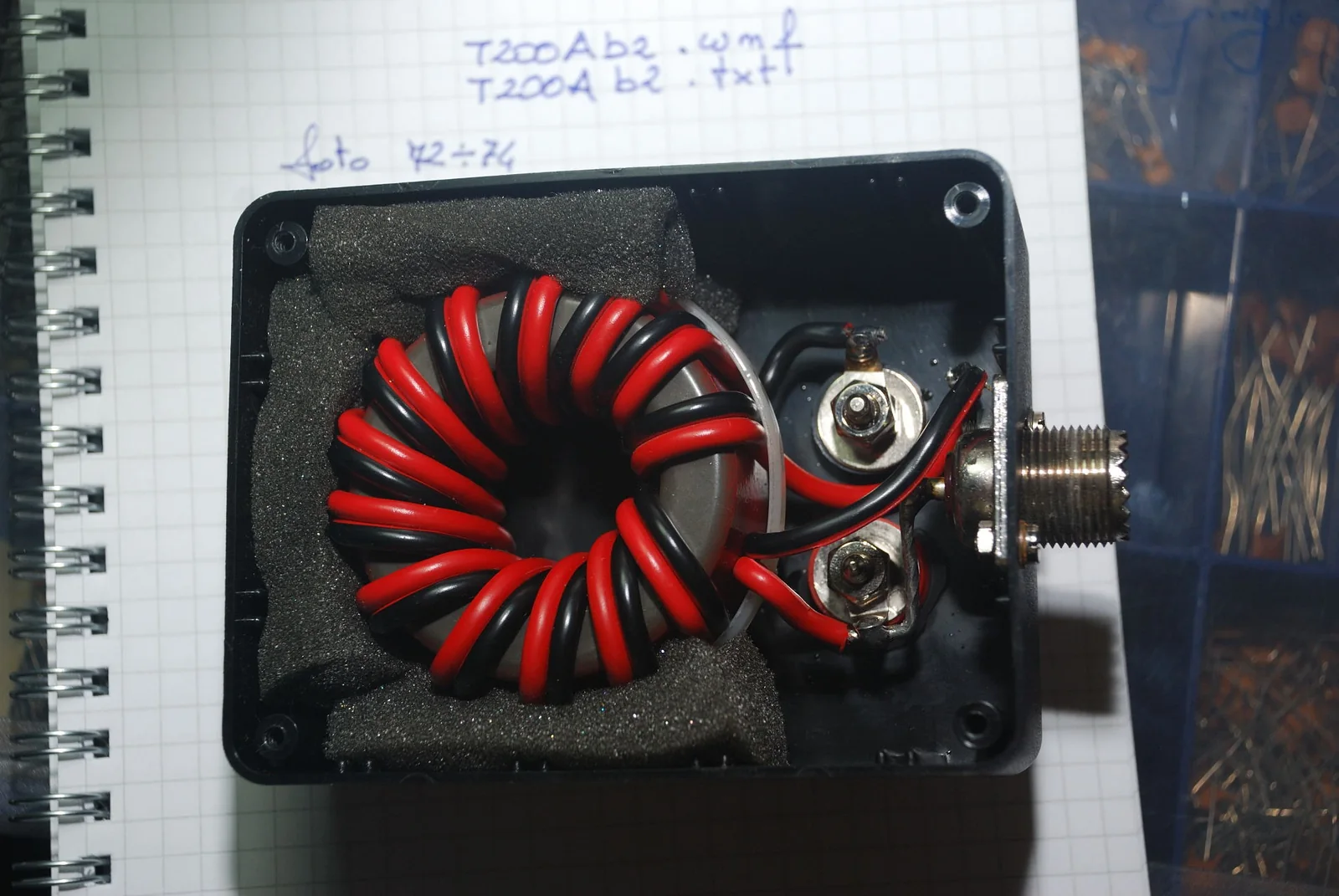
Water most often gets in through a leaky connector, so an increase in loss after winter is a signal to check it. A choke will stop current on the screen: factory-made or a few turns of cable on ferrite. More about this in the guide on QRM interference.
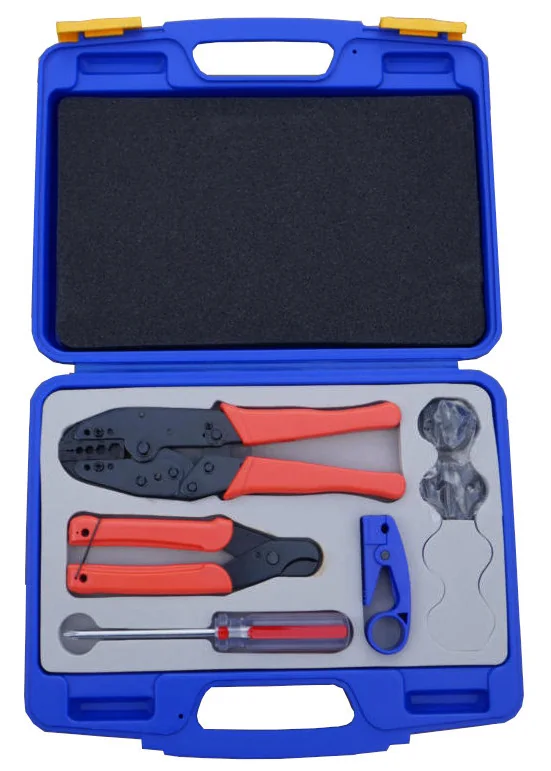
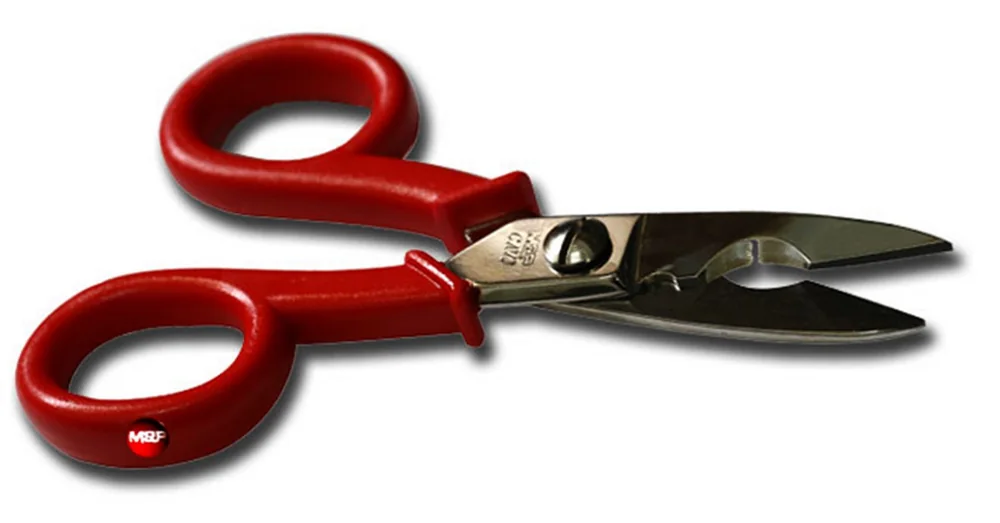
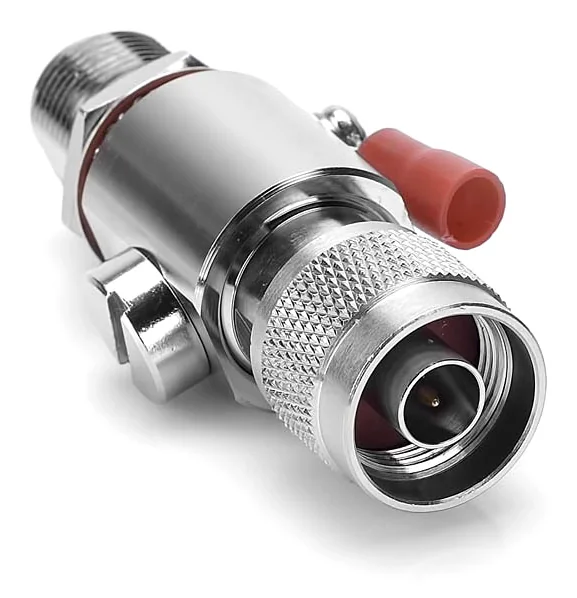
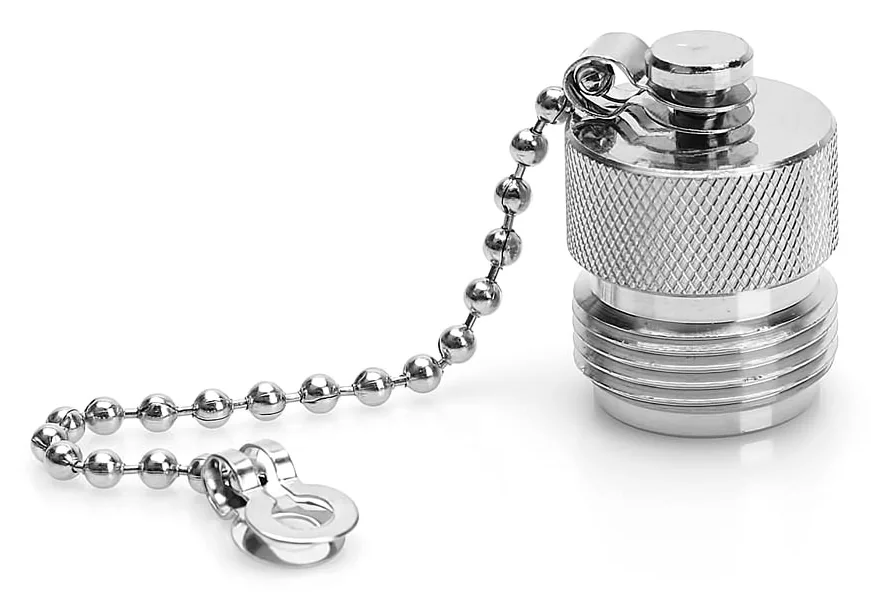
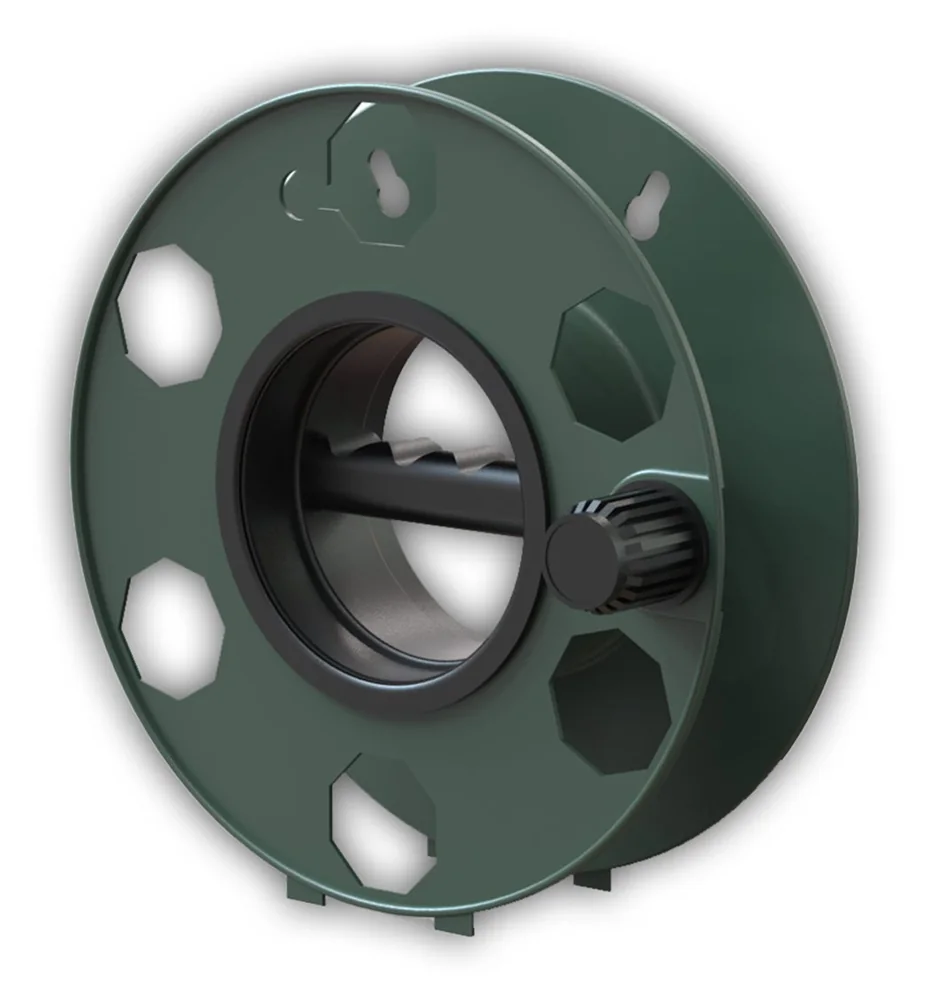
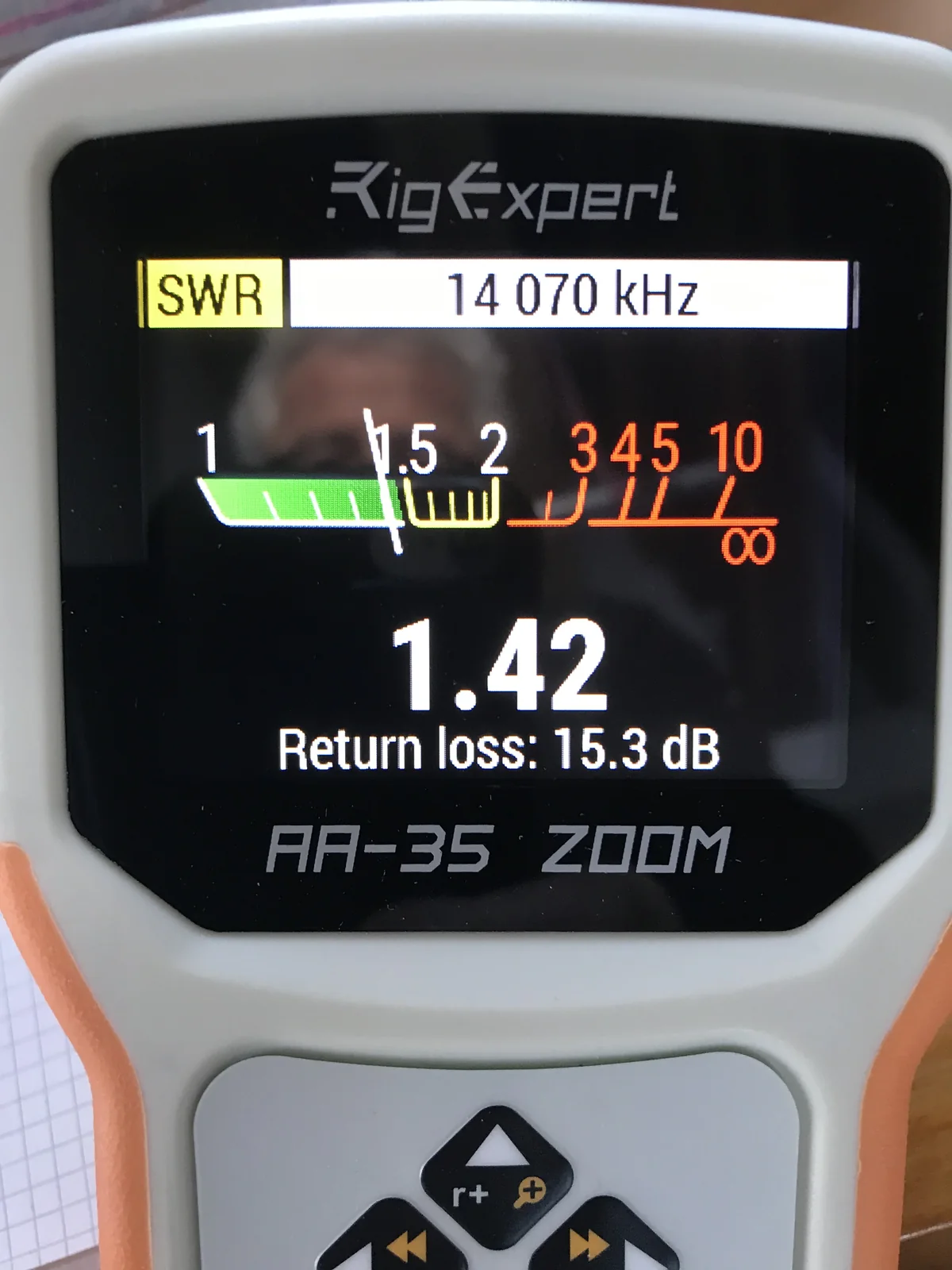
My suggestions. Loss calculated from the same datasheets, without connectors, from the best to the weakest cable in the row.
| Scenario | What to choose | Loss |
|---|---|---|
| Balcony, FM 2 m and 70 cm, 10 m of cable | Hyperflex 5, RF-5 or H-155 | 1.7–1.9 dB on 70 cm |
| Apartment block roof, 2 m and 70 cm, 25 m | Hyperflex 10, Ecoflex 10, Ultraflex 10 C | 2.1 dB on 70 cm |
| HF at home, 100 W, 30 m | RG-213, RF-10 | 0.4–0.5 dB at 10 MHz |
| Mobile in the car, 4 m | RG-58 or Airborne 5 | 0.4–0.8 dB on 2 m |
| POTA and SOTA, 10 m on a reel | POTA-Flex 7 | 0.2 dB at 14 MHz |
| 23 cm, 10 m | Ultraflex 10 C, Hyperflex 10, N connectors | 1.5 dB |
| HF, 1 kW, 30 m | Hyperflex 13, Broad Pro 50C | 0.3–0.4 dB at 14 MHz |
| Mast, 40 m for VHF/UHF | Hyperflex 13, Ecoflex 15, Heliax | 0.6–1.4 dB on 2 m |
| Scanner, SDR, short patch leads | RG-316, RF-5, SMA | approx. 0.2–0.6 dB per metre at 430 MHz |
I don’t recommend it for transmitting. The radio and antenna expect 50 Ω, so you’ll have a mismatch. For receive-only a short length will work.
From 50 W you’re left with about 40 W. In an ordinary QSO you won’t notice, but on 23 cm with weak signals 3–4 dB can be decisive.
Usually not by much. At 10 MHz over 20 m RG-58 loses 0.9 dB, while Hyperflex 10 loses 0.3 dB. The difference grows on 10 m and with high SWR.
Solid conductor has slightly lower losses on VHF/UHF, but it doesn’t like frequent bending. It’s good for permanent installation; for portable work and on a rotator use a stranded conductor. Comparison from datasheets.
“RG-58” and “RG-213” are types, not models. RG-58 at 100 MHz is 13.9 dB in the koax24 sheet, 15.8 dB in the Messi & Paoloni sheet, and 17 dB in the SSB table.
Check the loss for your length and frequency.