
01
Global reach
Ionospheric reflection (a so‑called hop) carries the signal thousands of kilometres. A single QSO can link Warsaw with Japan or South America.
Home / Guide / HF (shortwave)
This is the heart of amateur radio. On the bands from 160 to 10 metres the signal reflects off the ionosphere and returns to Earth hundreds or thousands of kilometres away — without the internet, without repeaters, without satellites. With a length of wire strung between trees and a handful of watts you can talk to the other side of the world. This guide is your map: bands, propagation, antennas, modes, equipment and your first QSO.
Shortwave is the only part of the spectrum where an ordinary ham with a home antenna can regularly work other continents — thanks to physics, not infrastructure.
Ionospheric reflection (a so‑called hop) carries the signal thousands of kilometres. A single QSO can link Warsaw with Japan or South America.
In good conditions even a few watts (QRP) and a simple antenna are enough for long‑distance contacts. It’s propagation and the antenna that count, not the amplifier.
Bands “breathe” with the time of day and the Sun’s cycle. The same antenna is silent one moment and opens to the whole globe the next — and it’s that hunt for conditions that gets you hooked.
DX, contests, operating from summits (SOTA) and parks (POTA), QSL confirmations and awards like DXCC — there’s plenty to compete for and to collect.
Every band has its own temperament — some come alive at night and locally, others in the day and worldwide. Here’s a brief guide (IARU Region 1 / Poland band plan).
Absorbed by the D layer during the day, they come alive after dark. The domain of national and European QSOs, and of winter DX. They need large antennas, but have a distinctive, “warm” feel.
| Band | Range · character |
|---|---|
| 160 m | 1.810–2.000 MHz · night‑time, demanding, “topband” |
| 80 m | 3.500–3.800 MHz · evening QSOs, national/EU |
| 40 m | 7.000–7.200 MHz · versatile: daytime regional, night‑time DX |
They open in the day and carry DX worldwide. The higher the band, the smaller the antenna and the more it depends on solar activity. 20 m is the king of DX — almost always open.
| Band | Range · character |
|---|---|
| 20 m | 14.000–14.350 MHz · prime for DX, active all day |
| 15 m | 21.000–21.450 MHz · excellent with high solar activity |
| 10 m | 28.000–29.700 MHz · can “explode” (Es, cycle peak) |
WARC bands (30 m: 10.1 MHz · 17 m: 18.1 MHz · 12 m: 24.9 MHz) are quieter, narrow bands without contests — 30 m is for CW and digital modes only. Always check the detailed allocations, mode segments and power limits in the current PZK (the Polish Amateur Radio Union) / IARU R1 band plan.
All the HF magic happens a few hundred kilometres above your head — in the Sun‑ionised layers of the atmosphere.
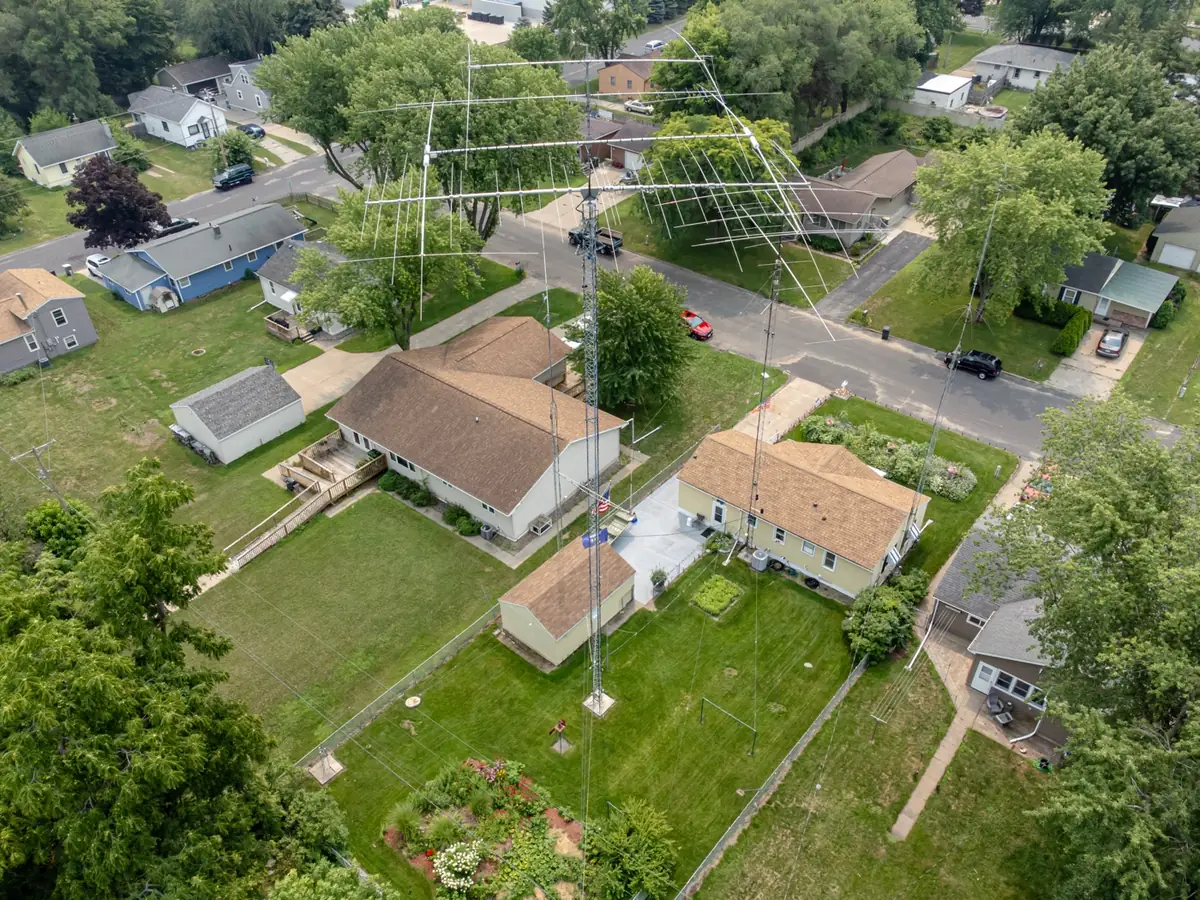
On HF, the antenna makes a bigger difference than power. A good antenna and 100 W will beat a poor antenna plus an amplifier. Where to start?
A classic and the standard. A length of wire, centre‑fed, strung between two points. Cheap, effective, easy to build for 40/20 m.
A vertical radiator with radials. Takes little horizontal space, radiates well at low angles — great for DX.
A long wire and an ATU (tuner) to match it on many bands. The simplest way to operate “on everything” from a small garden.
A small loop for a balcony and tight QTH. Compact and quiet on receive, at the cost of narrow bandwidth (needs retuning).
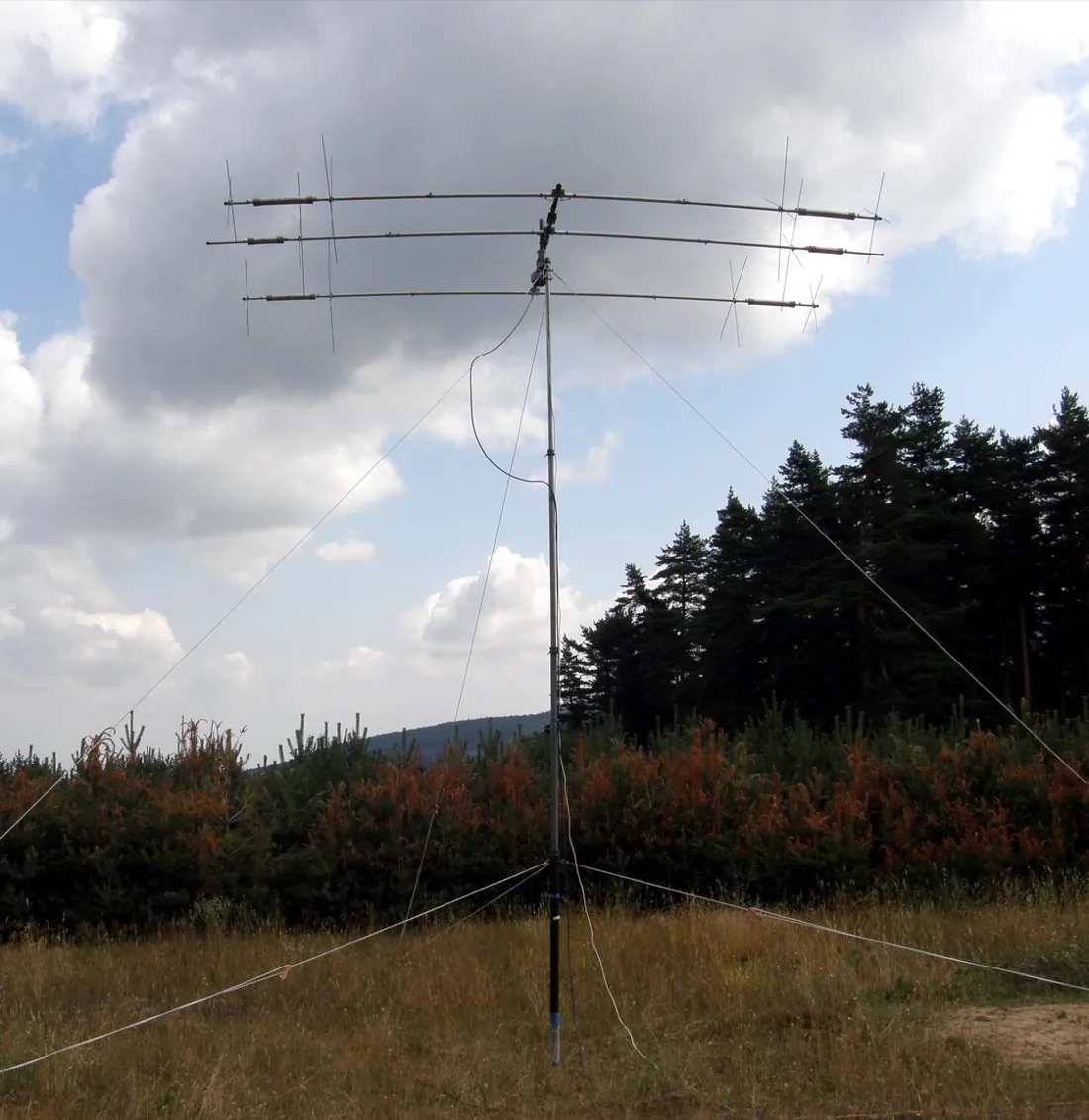
The same transceiver lets you operate by voice, with a key or via a computer — each mode has its own character and strengths.
Voice contacts. Below 10 MHz use lower sideband (LSB), above use upper (USB). The easiest way in — grab the mic and call CQ.
Morse code. Narrow bandwidth and excellent readability with weak signals — with low power you’ll get further than on voice. Practise with the trainer →
The computer encodes the signal so it gets through noise your ear can no longer hear. It excels in poor conditions and with QRP.
Radioteletype (RTTY), nostalgic AM, PSK31 and much more. HF is a playground for modes — plenty to explore for years.
An HF setup is simpler than it seems. The biggest investment isn’t the radio, but the time spent on a good antenna.
Before you pass the exam, just listen. An SDR receiver (even an online WebSDR) will show you how the bands open and close over the day. You’ll learn to recognise modes, callsigns and the rhythm of QSOs — it’s the best training before your first “CQ”.
You don’t need any licence to listen. To transmit on HF you need an operator’s certificate and a radio licence (exam at UKE — the Polish Office of Electronic Communications) — full access to the shortwave bands comes with a Class A certificate.
Voice on 40 or 20 m — the easiest. Here’s the whole flow of a first long-distance contact.
Tune across 40 and 20 m. Hearing lots of stations = the band is alive. Rule of thumb: by day aim higher (20/15 m), in the evening lower (40/80 m).
Pick a free frequency and make sure no one is using it. Ask before you call.
“Is the frequency in use? This is SQ5CBA”Make a general call or answer someone calling CQ. Use the phonetic alphabet — spell your callsign clearly.
“CQ CQ, this is Sierra Quebec Five Charlie Bravo Alfa, calling CQ”Give your callsign, RST report (readability and strength), name, QTH and locator. Note the same from the other station.
“Report 59, name Filip, QTH Warsaw, locator KO02”Say thanks, sign off with the classic “73” and enter the contact in your log. You can send QSL confirmation electronically.
“Thank you for the QSO, 73! SQ5CBA”Tip: the first time is the hardest. Start by answering other people’s CQ, rather than calling yourself — it’s easier to join an ongoing contact. And if voice makes you shy, try FT8: the computer handles the whole exchange and you learn the bands and propagation without mic stress.
Once you catch the rhythm of the bands, the real game begins: chasing distant and rare stations.
“DX” is a distant station. For confirmed QSOs with different countries you earn the legendary DXCC award — a lifetime collection.
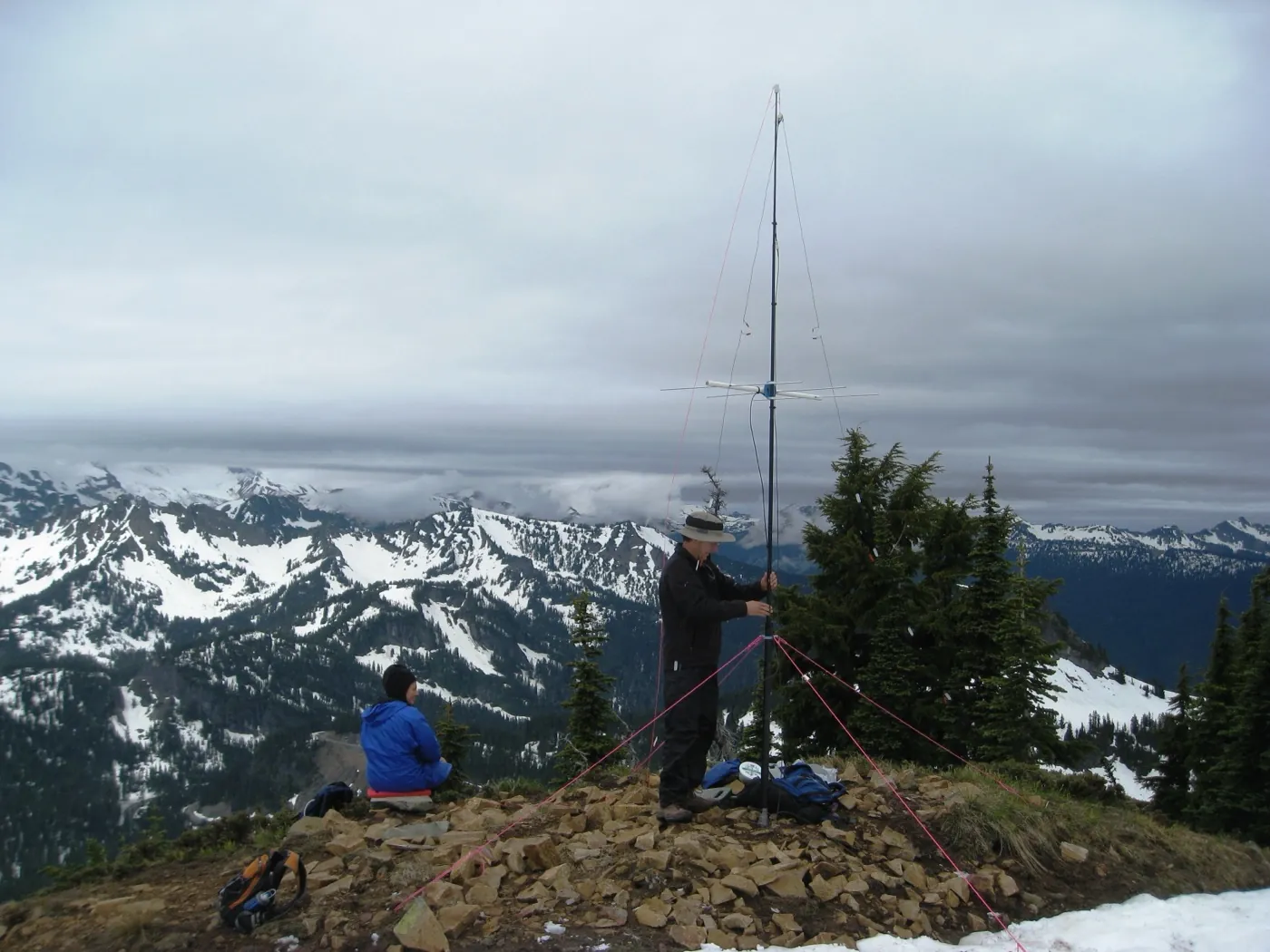
Operating from summits (Summits on the Air) and parks (Parks on the Air) — combining amateur radio with hiking and the outdoors. Light gear, big thrills.
When a crowd is calling a rare station, it operates “split” — listening slightly off its transmit frequency. The trick is to hit its window.
Weekend contests are a crash course in operating: hundreds of QSOs, time pressure and bands full of life. A great way to grow quickly.
On HF, CW is a superpower — with weak signals and low power you’ll get the furthest with it. Practise the characters with the interactive Morse trainer, then visit the guide to the 2 m and 70 cm bands.