
Home  /  Guide  /  IARU band plan

Guide · band plan

IARU band plan

A band plan is the agreed “road map” to every amateur band: which part is for telegraphy, where digital modes operate, where phone, and where beacons, satellites or FM. Sticking to it is the basis of on‑air etiquette — it lets everyone know where to look. Below is a summary of the IARU Region 1 plan (applicable in Poland) for the HF bands and for 6 m, 2 m and 70 cm.
IARU Region 1 160 m – 70 cm CW · DIGI · PHONE calling + FT8
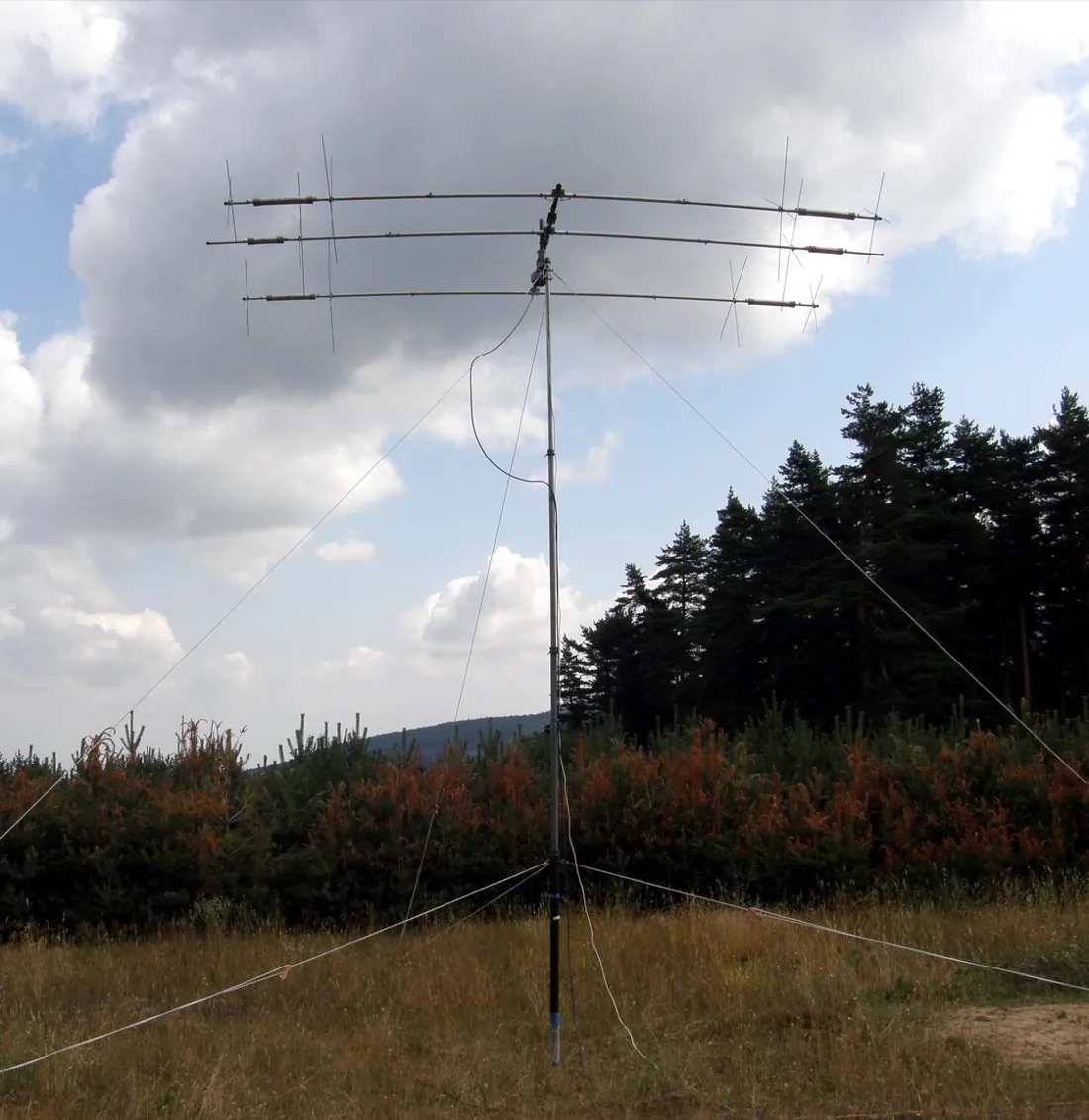
Yagi beam for HF bands against the sky — illustration for the band plan
band plan · photo: Lz1aat / Wikimedia Commons, CC BY-SA 3.0
How to read

Colours of the segments

Each bar shows the band from left (low) to right (high). The colour indicates what type of operation the band plan assigns there.

CW (telegraphy) Digital modes (narrow, e.g. FT8) Phone / all modes (SSB) Beacons (radio beacons) FM Satellites
Shortwave

HF bands (160–10 m)

Frequencies in kHz. The main calling, QRP and FT8 frequencies are shown. “Phone” below 10 MHz is LSB, above — USB.

160 m

1810–2000 kHz
night-time, “top band”
1810–1838CW
1838–1843Digital
1843–2000Phone / all
QRP 1836FT8 1840

80 m

3500–3800 kHz
evenings in Europe
3500–3570CW
3570–3600Digital
3600–3800Phone / all
QRP 3560FT8 3573Emergency 3760

60 m

5351.5–5366.5 kHz
secondary band · max 15 W EIRP
5351.5–5354Digital
5354–5366.5Phone / all
FT8 5357USB

40 m

7000–7200 kHz
versatile: EU by day, DX by night
7000–7040CW
7040–7050Digital
7050–7200Phone / all
QRP 7030FT8 7074Emergency 7110

30 m

10100–10150 kHz
no phone · secondary band
10100–10130CW
10130–10150Digital
FT8 10136

20 m

14000–14350 kHz
the king of DX, open all day
14000–14070CW
14070–14099Digital
14099–14101Beacons
14101–14350Phone / all
QRP 14060FT8 14074SSTV 14230

17 m

18068–18168 kHz
WARC · daytime DX
18068–18095CW
18095–18109Digital
18109–18111Beacons
18111–18168Phone / all
FT8 18100

15 m

21000–21450 kHz
excellent when SFI is high
21000–21070CW
21070–21110Digital
21110–21450Phone / all
FT8 21074Beacons 21150QRP 21285

12 m

24890–24990 kHz
WARC · DX if conditions allow
24890–24915CW
24915–24929Digital
24929–24931Beacons
24931–24990Phone / all
FT8 24915

10 m

28000–29700 kHz
can “explode” (Es / cycle peak)
28000–28070CW
28070–28190Digital
28190–28225Beacons
28225–29200Phone / all
29200–29300FM
29300–29510Satellites
29510–29700FM
FT8 28074Beacons 28190+FM call 29600
VHF/UHF

6 m · 2 m · 70 cm

Frequencies in MHz. FM details (repeaters, tones) for 2 m and 70 cm can be found in the guide 2 m / 70 cm band.

6 m

50–52 MHz
the “magic band” · Sporadic-E in summer
50–50.03Beacons
50.03–50.1CW
50.1–50.5Phone / all
50.5–52FM
CW call 50.090DX call 50.110FT8 50.313

2 m

144–146 MHz
VHF · local and tropo
144–144.025Satellites
144.025–144.15CW
144.15–144.4Phone / all
144.4–144.49Beacons
144.49–145Phone / all
145–145.8FM
145.8–146Satellites
CW call 144.050FT8 144.174SSB call 144.300APRS 144.800FM call 145.500

70 cm

430–440 MHz
UHF · urban, repeaters, satellites
432–432.1CW
432.1–432.5Phone / all
433–433.6FM
435–438Satellites
438–440FM
CW call 432.050FT8 432.174SSB call 432.200FM call 433.500Satellites 435–438
i

This is a quick reference, not the official document. The segments above are simplified and for guidance only. The only binding source is the current IARU Region 1 and PZK (the Polish Amateur Radio Union) band plan — check there for exact boundaries, permitted bandwidths and notes. Also remember: to transmit you need an operator’s certificate and a radio licence (exam at UKE — the Polish Office of Electronic Communications); listening is free for everyone.

Related

Browse the guides

Want to understand why the bands behave so differently? Start with the HF guide, and for FM 2 m/70 cm details see the Frequencies cheat sheet.