
Home  /  Calculators  /  SWR and mismatch

Calculators · antenna matching

SWR and mismatch calculator

SWR isn’t a death sentence, it’s just a number — and that number tells you how much power is reflected by the antenna and comes back to the radio instead of going out on the air. Enter your SWR and I’ll show the reflection coefficient, return loss, the percentage of power reflected, mismatch loss and how many watts actually reach the antenna — on an analogue SWR meter.

Γ · return loss % power reflected loss in dB watts at the antenna
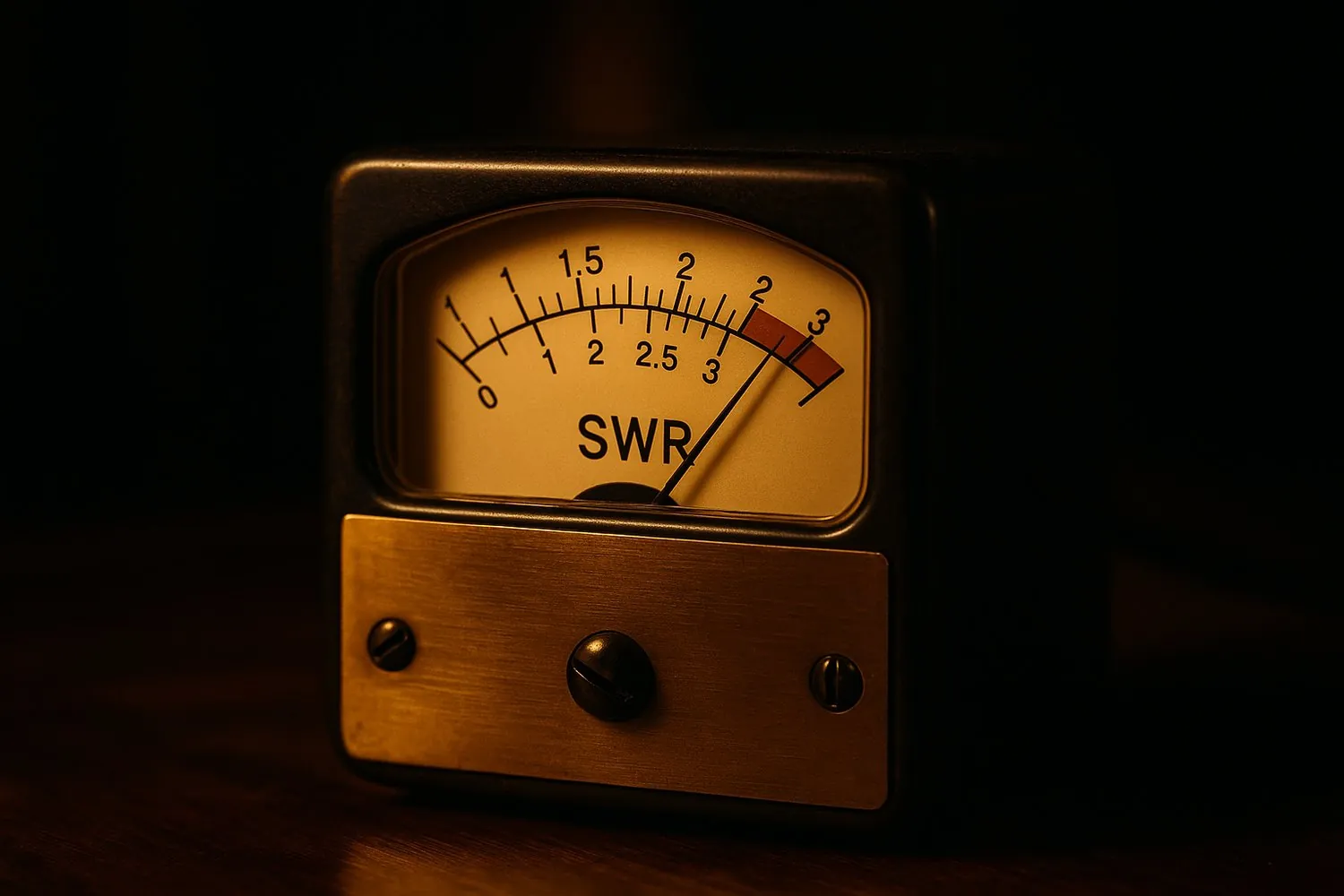
Analogue SWR meter with a glowing dial and the needle in the red
the meter doesn’t lie — the question is what its reading means

Your reading

// enter the SWR from the meter — the rest calculates itself

1.50 : 1
1.0 = perfect match (50 Ω). Slider up to 5.0; type a higher value below if yours is higher.
100 W
To work out how many watts come back to the radio and how many go to the antenna.
Match verdict
—
mismatch loss — dB  ·  power reflected —%  ·  to the antenna —%
!

SWR by itself doesn’t ‘burn’ power — it shows reflection. The real loss is caused by the cable (the reflected wave goes through it twice). With a short, decent feeder even an SWR of 2:1 costs pennies; with a long cable on 70 cm — quite a lot. Modern radios at SWR > ~1.5–2 will reduce power automatically to protect the PA.

Under the bonnet

How I calculate it

Pure transmission line physics — four equations that link SWR with power.

Equations

  • Reflection coefficient: Γ = (SWR − 1) / (SWR + 1). Tells you what fraction of the wave’s amplitude is reflected (0 = nothing, 1 = everything).
  • Return loss: RL = −20 · log₁₀(Γ) [dB] — how much weaker the reflected wave is than the forward wave. The higher the RL, the better.
  • Reflected power: Γ² (power ∝ square of amplitude). SWR 2:1 → Γ = 0.333 → 11% of the power returns to the radio.
  • Mismatch loss: ML = −10 · log₁₀(1 − Γ²) [dB] — how much less power reaches the antenna with an ideal cable. This is usually a fraction of a dB.
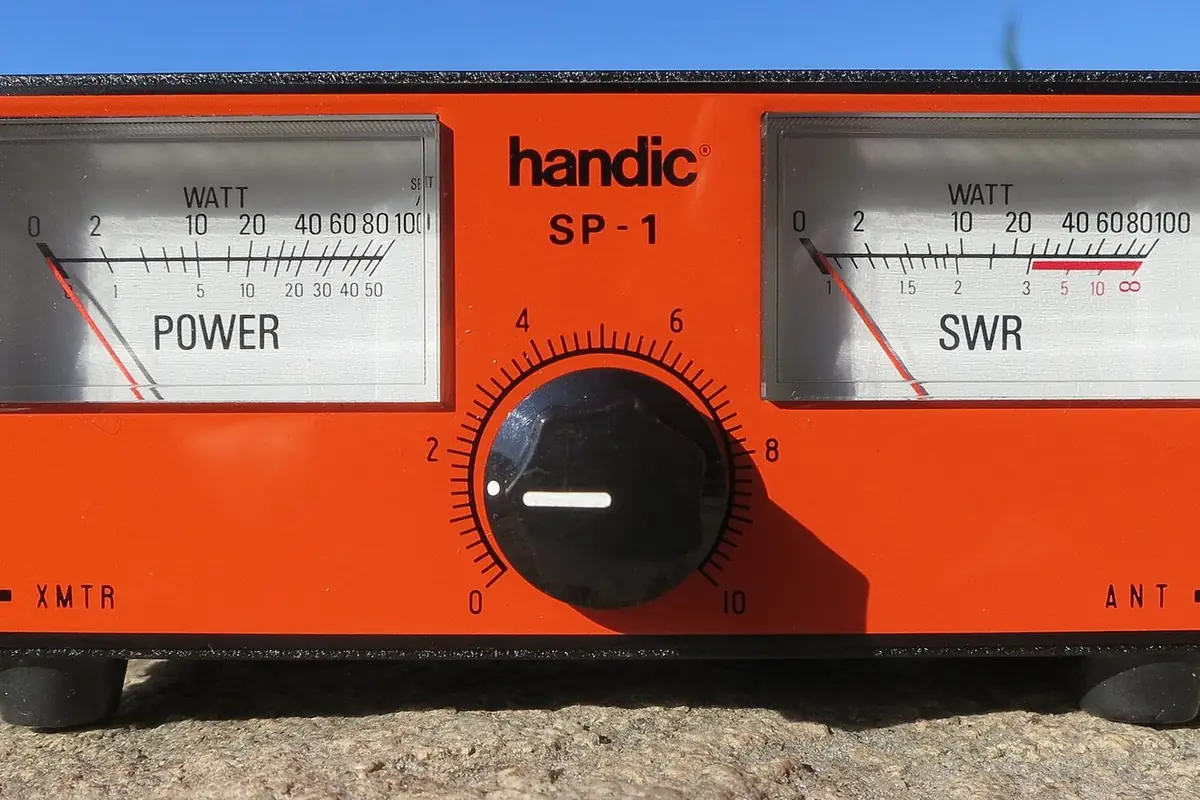
Vintage handic SP-1 SWR/power meter with two needles SWR/power meter “handic SP-1” · photo: R. Henrik Nilsson / Wikimedia Commons, CC BY 4.0
✓

Practical scale: ≤ 1.5 — excellent, nothing to worry about. 1.5–2 — good, operate normally. 2–3 — needs attention: retune the antenna or check the connectors. > 3 — something’s wrong (length, bad contact, water in the cable) — the radio may throttle power. For cable comparisons see the cable calculator.

Related calculators

High SWR? Check the length and the cable

The most common cause is the wrong antenna length or a lossy feeder. Calculate both.

Antenna dimensions → Cable calculator