
Home  /  Highlights  /  October on the air

On‑air calendar · 14–31 October 2026

October on the air:
scouts, meteors, a contest and the clock change

There’s more happening on the air in the second half of October than usual. First, scouts from all over the world hit the bands during JOTA‑JOTI (16–18.10). A few days later comes the peak of the Orionids, debris from Halley’s Comet (21.10). On the last full weekend of October we have the CQ WW DX SSB contest (24–25.10), and in the middle of it Poland changes time from summer to winter. I’ve put it all on one page. The countdowns and clocks run live.

JOTA‑JOTI 16–18.10 Orionids 21.10 CQ WW SSB 24–25.10 clock change 25.10
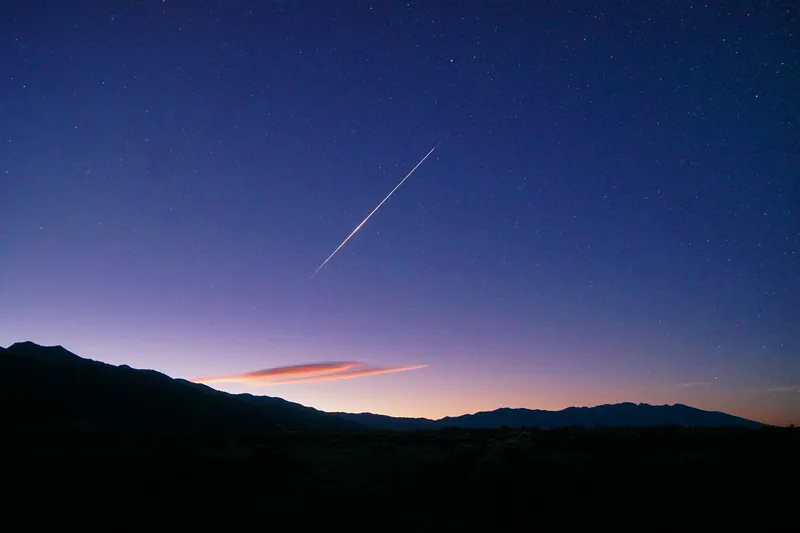
A bright Orionid meteor trail in a deep blue dawn sky, above a dark line of mountains and a pink morning glow Orionid at dawn · photo: Mike Lewinski, CC BY 4.0, crop
Live

What’s on the air now

The countdown runs in your browser from the device clock. Event times are given in UTC and in Polish time.

Live calendar

Next: JOTA‑JOTI

From Friday 16 October, scouts from around the world go on the air. On phone they’ll be calling “CQ Jamboree”.

JOTA‑JOTIFri–Sun · 16–18.10
Orionidsmaximum 21.10
CQ WW DX SSBSat–Sun · 24–25.10
Clock changeSun 25.10 · 03:00 → 02:00
On‑air calendar, 14–31 October 2026 Timeline of days from 14 to 31 October 2026. JOTA‑JOTI from Friday 16 to Sunday 18 October. The Orionids are active throughout this period, with a peak per IMO on 21 October. The CQ World Wide DX SSB contest on Saturday and Sunday 24–25 October, from 00:00 to 23:59 UTC. The change from summer to winter time on Sunday 25 October at 01:00 UTC, in the middle of the contest. 14 Wed 15 Thu 16 Fri 17 Sat 18 Sun 19 Mon 20 Tue 21 Wed 22 Thu 23 Fri 24 Sat 25 Sun 26 Mon 27 Tue 28 Wed 29 Thu 30 Fri 31 Sat OCTOBER 2026 · weekends highlighted Orionids · peak 21.10 (IMO) JOTA‑JOTI scouts on the air · 16–18.10 CQ WW SSB 48 h of HF contesting · 24–25.10 clock change 03:00 → 02:00 25.10, 01:00 UTC now

← swipe sideways →

The second half of October on a single axis. The vertical gold line shows “now” and moves by itself. The Orionids are active throughout this period, and the peak per IMO falls on 21 October. The red dashed line marks the clock change in the middle of CQ WW.
16–18 October · scouts

JOTA‑JOTI: radio in scouts’ hands

Jamboree on the Air is the annual meet‑up of scouts over amateur radio, and Jamboree on the Internet is its online part. In 2026 they take place together, from Friday 16 to Sunday 18 October.

The first JOTA took place in 1958, so this year’s is the 69th, and JOTI the 30th. The 2026 theme is “A Peaceful and Inclusive World”. The scale is huge: in 2025 over 650,000 groups and individuals registered from 188 countries and territories.

This is not a contest. It’s not the number of QSOs that matters, but the conversation. On phone, stations call “CQ Jamboree” or answer such a call. You may transmit on any permitted frequency, but the organisers recommend the world scout frequencies in the table below, and if it’s crowded, frequencies right next to them. The WOSM site gives hours from Friday 00:00 to Sunday 23:45 (with a UTC+2 offset in the site’s data), and ARRL states plainly there’s no hard start or finish: a station transmits when it’s ready.

A scout without a licence won’t go on air alone. The troop needs a licensed radio amateur or a club. Licence terms differ by country, and where scouts may not transmit themselves, the operator conducts the QSOs. ZHP (the Polish Scouting and Guiding Association) puts it simply: “you need a radio amateur”. The national coordinator in Poland is ZHP (jotajoti@zhp.pl). If you hold a licence and have a free weekend, you can volunteer with a troop or simply answer scout stations from home.

The 2024 WOSM handbook does not list a separate set of FM channels for JOTA chats on 2 m and 70 cm. It does list digital networks: DMR BrandMeister with talkgroup TG 907 (after making contact you move to rooms TG 9071–9078), D‑STAR reflector REF033A and EchoLink conference JOTA‑365. ScoutLink, however, will not be running this year: its public chat and Minecraft server are offline for the whole of October 2026, including the JOTA‑JOTI weekend.
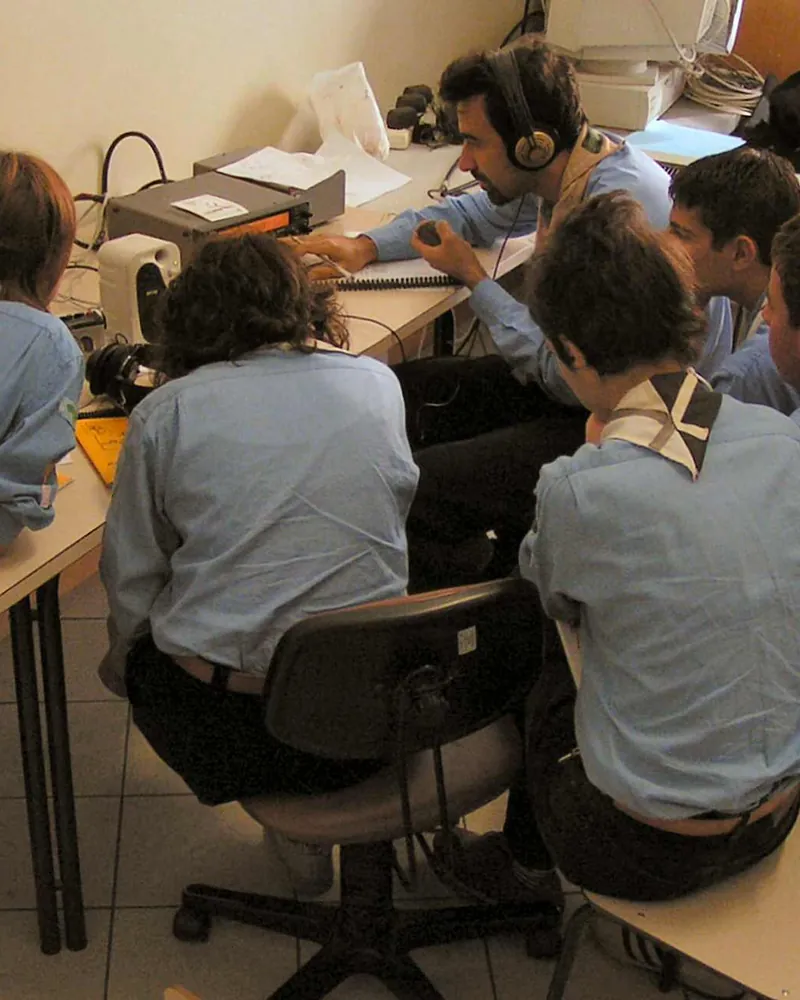
Scouts in blue uniforms leaning over a radio at a table, one wearing headphones, during Jamboree on the Air JOTA‑JOTI 2004 in Rome · photo: Lou Crazy, CC BY 3.0, crop
BandSSB (voice)CW
80 m3.690 MHz3.570 MHz
40 m7.090 and 7.190 MHz7.030 MHz
20 m14.290 MHz14.060 MHz
17 m18.140 MHz18.080 MHz
15 m21.360 MHz21.140 MHz
12 m24.960 MHz24.910 MHz
10 m28.390 MHz28.180 MHz
6 m50.160 MHz50.160 MHz

World scout frequencies per the WOSM handbook (2024) and the ARRL website. The global list on 80 m also includes 3.940 MHz. I’ve left it out here because it lies outside the 80 m band in Poland (3.5–3.8 MHz). On 40 m remember that in Region 1 phone ends at 7.200 MHz.

A sample conversation with a scout station

  1. Scout stationCQ Jamboree, CQ Jamboree, this is [station callsign], a scout troop from Warsaw. Can anyone hear us?
  2. Me · SQ5CBA[station callsign], this is SQ5CBA. I hear you very well. My name’s Filip, transmitting from Mokotów. Who is speaking now?
  3. Scout stationHi, Filip! Zosia here, I’m eleven. We’re at a troop meeting in the scout room. Where did you get your radio?
  4. Me · SQ5CBAZosia, the radio sits on my desk and the antenna is on the roof of my apartment block. My voice reaches you by radio wave, with no internet and no phone. What are you doing at the meeting?
  5. Scout stationWe’re learning the Morse alphabet and making contacts. You’re our fourth!
  6. Me · SQ5CBACongratulations! I’ll send you a QSL card as a keepsake. Say hello to the whole troop. [station callsign], this is SQ5CBA, 73!

This is an example I’ve put together, not a record of a real QSO. I’ve deliberately omitted the scout station’s callsign.

When you hear a scout station

  • Speak slowly and simply. On the other end of the mic there may be a ten‑year‑old holding a radio for the first time.
  • Ask. Their name, troop, town, and what they’re doing at the meeting. Children are keen to talk.
  • Tell them about your station. Where you’re transmitting from, what radio and antenna you have, how far your signal carries.
  • Keep overs short. The microphone passes from hand to hand, so give them a moment to reply.
  • Don’t race. JOTA isn’t a contest. One longer chat gives the troop more than five quick reports.
  • Offer a QSL card. For the troop it’s a memento of the weekend.
Peak 21 October · active until 7 November

Orionids: fragments of Halley’s Comet

The Orionids are fragments of comet 1P/Halley. According to the IMO calendar the shower is active from 2 October to 7 November, with a peak on 21 October.

Orionid radiant against the stars A patch of sky with the constellations of Orion, Gemini and Taurus. The Orionid radiant lies north‑east of Betelgeuse, near the border with Gemini (at maximum around RA 95°, declination +16°). Meteors shoot out from this point in all directions; they can be seen across the whole sky, not just near Orion. -20° -10° +0° +10° +20° +30° 4h 5h 6h 7h 8h Betelgeuse Rigel Castor Pollux Alhena Aldebaran Procyon Sirius ORION GEMINI TAURUS CANIS MINOR Orionid radiantRA 95° · Dec +16° (at maximum) view south · east to the left · grid: right ascension (h) and declination (°)
The Orionid radiant sits between Betelgeuse and Gemini (α = 95°, δ = +16°). The IMO notes that in the northern hemisphere the radiant is fairly high already before local midnight. Meteors don’t fly only “from Orion”: they’re visible across the whole sky, and their trails extended backwards converge on this point.

The IMO calendar for 2026 gives a peak on 21 October, at a solar ecliptic longitude of 208°. The expected ZHR is 20+, and the meteors enter the atmosphere at 66 km/s, so they’re very fast. ZHR is the number of meteors per hour an observer would see with the radiant at the zenith under very dark skies. In practice you see fewer.

The Moon doesn’t spoil the show this year. First quarter falls on 18 October, and full Moon on 26 October. The IMO assesses that moonlight won’t hamper observations near the peak, as the waxing Moon leaves dark hours at least up to the day of maximum.

The shower can be capricious. In 2006–2009 the ZHR reached 40–70 for two or three nights in a row, and in 2012–2020 the maxima averaged 20–30. The IMO also notes that activity is often similar for several nights around the peak, so the nights of 20/21 and 21/22 October are equally worth your attention.

For radio, moonlight doesn’t matter. A meteor leaves an ionised trail that reflects a VHF signal for a fraction of a second. On 2 m in Europe we use the MSK144 mode in 30 s periods, and the calling frequency is 144.360 MHz. The length of a ping scales with the square of wavelength, so on 2 m a ping lasts roughly one eighth as long as on 6 m. The IMO also reminds us that the radio maximum may occur at a different time than the visual one. Which shower is active now and how high the radiant is over Warsaw is shown by my live shower indicator.

speed66 km/s

Very fast

That’s the speed of the Orionids in the atmosphere according to the IMO and NASA. For comparison, the slow Taurids enter at 27–29 km/s.

activityZHR 20+

Moderate shower

In 2012–2020 the maxima averaged 20–30. In 2006–2009 the shower produced 40–70 for two or three nights in a row.

radiant95° · +16°

High after midnight

Right ascension and declination of the radiant at maximum. From Poland the radiant rises in the evening and is highest before dawn.

Major meteor showers from October to December 2026 According to the IMO 2026 calendar: Orionids active from 2 October to 7 November, peak 21 October, ZHR 20. Southern Taurids until 20 November, peak 5 November, ZHR 7. Northern Taurids from 20 October to 10 December, peak 12 November, ZHR 5. Leonids from 6 to 30 November, peak 17 November, ZHR about 15. Geminids from 4 to 20 December, peak 14 December, ZHR 150. Ursids from 17 to 26 December, peak 22 December, ZHR 10. OCTOBER NOVEMBER DECEMBER Orionids 21.10 · ZHR 20+ · 66 km/s S Taurids 5.11 · ZHR 5–10 · 27 km/s N Taurids 12.11 · ZHR 5 · 29 km/s Leonids 17.11 · ZHR ≈ 15 · 71 km/s Geminids 14.12 · ZHR 150 · 35 km/s Ursids 22.12 · ZHR 10 · 33 km/s now data: IMO Meteor Shower Calendar 2026 · the height of the “bump” grows with ZHR (log scale) · dot = maximum

← swipe sideways →

Autumn and winter in meteors according to the IMO 2026 calendar. After the Orionid peak come the November maxima of the weak and slow Taurids, the Leonids in mid‑November, and in December the Geminids with ZHR 150, which the IMO considers the most reliable of the major showers. I drew the height of the S Taurids’ bump for ZHR 7, the middle of the quoted 5–10 range. The golden dashed line marks today.
24–25 October · HF

CQ World Wide DX SSB: 48 hours of busy bands

The CQ World Wide DX Contest is the annual HF DX contest. The SSB part runs for 48 hours: from Saturday 24 October 00:00 UTC to Sunday 25 October 23:59:59 UTC.

The contest runs on six bands: 160, 80, 40, 20, 15 and 10 m. The WARC bands (30, 17 and 12 m) are excluded. The aim is simple: make as many QSOs as possible with as many CQ zones and countries as possible. The exchange is signal report and CQ zone number. Poland is in zone 15, so from SP you give “59 15”.

You can work each station once per band. A QSO with another continent scores 3 points, with another country in Europe 1 point, and with another Polish station 0 points. That last one isn’t useless, though: the first QSO with Poland on a given band gives a country multiplier, and the first with zone 15 a zone multiplier. The score is the sum of points multiplied by the sum of zone and country multipliers, tallied separately on each band.

For a single operator the power limits matter: 100 W in Low Power, 5 W in QRP and 1500 W in High Power. The “Assisted” category allows use of the DX cluster and skimmers. In Region 1 in the SSB part you must not transmit on 40 m above 7200 kHz, nor anywhere in the contest below 1810 kHz. The rules also require that a human must always initiate a frequency change, a station call and a log entry. Systems that do these on their own are prohibited.

Logs are submitted only as a Cabrillo file via cqww.com/logcheck, no later than 48 hours after the end of the contest, i.e. by Tuesday 27 October, 23:59 UTC. Stations outside the USA put “DX” as the location in the header. You don’t have to chase a score to take part and send in a log.

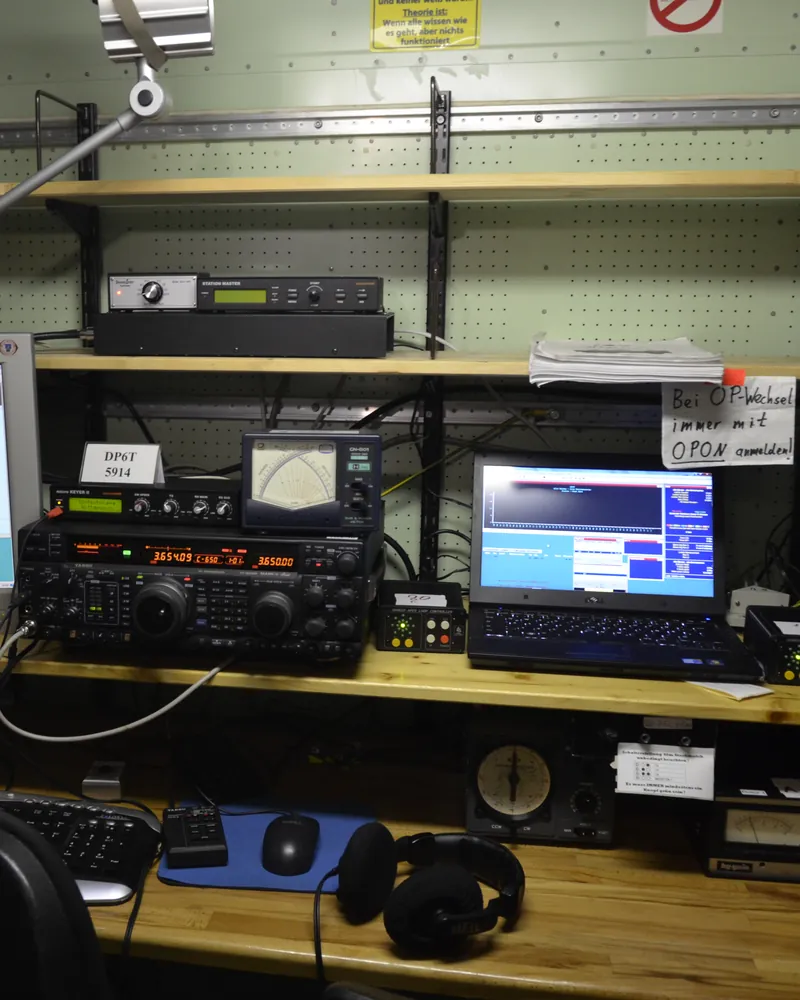
Contest station operating position: HF transceiver, two monitors with a logging program, headphones, microphone and paddle on the desk Contest station, Germany 2017 · photo: Ptolusque, CC BY‑SA 4.0, crop
How many points a QSO is worth in CQ WW when you’re operating from Poland QSO with another Polish station: 0 points, but it counts towards the zone and country multipliers. With another country in Europe: 1 point. With another continent: 3 points. The final score is the sum of points multiplied by the sum of CQ zones and countries, calculated separately on each band. 3 pts other continent 1 pt Europe, other country 0 pts Poland SP ↔ SP multiplier counts W JA VK ZS PY VE DL OK I G UR Score points× (CQ zones+ countries) each station once per band multipliers separately per band 6 bands: 160–10 m exchange in SSB: 59 15 RS report + CQ zone
Points from a Polish station. Other continent: 3 points; other country in Europe: 1 point; SP with SP: 0 points, but the first such QSO on a band gives the country and zone 15 multipliers. The prefixes on the wheels are just examples.
When24.10 00:00 UTC – 25.10 23:59:59 UTC
in Poland: Sat 02:00 – Mon 00:59
Bands160, 80, 40, 20, 15, 10 m
Exchange59 15
Points3 / 1 / 0 (continent / Europe / SP)
MultipliersCQ zones + countries (DXCC, WAE, IG9/IH9), on each band separately
PowerQRP 5 W · Low 100 W · High 1500 W
LogCabrillo, by 27.10 23:59 UTC, only via cqww.com
CW part28–29.11, exchange 599 15

A short summary of the CQ WW DX 2026 rules. Before you start, read the full rules, especially the category definitions.

48 hours of CQ WW DX SSB 2026 in UTC and Polish time The contest runs from Saturday 24 October 00:00 UTC to Sunday 25 October 23:59 UTC. In Poland that’s Saturday 02:00 summer time. On Sunday at 01:00 UTC the clocks in Poland go back from 03:00 to 02:00, so the hour from 02:00 to 03:00 occurs twice. The contest ends in Poland on Monday 26 October at 00:59 winter time. You keep the log in UTC, which does not change. UTC 00 03 06 09 12 15 18 21 00 03 06 09 12 15 18 21 00 Saturday 24.10 Sunday 25.10 PL summer time (CEST) · UTC+2 winter time (CET) · UTC+1 02 05 08 11 14 17 20 23 02 04 07 10 13 16 19 22 01 start: Saturday 02:00 PL end: Monday 00:59 PL 25.10 01:00 UTC · in Poland 03:00 → 02:00 the hour 02:00–03:00 occurs twice in Poland; officially the second is “2a” In the log and in the Cabrillo file everything is in UTC — that timeline doesn’t jump.

← swipe sideways →

Contests are logged in UTC. In Poland they start on Saturday at 02:00, and end on Monday at 00:59. On Sunday at 01:00 UTC the clocks in Poland go back by one hour. The hour from 02:00 to 03:00 Polish time occurs twice that night, and officially the second is called “2a”. UTC keeps flowing without a jump.
Sunday 25 October, 01:00 UTC

Clock change: UTC does not go back

On Sunday 25 October at 01:00 UTC Poland returns to Central European Time: at 03:00 summer time the clocks go back to 02:00. The change falls in the middle of the CQ WW.

UTC--:--:--universal time · in the log
Poland--:--:--CEST · UTC+2
live, based on your device’s clock

Nothing changes in the log. Hams log QSOs in UTC, and that time runs evenly all year. Only the difference between UTC and your watch changes: before the switch it is 2 hours, after the switch 1 hour. A sked arranged “at 20:00 UTC” meant 22:00 in summer, and from 25 October it means 21:00 Polish time.

The hour from 02:00 to 03:00 occurs twice that night. At 03:00 summer time the clocks return to 02:00 winter time. The regulation marks the repeated hour with the letter “a”: from “hour 2a minute 01 to hour 3a minute 00, after which comes hour 3 minute 01”. It’s a good night to avoid logging by hand from the wall clock. The clocks alongside show this live, and the button replays that night 30 times faster.

After the change, check the clocks in your gear. A computer with the Polish time zone and automatic DST will adjust itself, and a logger working in UTC will not notice the change. Adjust by hand only the clocks that show local time, for example in the radio. Leave clocks set to UTC alone. FT8 and MSK144 need a well synchronised clock, so I keep a UTC clock handy. I write about my first FT8 QSO in the article FT8 on 2 m.

What’s next

November and December in brief

These dates have also gone into the countdown on the home page. When their time comes, I’ll describe them in more detail.

17.11 · 23:45 UTC

Leonids

Nodal maximum according to the IMO (Maslov’s forecast: 16:00 UTC), ZHR about 15, very fast meteors: 71 km/s. Moon in the first quarter. The dust trails from 17–19 November are expected to produce only weak activity.

28–29.11 · 48 h

CQ WW DX CW

The Morse (CW) part of the same contest. Exchange from Poland: 599 15. Log by 1 December, 23:59 UTC.

14.12 · 14:00 UTC

Geminids

According to the IMO the most reliable of the major showers: ZHR 150, 35 km/s, no Moon. The peak falls in Poland during the day, so it’s worth watching on the nights of 13/14 and 14/15 December. The radiant rises in the evening and is highest around 02:00.

12–13.12 · 48 h

ARRL 10 m

Contest only on the 10 m band. You may operate at most 36 of the 48 hours. DX stations, including Polish ones, send a serial number. Phone: 2 points, CW: 4 points.

Sources

Where do these dates and figures come from

  1. World Organization of the Scout Movement: JOTA‑JOTI 2026 · www.scout.org
  2. WOSM: “Scouts worldwide connect in largest digital Scouting event” (22.10.2025) · www.scout.org
  3. JOTA‑JOTI: JOTA page and list of national coordinators · www.jotajoti.info
  4. WOSM: “Manual for amateur radio activity” (2024) and the Polish version “Podręcznik do ćwiczeń radioamatorskich” · www.jotajoti.info
  5. ARRL: Jamboree‑on‑the‑Air · www.arrl.org
  6. ZHP: JOTA‑JOTI 2026 · zhp.pl
  7. ScoutLink: JOTA‑JOTI 2026 · www.scoutlink.net
  8. International Meteor Organization, J. Rendtel (ed.): “Meteor Shower Calendar 2026”, IMO INFO(3‑25) · www.imo.net
  9. NASA: Orionids · science.nasa.gov
  10. R. Suggs NN4NT: “Meteor Scatter: Science Behind the Pings”, HamSCI Workshop 2026 · hamsci.org
  11. IARU Region 1 VHF Handbook, version 10.03 (MSK144 on 2 m) · www.iaru-r1.org
  12. CQ World‑Wide DX Contest: 2026 rules · www.cqww.com
  13. CQ WAZ: list of CQ zones · www.cqww.com
  14. ARRL: contest calendar and ARRL 10‑Meter Contest 2026 rules · contests.arrl.org
  15. Regulation of the Prime Minister of 4.03.2022 on the introduction and cancellation of daylight saving time (Dz.U. 2022 poz. 539) · api.sejm.gov.pl
  16. Directive 2000/84/EC on arrangements for daylight saving time, Art. 3 · eur-lex.europa.eu

I downloaded the 2026 IMO calendar from an archived copy, as the imo.net site is being rebuilt. The IMO notes that data may be updated later. Check the contest times and rules in the current regulations before you start. The November and December dates refer to 2026.

Next step

Switch on the radio this weekend

Over the weekend of 16–18 October, listen out for “CQ Jamboree” carrying across the band. On the nights of 20/21 and 21/22 October check 144.360 MHz. If you hear me or anything interesting, sign the guestbook.