Home  /  D-STAR, C4FM and DMR

Guide · digital modes

D-STAR, C4FM, DMR

On Polish repeaters, alongside FM, three mutually incompatible digital systems coexist. Each was created elsewhere and for a different reason; all three process voice with the same codec, yet a radio for one won’t talk to another. Below: where they came from, what really sets them apart, how many there are in Poland, and which one to start with.

3 standards 1 codec · AMBE 438 repeaters in Poland a hotspot supports them all
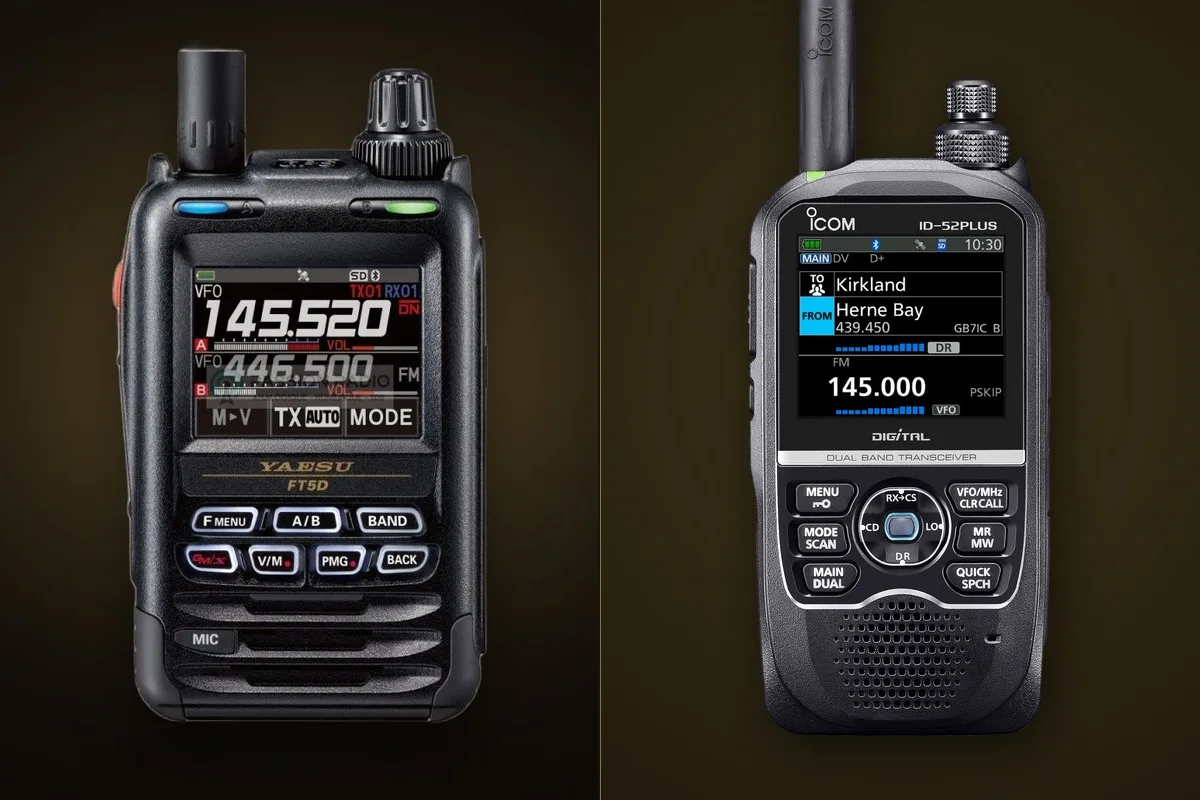
Two digital handheld transceivers side by side: a Yaesu FT-5D with C4FM and an Icom ID-52E PLUS with D-STAR
the same bracket · C4FM and D-STAR
Origins

Where the three came from

If a single standard had been created, this page wouldn’t exist. Three appeared because each had a different parent and a different goal.

2001 · JARL

D-STAR

Written from scratch for radio amateurs by the Japanese association JARL, with a network in mind where the address is the callsign. The oldest, the most “amateur” in spirit — and the only one without commercial roots.

2013 · Yaesu

C4FM / System Fusion

Yaesu’s answer to D-STAR: also for amateurs, but entirely proprietary. Built for maximum simplicity of entry — you buy a radio, enter your callsign and get on the air. No registration.

2005 · ETSI

DMR

A professional standard, created for firms, security and services. It made its way into amateur radio through the back door when Chinese radios dropped in price to a hundred-odd PLN — and today it is the most widespread in SP.

The specifics

Three systems side by side

The key differences on one screen. The “repeaters in SP” row comes from my database — multi‑mode machines are counted in every system they support.

D-STARC4FM / FusionDMR
Creator, yearJARL, 2001Yaesu, 2013ETSI, 2005
ModulationGMSK4FSK (C4FM)4FSK
Bit rate4800 bit/s9600 bit/s9600 bit/s
Voice codecAMBE, 2400 bit/sAMBE+2AMBE+2
Channel12.5 kHz12.5 kHz12.5 kHz with TDMA
Calls per channel112 — two time slots
Addressingcallsigncallsign entered in the radioID number + talkgroup
Registrationyes — one‑off at the gatewaynoyes — DMR ID number
Network backboneircDDB + REF/XRF/DCS/XLX reflectorsWIRES-X (Yaesu) and community-run YSF and FCSBrandMeister, DMR+, FreeDMR, TGIF
Data alongside voice1200 bit/s all the time — GPS, text, descriptionin DN mode, half the stream is datashort messages and GPS, depending on the network
HardwareIcom, KenwoodYaesua dozen-plus manufacturers, from Motorola to Anytone
Cost of entryhighmediumlowest
Repeaters in SP6274112
?

If all three use the same kind of codec, why don’t the radios talk to each other? Because a codec is only a way of compressing voice. What differs is everything around it: modulation, framing, addressing and the network protocol. It’s a bit like sending the same MP3 file once by post, once by fax, and once by carrier pigeon.

What they’re like to use

Each has its own character

D-STAR — a network that thinks in callsigns

D-STAR’s biggest advantage isn’t visible in a table: callsign routing. You enter your friend’s callsign and the network itself finds which gateway they last transmitted through. You don’t need to know where they are or which group they joined. Data rides alongside the voice, so the display shows who’s transmitting and from where before they finish the first sentence. The price for that: a one-off registration and the most expensive gear of the three.

C4FM — out of the box and on the air

Fusion is unbeatable at the start: zero paperwork. You enter your callsign in the menu and you’re on the network. The radio switches itself between digital and analogue FM (the AMS function), so the same channel serves both worlds. In VW mode the entire bitrate goes to voice — and you can hear it straight away, as it sounds the best of the three. The downside: one company, one manufacturer and one ecosystem.

DMR — the most of everything, the least intuitive

DMR wins on numbers: the most repeaters in Poland, the cheapest radios, the largest networks. You pay for it with a learning curve: you need to obtain an ID number, and you don’t program radios from the keypad — you load a ready-made codeplug from a computer, a file with channels, talkgroups and colour codes. In return it’s the only one that fits two independent conversations into one channel by splitting time into two slots.

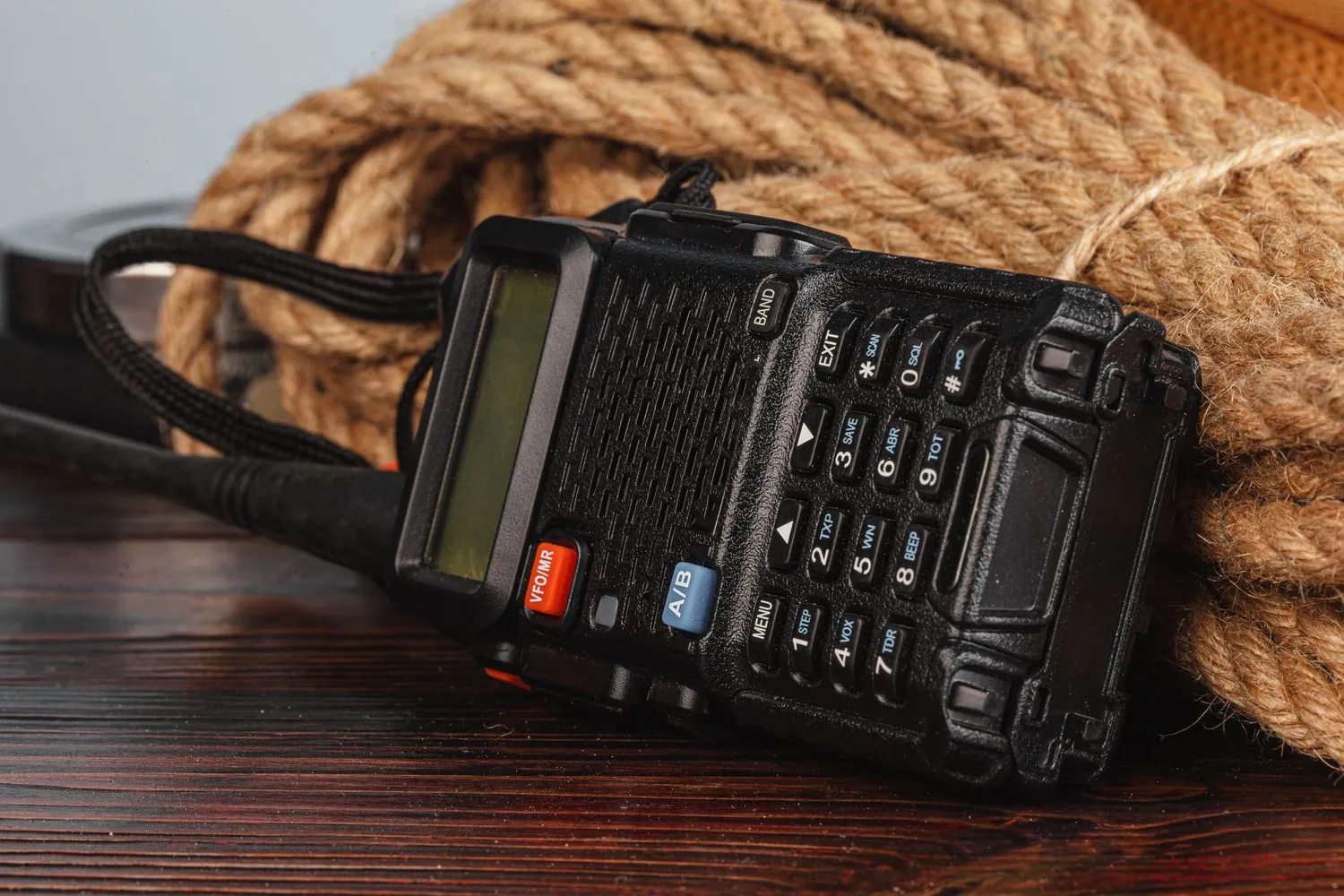
A dual-band handheld on the desk — typical access to each of the three digital networks handheld — your entry into any of the networks
Reality

How many there are in Poland

Figures from the repeater database — 438 entries, up to date. The total is higher than the number of repeaters, because many machines support several systems at once.

DMR — 112most numerous The largest digital network in Poland and the cheapest way in. If you want to be sure you’ll catch something from home without a hotspot, the statistics are on DMR’s side.
C4FM — 74second The fastest‑growing of the three, mainly because many clubs are replacing old analogue machines with Yaesu gear that handles FM and digital on the same channel.
D-STAR — 62third, but stable 60 of them run on 70 cm, only 2 on 2 m. Twenty-four are multi‑mode machines, supporting D-STAR alongside DMR or C4FM.
FM — 275still king Analogue still has more repeaters in Poland than all the digital systems combined. Digital is an add-on to FM, not its successor — at least for now.
Warsawusing my QTH as an example From Mokotów: DMR on 438.775 (SR5WU, Ursynów) and 438.500 (SR5WW, the EC Kawęczyn chimney), C4FM on 438.900 (SR5WI), and the nearest D-STAR is only on 438.600 (SR5WC) from the power station chimney near Pruszków.

Sound

What it sounds like

voice quality

More bits, better audio

You can hear the difference exactly where the table points. D-STAR gives the codec 2400 bit/s and sounds the most “telephone-like”. C4FM and DMR use the newer AMBE+2, and Fusion in VW mode can give the full 9600 bit/s to voice — the best-sounding option of the three, at the cost of no room for data.

range

The cliff effect

A common feature of all three: no noise. The signal is crystal clear right up to the moment when error correction cannot keep up — and then, in a single step, it breaks up into metallic “R2D2” and goes silent. On FM you can hear the other station moving away; on digital it just disappears. But up to that threshold it is clean, where FM would have been noisy long before.

Common denominator

One codec for three standards

§

AMBE and AMBE+2 are the closed, proprietary, patented technology of the American company DVSI. In practice that means every amateur digital radio contains a chunk of licensed hardware or software that nobody outside can inspect or legally re-implement. For a community that’s been building its own transmitters for a hundred years, that’s a bit of a sore point — and that’s exactly why M17 was created: a fully open amateur standard with the free Codec2 codec. There isn’t much hardware yet, but popular hotspots support it.

You can bridge it

Bridges between systems

A radio for one standard won’t receive another, but the networks can interconnect on the internet side.

Transcodingon the server XLX reflectors can decode audio from one system and encode it in another. The Polish XLX132 has module C permanently bridged to the national DMR network — speaking via D-STAR, DMR users hear you as well.
The cost in qualitywhy it sounds worse Every bridge means unpacking and repacking the audio with another codec. Distortion builds up, so over two bridges the other station sounds noticeably worse than direct.
Hotspot as a universal keyMMDVM A single MMDVM board with Pi-Star or WPSD supports D-STAR, DMR, C4FM, and often P25, NXDN and M17 as well. You switch it in your browser — though of course you can only use one at a time.
Decision

Which one to start with

The honest answer is: the one that works in your area. Check first what you have within range — only then buy a radio.

1

Want to start today, with no paperwork

Go for C4FM. No registration, no codeplug — enter your callsign in the menu and you’re on the air. The radio will also handle plain FM on the same channel.

2

Want the cheapest option and the most repeaters

Go for DMR. Lowest price point and the densest network in Poland. Expect an evening spent programming a codeplug — or ask someone at the club for a ready-made one.

3

Like the network to know where you are

Go for D-STAR. Callsign routing, GPS position in the background of every transmission and the most “radio-like” approach of the three. You’ll pay the most and go through registration once.

4

No repeater within range

Then the standard barely matters — buy a hotspot that supports all three, and choose the radio for ergonomics rather than the network.

Cheat sheet

Mini-glossary

AMBE
a proprietary codec that turns voice into a bitstream
TDMA
splitting a channel into time slots — DMR’s trick for two simultaneous conversations
Talkgroup
a DMR talkgroup — the equivalent of a “room”
Codeplug
a file with the full configuration of a DMR radio, uploaded from a computer
Color Code
a number 0–15 distinguishing neighbouring DMR repeaters
WIRES-X
Yaesu’s proprietary network linking C4FM repeaters
YSF / FCS
community C4FM reflectors, independent of Yaesu
AMS
automatic recognition of whether it’s FM or digital
DN / VW
C4FM modes: voice with data, or voice only at higher quality
Reflector
a server linking many repeaters into one conversation
MMDVM
a universal hotspot board supporting all the systems
M17
an open amateur standard with the free Codec2 codec
Next step

Starting with D-STAR?

I’ve written a separate guide from scratch: callsign registration, the four fields in the radio, DR mode, reflectors, a hotspot and your first QSO — all in Polish and step by step.