Home  /  Articles  /  Emergency communications

Article · emergency communications

When the network goes quiet:
radio in reserve

A mobile phone works as long as the power, the base station and the backhaul behind it are working. A flood or a wide‑area power outage is enough for one of those links to fail. A radio on its own battery needs none of them. I show how to put together a four‑tier communications plan, what frequencies to monitor for emergency traffic, how HF links hundreds of kilometres without repeaters, and how to send a message so it arrives word for word.

PACE plan 3760 · 7110 kHz 145.500 MHz NVIS 0–650 km
High‑voltage pylons and tower blocks silhouetted against a rusty dusk sky A high‑voltage line and a city at dusk — the mobile network is hanging off those wires too
What really switches off

A chain that breaks one link at a time

A power outage doesn’t silence everything at once. First to go is what has no reserve at all, then what runs out of batteries. What remains is kit that has its own power and someone who knows how to use it.

  1. 0 minutes

    The power goes out

    The router, fibre terminal and VoIP landline go dark immediately unless they have their own UPS. Your mobile still has signal — the base station has switched to batteries.

    ● home internet
  2. first few hours

    Mobile network on batteries

    The telecoms industry states that every base station in Poland has backup power for at least a few hours. After that you need a generator, and for the generator — a passable road.

    ● sites without a generator
  3. 24 hours

    What has its own power keeps working

    A radio with a charged battery, an HF station on a battery, a repeater with standby power. A repeater without backup goes quiet together with the grid — it’s worth knowing in advance which is which.

    ● radio on a battery
  4. the following days

    What you can recharge stays on

    Power draw and charging matter: a solar panel, the car socket, the neighbour’s generator. A handheld on standby will last a long time; a mobile rig transmitting at full power — not for long.

    ● panel + LiFePO4

Kłodzko Valley, September 2024

On 16 September 2024 mobile operators reported that in the Kłodzko Valley nearly half of base stations were down. Reason: lack of power and flooding. Crews were hooking up generators wherever possible; to some sites there was simply no access.

The day before, three radio amateurs from the Wrocław club SP6PRT — SQ6ILI, SQ6ILS and SQ6VY — went with comms kit and generators to the emergency operations centre in Kłodzko. On the way, near Wolibórz, they supported firefighters with radios while rescuing a woman with three children whose car was swept away by the river. In Kłodzko, two base radios, mobile radios in off‑road lorries and handhelds worked as a mobile communications hub during the evacuation.

Nothing here was technically spectacular: a few transceivers, batteries and people who know how to use them. And that’s exactly the point of this whole article.
Kłodzko Valley · 16.09.2024 ~50%

of base stations were out — due to power loss and flooding, according to statements from operators Orange, Play and Plus.

Source: wroclaw.se.pl, 16.09.2024 · SP6PRT report, 16.09.2024
Communications plan

Four tiers: P · A · C · E

PACE is a communications planning method devised in the US military, now also used by services and local authorities: Primary, Alternate, Contingency, Emergency. The point is that at the moment of crisis no one needs to figure out what to do next. Each subsequent tier is less convenient, but depends less on someone else’s infrastructure.

  1. P

    Phone, SMS, messaging appPrimary

    As long as it works, there’s no reason not to use it. Agree in advance, though, how long you’ll wait for a reply before stepping down a tier.

    mobile network
  2. A

    2 m / 70 cm repeaterAlternate

    A handheld via a repeater on a high mast reaches tens of kilometres. That too is someone else’s infrastructure: it works as long as the repeater has power.

    e.g. SR5W · 145.750 MHz · −0.6 MHz · CTCSS 127.3 Hz
  3. C

    Simplex: radio to radioContingency

    With no intermediary at all. Range depends on antenna height and terrain, so agree a specific frequency and get higher if you can’t hear anything.

    145.500 MHz · 433.500 MHz · FM
  4. E

    HF: NVIS and digitalEmergency

    An HF station on a battery and a bit of wire strung low over the ground link for several hundred kilometres without repeaters or the internet. When voice disappears into the noise, there’s digital — for example JS8Call.

    3760 kHz night · 7110 kHz day
← convenience · fast, for everyoneslower, but on your own power supply · independence →
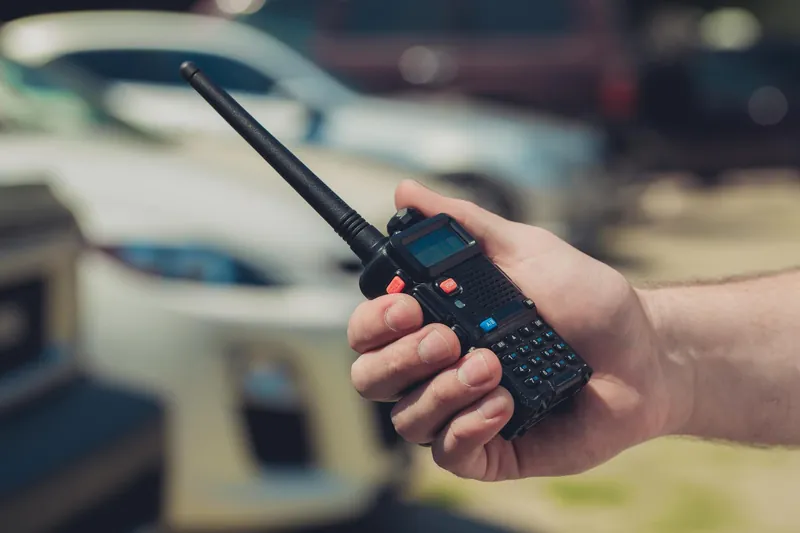
A hand holding a dual‑band handheld with extended antenna and keypad, blurred cars in a car park behind A dual‑band handheld — tiers A and C in one radio
!

In a PACE plan, arrangements matter more than equipment: who, on what frequency, at what time. Without them two working radios can miss each other — each will be listening somewhere else.

Tool

Your PACE card

Choose a means of communication for each tier, enter an assembly point and listening times. The card on the right updates live — print it and put it in your wallet, in the radio box and on the fridge. Without an amateur radio licence the generator only suggests PMR446, CB and the phone.

Who
Plan tiers

Details auto‑fill once you choose a means — you can edit them, e.g. enter your repeater.

When and where
Contacts
COMMUNICATIONS PLANP · A · C · E
Filip SQ5CBA
  1. P
  2. A
  3. C
  4. E
Listening: Assembly point: Contacts: Rule: no response in the listening window = I step down one level.
IARU R1 · HF emergency centres of activity: 3760 · 7110 · 14300 · 18160 · 21360 kHz · sq5cba.pl

The card is saved only in this browser. When printing you get just the card, black on white.

Wallet cheat sheet

Where to look for emergency traffic

IARU Region 1, of which Poland is a member, designates centres of activity for emergency traffic on HF. On VHF/UHF there’s no single frequency for the whole region — that role is taken by national calling channels.

Scroll the table sideways →

BandFrequencyPurposeSource
HF · IARU R1 emergency centres of activity (±20 kHz)
80 m3760 kHzLSB · NVIS in the evening and at night, regional coverageIARU R1
40 m7110 kHzLSB · NVIS by day, nationwide coverageIARU R1
20 m14300 kHzUSB · international, long‑haul pathsIARU R1
17 m18160 kHzUSB · long‑haul by dayIARU R1
15 m21360 kHzUSB · long‑haul by dayIARU R1
VHF/UHF · FM calling frequencies
2 m145.500 MHzFM simplex · calling channel, in many countries also the emergency channelIARU R1
70 cm433.500 MHzFM simplex · calling channelIARU R1
Digital on HF
JS8 · 80 m3.578 MHzUSB · JS8Call’s default frequencyJS8Call
JS8 · 40 m7.078 MHzUSB · default, store‑and‑forward messagingJS8Call
No licence · no radio licence required
PMR446446.00625–446.19375 MHz16 analogue channels at 12.5 kHz spacing · 0.5 W ERP · fixed antennaPKE art. 145
PMR 3/14446.03125 MHzchannel 3, CTCSS code 14 · the customary hikers’ channel in the Polish mountains, not a services channelcustom
CB · channel 927.065 MHzcustomarily used to call for help · in the “PL” standard 27.060 MHzcustom
CB · channel 1927.185 MHzroad channel · in the “PL” standard 27.180 MHzcustom

IARU frequencies are centres of activity, not fixed channels — emergency traffic may take place up to 20 kHz away. CB: 26.96–27.41 MHz band, without a licence up to 4 W carrier power in AM and FM and 12 W peak envelope power in SSB (Dz.U. 2022 poz. 567). Polish CB radios in the “PL” standard have frequencies 5 kHz lower than the European “EU” — both radios must be set the same.

HF for short distances

NVIS: up and back

On HF we usually aim for a low radiation angle so the signal goes as far as possible. In an emergency you need the opposite: contact with the neighbouring county and voivodeship, at a distance beyond the reach of VHF. That’s what NVIS does — a wave sent almost straight up that reflects off the ionosphere and falls back like an umbrella.

Vertical antenna: groundwave weakens, reflected wave lands far away, dead zone in between IONOSPHERE · F dead zone signal returns far away groundwave weakens VERTICAL · LOW ANGLE
Vertical antenna, low angle. The ground wave fades quickly, and the wave reflected by the ionosphere lands far away. In between there’s a dead zone — a station in the neighbouring voivodeship may hear nothing.
Dipole low over the ground: the waves go steeply up and return like an umbrella, covering the area without a dead zone IONOSPHERE · F coverage from 0 to about 650 km — no dead zone LOW DIPOLE · NVIS
Dipole low over the ground. Most of the energy goes steeply up, returns within a few hundred kilometres and covers the whole area without a dead zone — usually from zero to around 650 km.

Three conditions to make it work

  • Frequency below critical. The wave must reflect off the F layer, not pass through it. A practical rule is about 15% below the critical frequency. At our latitudes that usually means 80 m in the evening and at night, 40 m in the day.
  • Antenna low. A horizontal dipole from 1/20 to 1/4 wavelength above ground; the optimum is about 1/4. On 80 m that’s 4 to 20 metres — two telescopic masts or two trees will do.
  • Patience with the band. By day the D layer attenuates low frequencies, so 80 m around noon can be dead, and after dark 40 m stops returning close-in. Note which band works at what time on a path you know.
BandDipole1/20 λ1/4 λ
80 m · 3.760 MHz37.9 m4.0 m19.9 m
40 m · 7.110 MHz20.0 m2.1 m10.5 m

Dipole length calculated as in the wire antenna calculator (λ/2 × 0.95) — cut a bit longer and trim for minimum SWR. The 1/20 λ and 1/4 λ columns are the hanging height range.

Equipment

Go-box: station in one box

A go-box is the radio, power and everything you need to get on the air, packed so that once you open the case it’s working in five minutes. It doesn’t have to be expensive. It must be complete and tested — preferably on an ordinary weekend, not on the day of the outage.

Exploded view of a go-box: radio, fused distribution block and battery in the case, around it an antenna, coax, headphones, card and notebook, a head torch and a solar panel 145.500 FM LiFePO4 · 12.8 V 20 Ah PACE 1 2 3 4 5 6 7 8 9
  1. Transceiver — a 2 m / 70 cm mobile or an HF set with VHF/UHF, bolted to the case frame.
  2. 12.8 V LiFePO4 battery — lighter than lead‑acid and tolerates deep discharge.
  3. Fused distribution block — each device on its own fuse, Anderson Powerpole connectors.
  4. Antenna — a wire dipole for HF and a VHF/UHF mag‑mount or telescopic antenna.
  5. Coax — two lengths, spare plugs and adaptors.
  6. Headphones and microphone — in a noisy command post you can’t work without headphones.
  7. PACE card and notebook — a pencil writes in the rain and in freezing conditions.
  8. Head torch — your hands must be free.
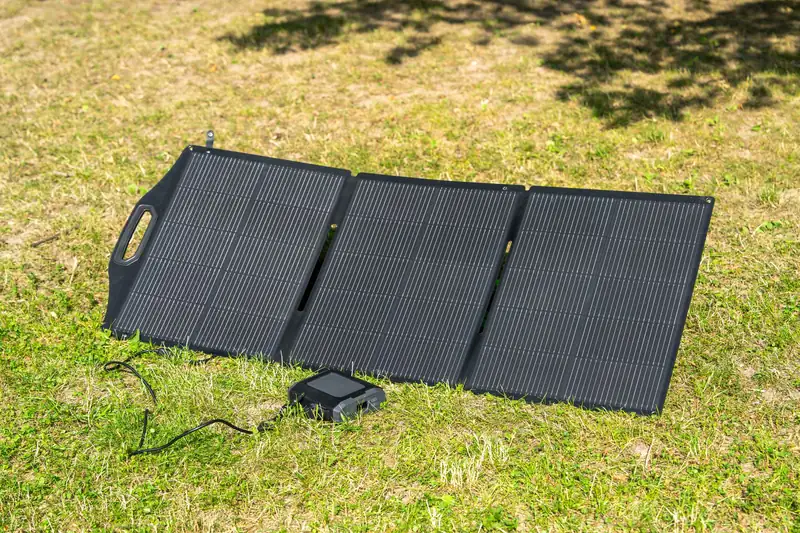
  9. Folding solar panel — with a LiFePO4 charge controller.

How long will the battery last

A radio draws little on receive and a lot on transmit. So it’s the average draw that matters, not the nameplate power. A VHF/UHF mobile at full power draws several to a dozen amps on transmit, and a fraction of an amp on receive; the exact figures are in your radio’s manual.

The example below assumes you listen 90% of the time and transmit 10%. That’s what emergency net operation usually looks like: lots of monitoring, short messages. Enter your own values in the field power calculator — it will also calculate the panel needed to keep the station running.

20 AhLiFePO4 battery
18 Ahavailable when discharged to 90% of capacity
1.54 Aaverage: 0.6 A receive, 10 A transmit for 10% of the time
≈ 12 hoperation without charging
A folding three‑section solar panel lying on grass, cabled to a small portable power station Folding panel on the grass — charging the battery when mains power hasn’t come back
IARU procedure

Emergency traffic has priority

All three IARU regions have adopted a common HF emergency traffic procedure. It’s short and worth learning by heart, because in a crisis no one will be looking it up.

Five rules on the air

  1. You hear the word “emergency”, “welfare traffic” or the Q‑code QUF — you stop transmitting and listen.
  2. Do not leave the frequency until you are sure someone else is helping. Do not transmit until you know you can help.
  3. Traffic is controlled by the station in distress, or a station it designates. You follow its instructions.
  4. Messages short, no unnecessary words. Write down everything you hear.
  5. You handle communications. Leave advising on and planning the response to the people and agencies responsible for it.
When?date, time, frequency
Where?incident location
What?what happened, what needs to be done
How?how help can be provided
Who?who can help
  • XY1ZZ“YX1AA, this is XY1ZZ, I have a message, over.”
  • YX1AA“This is YX1AA, ready, over.”
  • XY1ZZ“Message, start. Number four, X‑ray Yankee One Zulu Zulu, one eight three two. Address: hospital, Lake City. Text: two more ambulances needed on Harbour Street. End of message, over.”
  • YX1AA“Received number four, out.”

Example per the IARU procedure, with the sample callsigns from that document. You spell the callsign letters using the ICAO alphabet — the procedure permits only that alphabet.

MESSAGE · IARUthe check is calculated automatically
This is how it goes on the air

Preamble per IARU procedure: number, precedence, originating station, check (number of words in the text), place of origin, time and date in UTC. On VHF FM nets, a short preamble is enough: number, station of origin and time.

Emergency net: net control station in the centre, around it the command post, hospital, evacuation point and a field station; a distant station is linked via a repeater STATION CONTROL NCS Municipalcommand post Hospital Evacuationpoint Stationfield stationrelay station behindthe hill relay

A net with a single net control station

On a single frequency with ten stations, order is more important than power. One station directs the traffic — in the IARU procedure this is the station in distress or one it designates, in the jargon NCS. Field stations call only that station; it sets the order and decides who transmits the message.

A station that NCS cannot hear passes its traffic via a relay station. Each message gets a number, so you can check whether it arrived, and ask for a repeat of a specific word instead of the entire text.

No licence

The family needs a plan too

Not everyone at home has a licence and they don’t need one. For communications over a few streets, radios you can use in Poland without a licence are enough: PMR446 and CB. Transmitting on the amateur bands requires a licence — with one exception, which I cover below.

UHF · no licence

PMR446

16 analogue channels in 446.0–446.2 MHz, 0.5 W ERP, fixed antenna. Cheap, small, often on regular AA batteries. Range depends on terrain and buildings — in an apartment block it’s often much less than the box promises.

Agree one channel and one CTCSS code for the whole family and write them on your PACE card. In the Polish mountains it’s customary to use channel 3 with code 14 — that’s a hikers’ initiative, not a rescue services channel.

channel 1: 446.00625 MHz · channel 16: 446.19375 MHz
27 MHz · no licence

CB radio

40 channels in 26.96–27.41 MHz, up to 4 W in AM and FM and 12 W PEP in SSB. Higher power and a longer antenna than PMR, especially in a car.

Channel 9 is customarily used to call for help, channel 19 is the road channel. Mind the standard: Polish radios in “PL” mode have frequencies 5 kHz lower than European “EU” — both radios must be set the same.

channel 9: 27.065 MHz (PL 27.060) · channel 19: 27.185 MHz (PL 27.180)
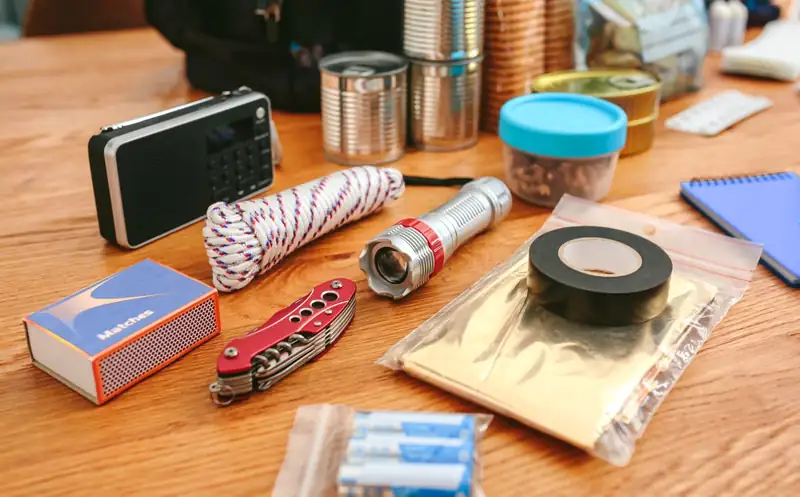
An emergency kit laid out on a wooden table: a radio with display, torch, rope, penknife, matches, insulating tape, batteries, a rescue blanket and tins Radio, torch, batteries — a home emergency kit
§

The ITU Radio Regulations (provision 4.9) state that nothing in them forbids a station in distress from using any available means of radiocommunication to attract attention, make known its position and obtain assistance. This is an exception for danger to life, not a loophole for “testing” a radio on the amateur bands without a licence.

Law and people

Who does this in Poland

Amateur radio emergency communications rest on a few provisions of the international Radio Regulations, on Polish radio law and — above all — on clubs that practise before anything happens.

ITU Radio Regulations · 25.3

Third‑party messages

Amateur stations may relay international messages on behalf of third parties only in emergencies and disaster relief. Whether and how this provision applies is decided by the administration of each country.

ITU Radio Regulations · 25.9A

Encouragement to administrations

Administrations are encouraged to enable amateur stations to prepare for, and to conduct, communications in support of disaster relief. This provision was added by WRC‑03.

ITU Radio Regulations · 4.9

Station in distress

No provision of the Regulations forbids a station in distress, or a station assisting it, from using any available radio means to call for and obtain assistance.

In Poland the use of radio equipment is governed by the Electronic Communications Law (Prawo komunikacji elektronicznej) of 12 July 2024 (Dz.U. 2024 poz. 1221). Transmitting on the amateur bands requires a licence — I explain how to get one in the licence guide.

SP EmCom, clubs and exercises

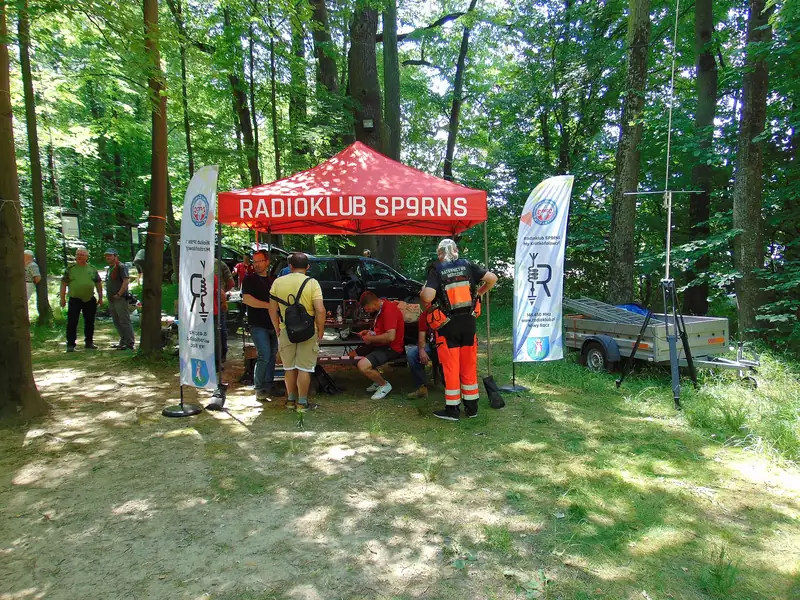
Within the structure of the Polish Amateur Radio Union (PZK) there is SP EmCom — the unit responsible for amateur radio emergency communications, led by a coordinator appointed by the PZK Presidium. Local branches collect a roster of radio amateurs ready to help, and clubs train in the field. The SP9RNS radio club from Nowy Sącz, for example, invited people to the EmCom Polska emergency communications exercise on 145.500 MHz, with CB (channel 19) and PMR (channel 3) users taking part.

  • 1997Millennium Flood. When telephones were down and there was no power, radio amateurs maintained communications on the 80 m band. SP8BWR recorded a fragment of that traffic on cassette.
  • 2024Flood in the southwest. The SP6PRT club supported the crisis centre in Kłodzko with communications, and in Wrocław announced 145.550 MHz simplex and the SR6WR repeater as channels for exchanging information on the flood situation.
  • 2×/yearGlobalSET. An IARU exercise organised since 2006: it checks how the emergency frequencies work between regions and practises passing messages according to the IARU procedure.
A red tent with ‘Radioklub SP9RNS’ in a forest, with club banners beside it, a beam on a tripod and radio amateurs, one in orange rescue gear SP9RNS operating position in Stróże, 2022 · photo: Zalasem1, CC BY-SA 4.0, Commons
A plan for Saturday and Sunday

Get ready in one weekend

None of this requires a lot of money. It needs one free weekend and trying everything out in practice before it’s really needed.

1

Print your PACE card

From the generator above, one for every member of the household. In a plastic sleeve, the card will survive in a wallet even in the rain.

2

Program the channels

Store your repeater, 145.500 and 433.500 MHz in the radio’s memory under easy‑to‑remember numbers. I show how to do this step by step in the radio programming guide.

channel 1 · repeater · channel 2 · 145.500 · channel 3 · 433.500
3

Check the battery under load

Not by checking the open‑circuit voltage, but by transmitting for a few minutes and watching the voltage drop. A battery that’s sat in the cellar for a year can surprise you.

4

String up an NVIS dipole

An 80‑ or 40‑metre dipole a few metres above the ground, and a test with a mate 100–300 km away. Note which band works at what time.

3760 kHz in the evening · 7110 kHz at midday
5

Make a plan with the family

PMR channel, CTCSS code, assembly point and listening times. One chat over dinner, zero cost.

6

Practise a message

Send a short message to a fellow ham following the IARU procedure and check it arrived word for word. Then ask your PZK branch about the SP EmCom register.

Next step

Work out the power supply

The weak spot in a go‑box is usually the battery. The calculator will work out how many amp‑hours you need for a day’s operation and what panel will keep the station alive.