Home  /  Curiosities  /  Digital Małopolska and 23 cm

Curiosities · repeater networks

Digital Małopolska
and the 23 cm band

A dozen or so years ago a group of enthusiasts from Kraków and Podhale built a network of D‑STAR and DMR repeaters from Chorągwica near Wieliczka to Gubałówka. Today part of that network is still on the air, part is silent, and one of its founders is encouraging a refresh. While we’re at it, we look one floor up, to the 23 cm band: in Poland there are twenty licences for FM and digital repeaters on 1.2 GHz, according to SP9SVH more and more people have gear that covers it, and the Galileo issue is hanging over it.

SR9UVM · SR9KR · SR9UVT DMR TG 26093 “KPGK” D‑STAR REF032 A 23 cm: 1298 / 1270 MHz
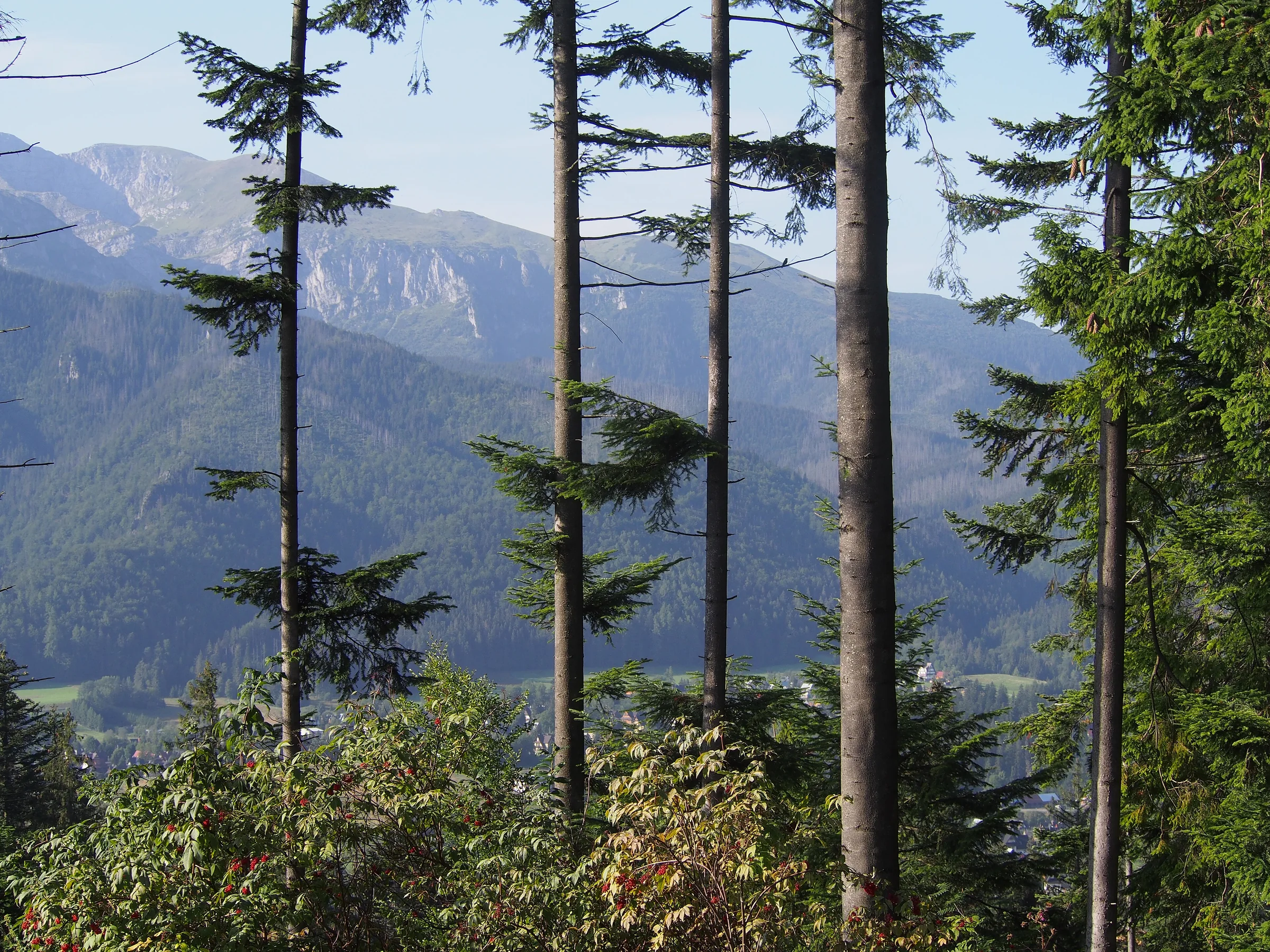
Panorama of the Tatras at sunset, mist lying over the valleys, golden clouds in the sky Tatras at sunset, view from Podhale · photo by Qvidemus, CC BY-SA 3.0 pl, crop
How this article came about

A message from Kraków

After some updates to the repeater map (SR9KR, SR9UVM, SR9UVZ, SR9UVO), Krzysztof SP9SVH, a co‑creator of the network described here, wrote back as follows:

Hi Filip, I’d be very happy to, but the group that was very active a few years ago and did a lot of good work, building practically the entire D‑STAR and DMR network in Kraków and Podhale (SR9KR, SR9UVM, SR9UVT, SR9UVP, SR9UVR, SR9UVZ, SR9UVO and a few other FM ones), is now practically inactive. Unfortunately, many have run out of steam — a shame. The www.kpgk.pl website also hasn’t been updated for a long time, but perhaps this is a nudge to refresh things :)

If you need any information, just write — I’m in close contact with the repeater operators from Kraków, Podhale, Tarnów and the Sącz region.

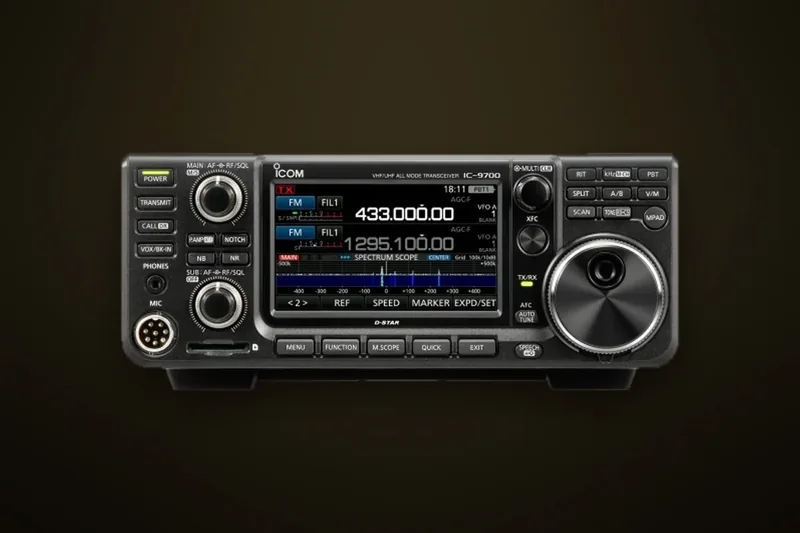
Perhaps it’s worth adding the 23 cm band to the map as well — there are a few working repeaters in Poland and more and more users of new equipment, e.g. the popular IC‑9700, which includes this band.

SP9SVHKrzysztof, ‘Chief Engineer’ of the SP9KPK club (KPGK)
spelling lightly normalised, quoted with the author’s permission

Two matters in one message

The first is history. The digital repeater network for Kraków and Podhale didn’t build itself. It was built by people from the Kraków–Podhale Amateur Radio Group (KPGK): they bought equipment, installed it on masts, replaced antennas and duplexers, and negotiated with site owners. We tried to reconstruct this from the kpgk.pl website, its archived copies, the UKE (the Polish Office of Electronic Communications) register and BrandMeister network data.

The second is the 23 cm band. We took the advice: from today the repeater map also shows repeaters on 1.2 GHz, and below we describe all twenty licences for FM and digital repeaters in this band. We also outline what it’s worth knowing about this band before you buy an antenna.

Krzysztof is in very good contact with the repeater operators in Kraków, Podhale, Tarnów and the Sącz region. If you’d like to get involved, write via the contact form on sq5cba.pl and we’ll pass the message on.
Map · status as of 16.10.2026

From Chorągwica to the Tatras

Six sites, ten repeaters linked to KPGK. Click a point to see frequencies, history and current status. A green outline means the repeaters at that site are visible on the network (BrandMeister or a D‑STAR reflector), and a grey dashed one that they have been silent for a long time. The blue diamonds are 23 cm repeaters in the region: SR23E in Myślenice and SR9NJ on Jaworzyna Krynicka.

KPGK repeater network map in Małopolska A schematic map of Małopolska from Kraków to the Tatras. Marked are the sites of repeaters built by the Kraków–Podhale Amateur Radio Group: Chorągwica near Wieliczka (SR9UVM and SR9KR), Koskowa Góra (SR9UVT and SR9UVP), Gubałówka (SR9VRJ and SR9X) and Gliczarów Górny (SR9UVZ and SR9UVR), as well as now‑silent Kochanów (SR9UVO) and Luboń Wielki (SR9UVL). The dashed lines show the historical scheme of permanently linking the D‑STAR repeaters from Kraków and Koskowa Góra to SR9UVZ in Podhale according to the KPGK list from 2017, overlaid on today’s positions. Diamonds mark the region’s 23 cm repeaters. 49.5°N 50.0°N 19.5°E 20.0°E 20.5°E 21.0°E SLOVAKIA MAŁOPOLSKA ŚLĄSKIE ▲ Tatras Kraków Tarnów Nowy Sącz Nowy Targ Wadowice Krzeszowice D‑STAR permanently linkedto SR9UVZ (KPGK list, 2017) SR23E · Myślenice SR9NJ · Jaworzyna ChorągwicaSR9UVM · SR9KR Koskowa GóraSR9UVT · SR9UVP GubałówkaSR9VRJ · SR9X Gliczarów GórnySR9UVZ · SR9UVR KochanówSR9UVO Luboń WielkiSR9UVL
on the networksilent23 cmD‑STAR link

Sources for status: BrandMeister API (DMR), list of stations connected to the REF032 reflector (D‑STAR), UKE register of licences as of 30.09.2026, kpgk.pl.

Elevations of KPGK repeater sites Profiles of the hills to scale: Chorągwica about 420 metres above sea level with an RTCN mast 286 metres tall, Koskowa Góra 866 metres, Luboń Wielki 1022 metres, Gliczarów Górny from 900 to 1006 metres, Gubałówka about 1120 metres with an RTON mast 102 metres tall; for comparison Jaworzyna Krynicka 1114 metres. 0 m 250 m 500 m 750 m 1000 m 1250 m Chorągwica approx. 420 m + 286 m mast SR9UVM · SR9KR Koskowa Góra 866 m SR9UVT · SR9UVP Luboń Wielki 1022 m SR9UVL (silent) Gliczarów Górny village 900–1006 m SR9UVZ · SR9UVR Gubałówka approx. 1120 m + 102 m mast SR9VRJ · SR9X Jaworzyna Kr. 1114 m SR9NJ (23 cm) Elevation above sea level · vertical scale preserved

← swipe sideways →

Why these locations. On VHF the range is all about antenna height. Chorągwica is only about 420 m above sea level, but the RTCN mast is 286 m. Koskowa Góra, Luboń Wielki, Gliczarów and Gubałówka are between about 870 and 1120 m, and from Gubałówka and Gliczarów you can see the entire Tatras. Elevations (for Gliczarów: the village altitude range) from Wikipedia and site descriptions, approximate. The antennas are mounted higher.
KPGK history

How the network came about

KPGK was founded around 2008: in June 2012 the group wrote on its site that “four years have passed since KPGK was formed”. At the start of 2015 the group became a club at the Małopolskie Amateur Radio Society (PZK, the Polish Amateur Radio Union, Kraków regional branch), number 25 with the callsign SP9KPK.

  1. A visit to Łódź.

    Friends from the Łódź DIGITAL group help obtain a server and an Icom ID‑RP2C controller. The repeater is built at the SP7PHP club from four Motorola GM340 mobiles and two duplexers.

  2. SR9UVM goes on air at Chorągwica.

    After months of battling with the power supply, freezes and interference comes a trial start‑up. On the KPGK site it was written in one word: “Success!!!!”. Emitel makes its sites at Chorągwica and Gubałówka available for the repeaters.

  3. SR9UVZ in Podhale.

    The second D‑STAR repeater, on 439.200 MHz, starts up temporarily in Gliczarów Górny, because the Emitel building on Gubałówka is under renovation. It moves to its target location, i.e. Gubałówka, in 2014.

  4. Club SP9KPK and new hardware.

    SQ9MUR and SQ9PCH from Tarnów build new SR9UVM and SR9UVT using Motorola MTR2000s. On 10 October SR9UVR (D‑STAR) goes live at Kudłacze, and by early 2016 SR9UVP on Koskowa Góra goes on air.

  5. The arrival of DMR.

    22.10.2016 SR9UVR at Kudłacze starts working on DMR, on 26.10 SR9UVT joins, and by spring 2017 SR9UVM also moves to DMR (439.400 MHz). From 16.11 the Kraków D‑STAR is handled by SR9UVP from Koskowa Góra and SR9KR from ul. Basztowa. In the 2017 list SR9KR, SR9UVP and the SP9KPK hotspot are “automatically linked with SR9UVZ”, so Kraków and Podhale hear each other permanently.

  6. Kochanów, Luboń, Zakopane.

    At the turn of 2016 and 2017 SR9UVO launches in Kochanów (club HQ from 28.01.2017), in spring 2017 SR9UVL on Luboń Wielki comes on. On 3 January Fr Szczepan Gacek SP9VRJ, chaplain of radio amateurs and honorary club president, dies. His callsign is carried by the DMR repeater SR9VRJ for Zakopane, installed in autumn 2017.

  7. The first losses.

    By the end of 2023 the KPGK website is already reporting the dismantling of the repeaters from ul. Basztowa in Kraków. SR9UVL on Luboń works only locally, because the provider didn’t provide an internet connection, and later it stops working, “due to lack of cooperation with the site owner”. The group announces switching the DMR repeaters to colour code 9 and today they all use it.

  8. Back to Gliczarów.

    Thanks to OSP Gliczarów Górny (the volunteer fire service) SR9UVZ (now D‑STAR and C4FM) and SR9UVR (now FM in the FM‑POLAND network) get a new place on the fire station mast.

  9. SR9VRJ on new hardware.

    The repeater returns to service at RTON Gubałówka. This is the last entry on kpgk.pl.

  10. Today.

    Since November 2024 SR9UVO hasn’t connected to BrandMeister, and five network repeaters are missing from the UKE register (according to SP9SVH new licences are being issued for two). Meanwhile SR9UVM, SR9UVT and SR9VRJ still operate in talkgroup 26093.

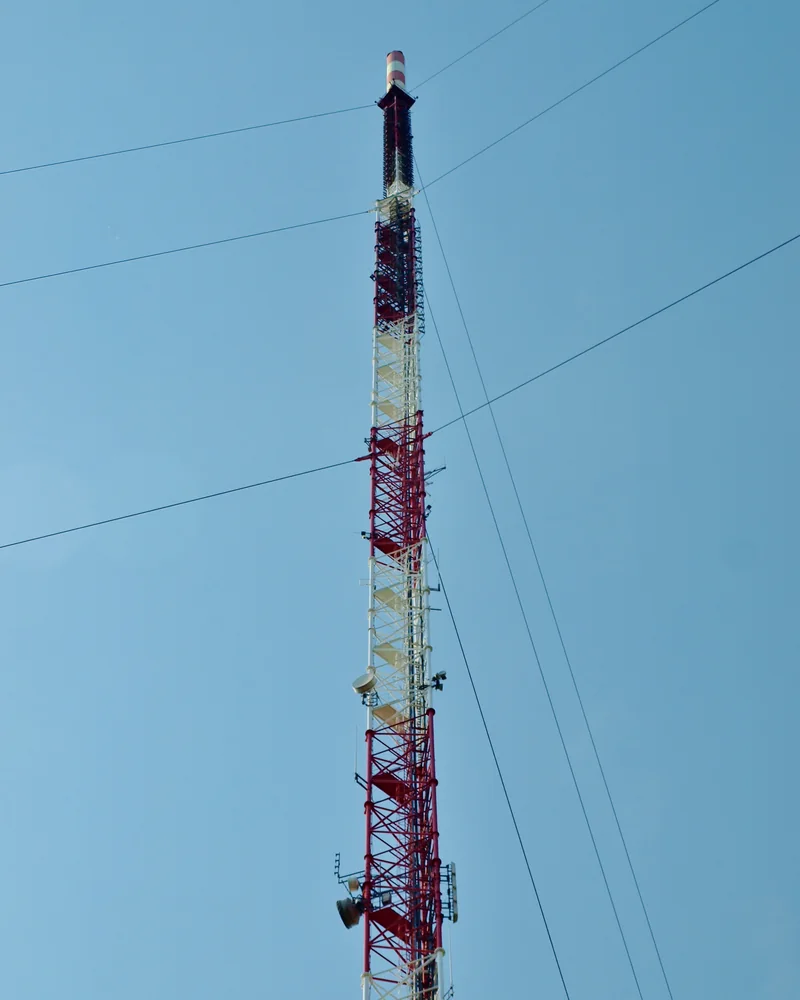
Red‑and‑white guyed mast seen from below against a blue sky RTCN Kraków‑Chorągwica mast, 286 m · photo: Wuhazet, CC BY-SA 3.0, crop
People

Who built it

According to the members list on kpgk.pl: president Jacek SQ9OKR, “Chief Club Engineer” Krzysztof SP9SVH, “Head of Network Maintenance” Kazimierz SP9SVE. Colleagues from SP7 and from Tarnów also helped with the build. The honorary president was Fr Szczepan Gacek SP9VRJ, organiser of radio amateurs’ rallies in Gliczarów Górny.

More than repeaters

Beacons and library

KPGK also put up beacons: SR9FHA on 50.426 MHz (Chorągwica), SR9FHK on 70.026 MHz (Kochanów) and SR9VHF on 144.484 MHz (Luboń Wielki). On kpgk.pl there’s also a home for Krzysztof OE1KDA’s “Polish Radio Amateur’s Library”.

Principle

“No compulsory fees”

This is how the group invited new members: everyone got a free callsign@kpgk.pl address. The network was built from donations, volunteer work and thanks to the goodwill of mast owners: Emitel, Polkomtel and OSP.

Status as at 16.10.2026

What works today

We checked the status on 16 October 2026 in three sources. For DMR: in the BrandMeister network (time of the repeater’s last contact with the server). For D‑STAR: on the list of stations connected to reflector REF032. Licences: in the UKE register.

CallsignWhereModeOutput / input MHzStatusUKE licence
SR9UVMRTCN ChorągwicaDMR, CC 9439.400 / 431.800onlinenot in the register; new pending*
SR9UVTKoskowa GóraDMR, CC 9439.2375 / 431.6375onlinenot in the register
SR9VRJGubałówkaDMR, CC 9438.7125 / 431.1125onlineuntil 10.12.2029
SR9KRChorągwica 100D‑STAR439.275 / 431.675on REF032until 10.12.2029
SR9UVPKoskowa GóraD‑STAR439.3625 / 431.7625on REF032not in the register
SR9UVZGliczarów GórnyD‑STAR, C4FM439.200 / 431.600on REF032not in the register; new pending*
SR9UVRGliczarów GórnyFM, FM‑POLAND439.300 / 431.700CTCSS 94.8 Hzuntil 05.12.2029
SR9XGubałówkaFM145.700 / 145.100analogueuntil 10.12.2029
SR9UVOKochanówDMR439.325 / 431.725last seen on BM 13.11.2024not in the register
SR9UVLLuboń WielkiDMR438.3625 / 430.7625last seen on BM 30.06.2023until 05.12.2029

“Online” means that on 16.10.2026 the repeater was connected to a BrandMeister server; that’s not the same as a reception report. * According to Krzysztof SP9SVH (15.10.2026) new licences for SR9UVM and SR9UVZ are in the process of being issued. “On REF032” means the repeater is on the list of stations connected to module A of the reflector. That list does not show times, so it doesn’t confirm that someone is actually talking through the repeater right now. We removed SR9UVO from the map on 15.10.2026.

How to get on the air through the network

  • DMR: talkgroup 26093 “KPGK” is permanently (statically) on time slot 2 of repeaters SR9UVM, SR9UVT and SR9VRJ, with colour code 9. On time slot 1, talkgroup 260 (Poland) is static. From a hotspot connected to BrandMeister you can also call talkgroup 26093 from outside the region.
  • D‑STAR: SR9KR, SR9UVP and SR9UVZ appear on reflector REF032 A. When they’re linked to the reflector, you’ll also hear them via a hotspot set to REF032 A. We explain how to configure the radio in the D‑STAR guide.
  • FM: SR9UVR is a node of the FM‑POLAND network. In Podhale you’ll open it with a 94.8 Hz tone.

How to freshen up the network

Krzysztof himself suggested it: “maybe that’s a reason to freshen things up”. Here’s what anyone can do straight away:

  • Traffic on talkgroup 26093. A repeater with no traffic is easily seen as unnecessary, and a regular weekly net gives a reason to keep it maintained.
  • Reports from the field. Write where you’re listening from and on what you hear SR9UVT from Koskowa or SR9VRJ from Gubałówka. We’ll add such data to the map entry.
  • Help with licences and sites. Missing licences and sites without internet access are typical jobs for new people in the club.
  • Change notifications. Report any change to a repeater using the “Report a repeater” button on the map. We add them after checking.
A view between slim spruces towards Zakopane and the Giewont massif
From Gubałówka towards Zakopane and Giewont · photo: Agnieszka Kwiecień, Nova, CC BY-SA 4.0
Green bands of fields on a slope, a telecoms tower on the summit
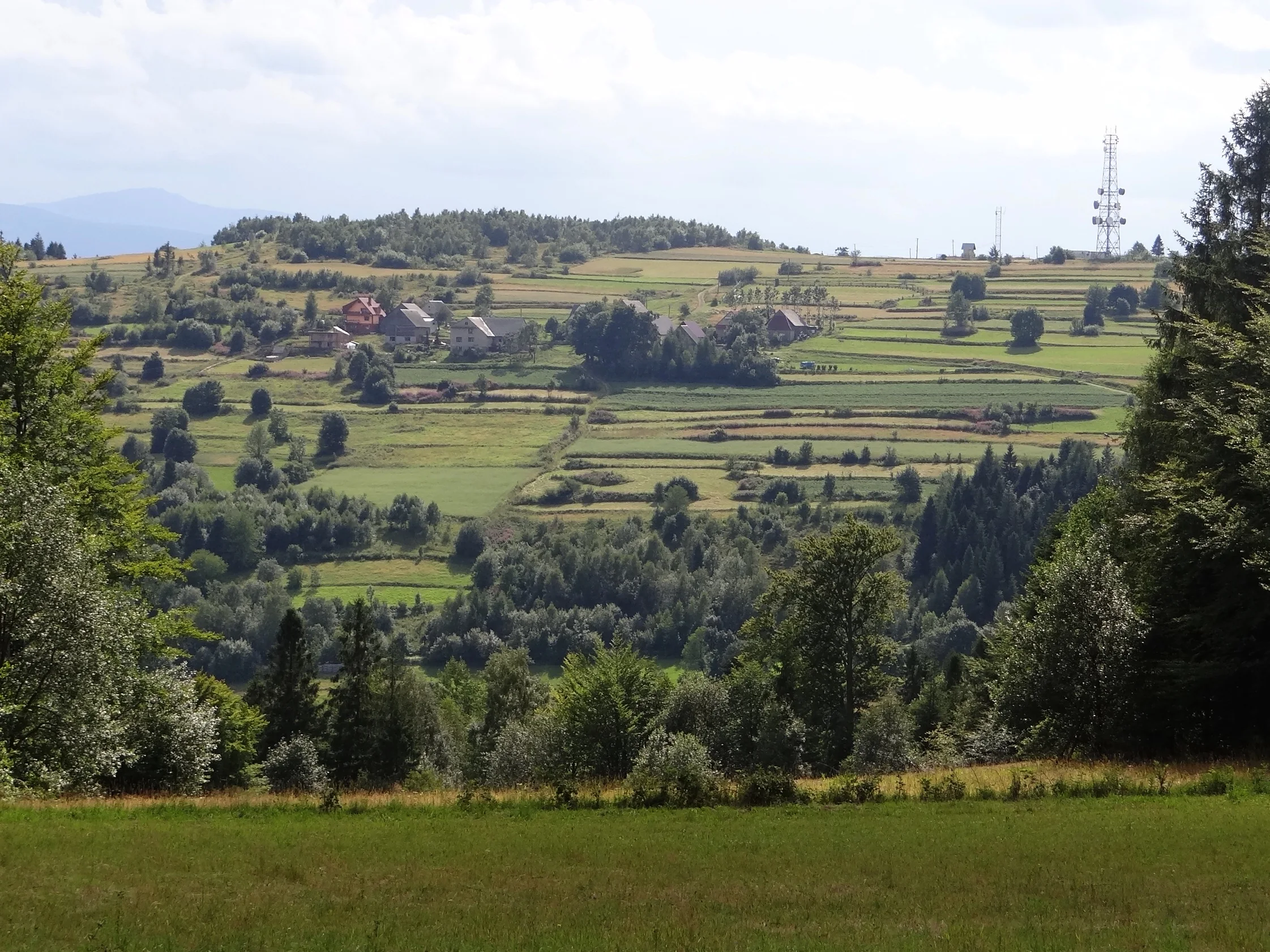
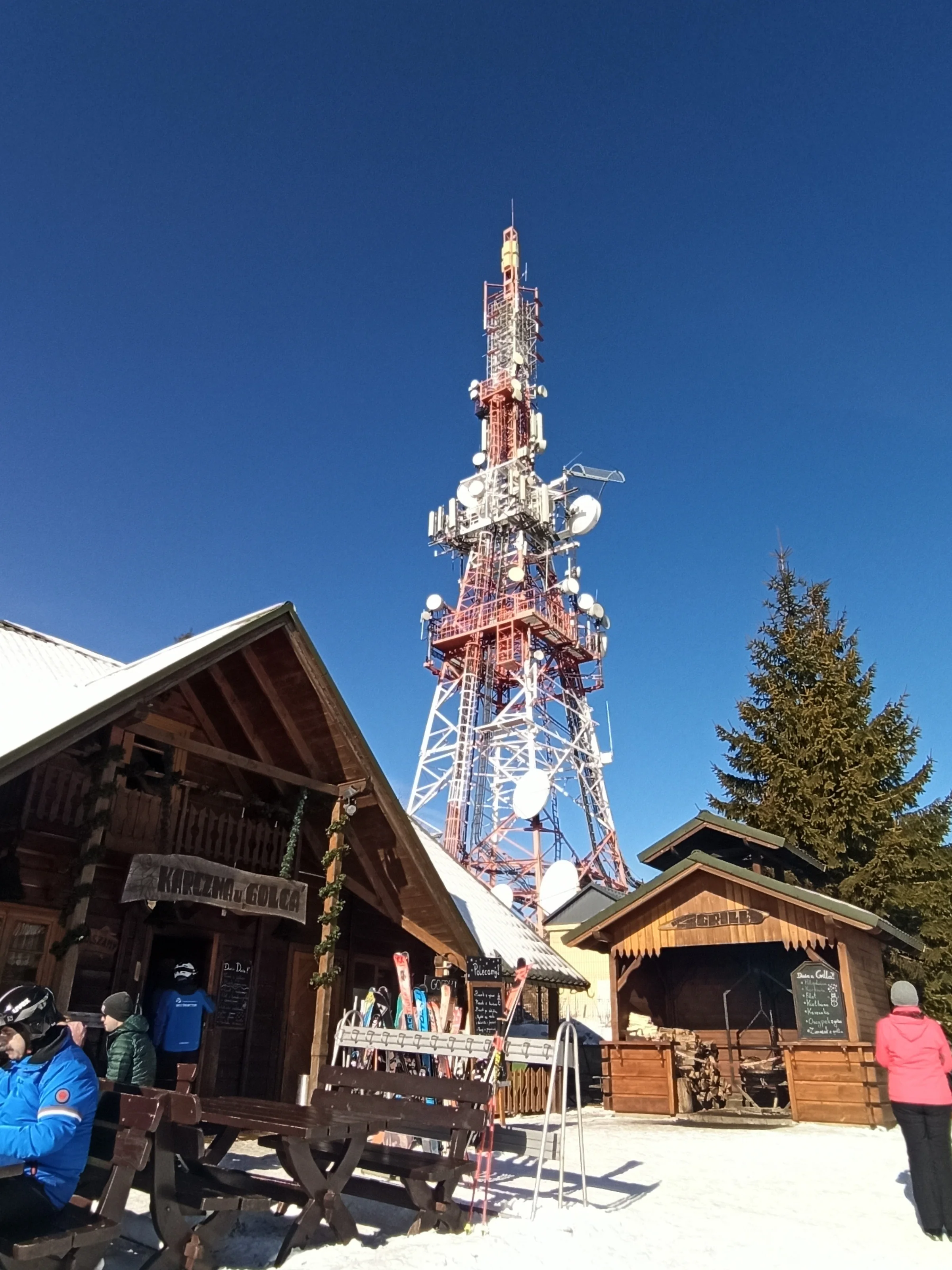
Koskowa Góra with the tower, view from Praszywka · photo by Jerzy Opioła, CC BY-SA 4.0
A hill with a thin mast above village buildings, a field in the foreground
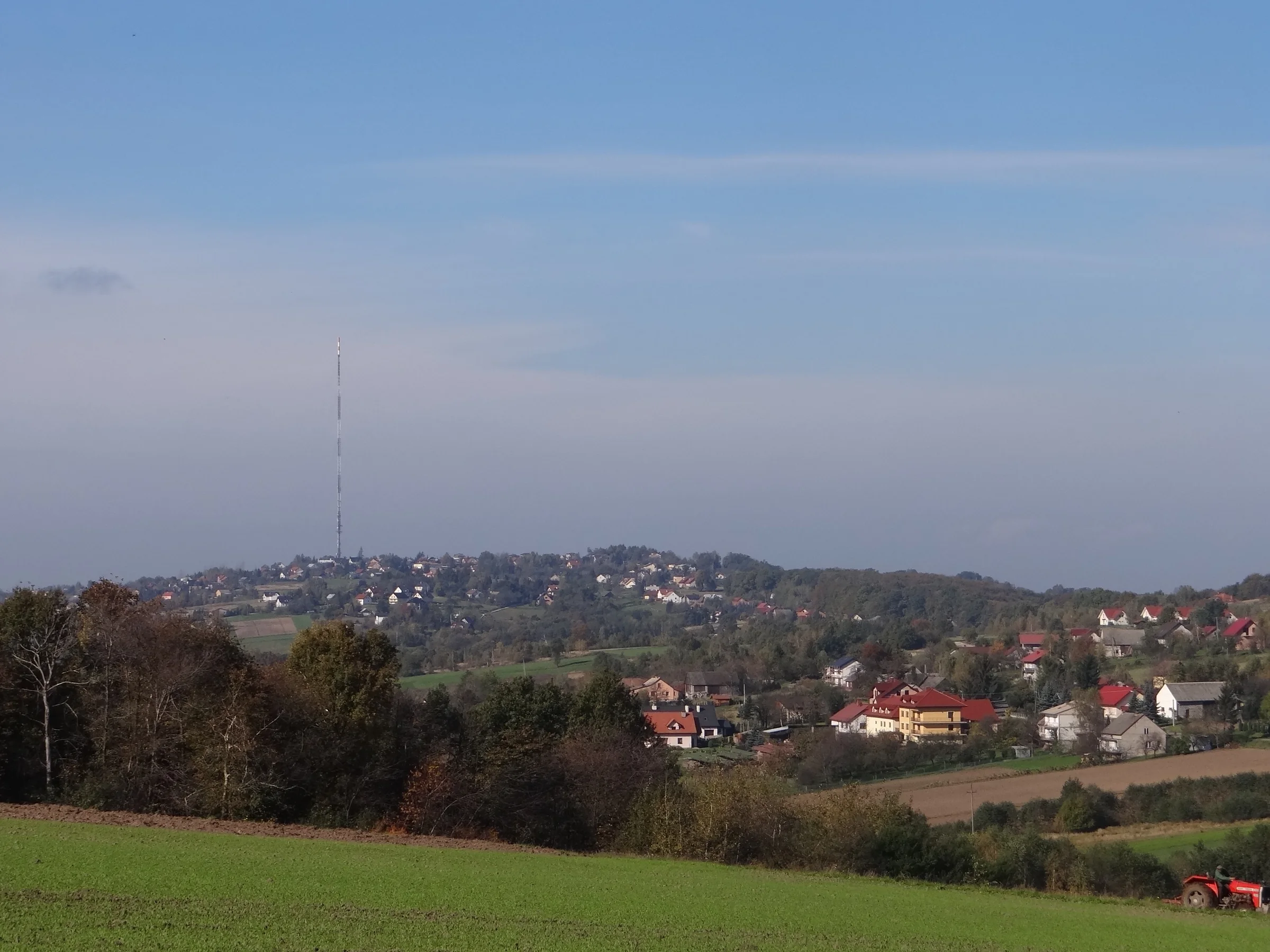
Chorągwica with the RTCN mast above the Wieliczka area · photo by Jerzy Opioła, CC BY-SA 4.0
Wawel Castle lit at dusk, boulevards and lampposts in the foreground
Kraków: Wawel at dusk · photo by TimiKowalski, CC BY-SA 4.0
Snow‑covered Tatra peaks above hills and a ploughed field
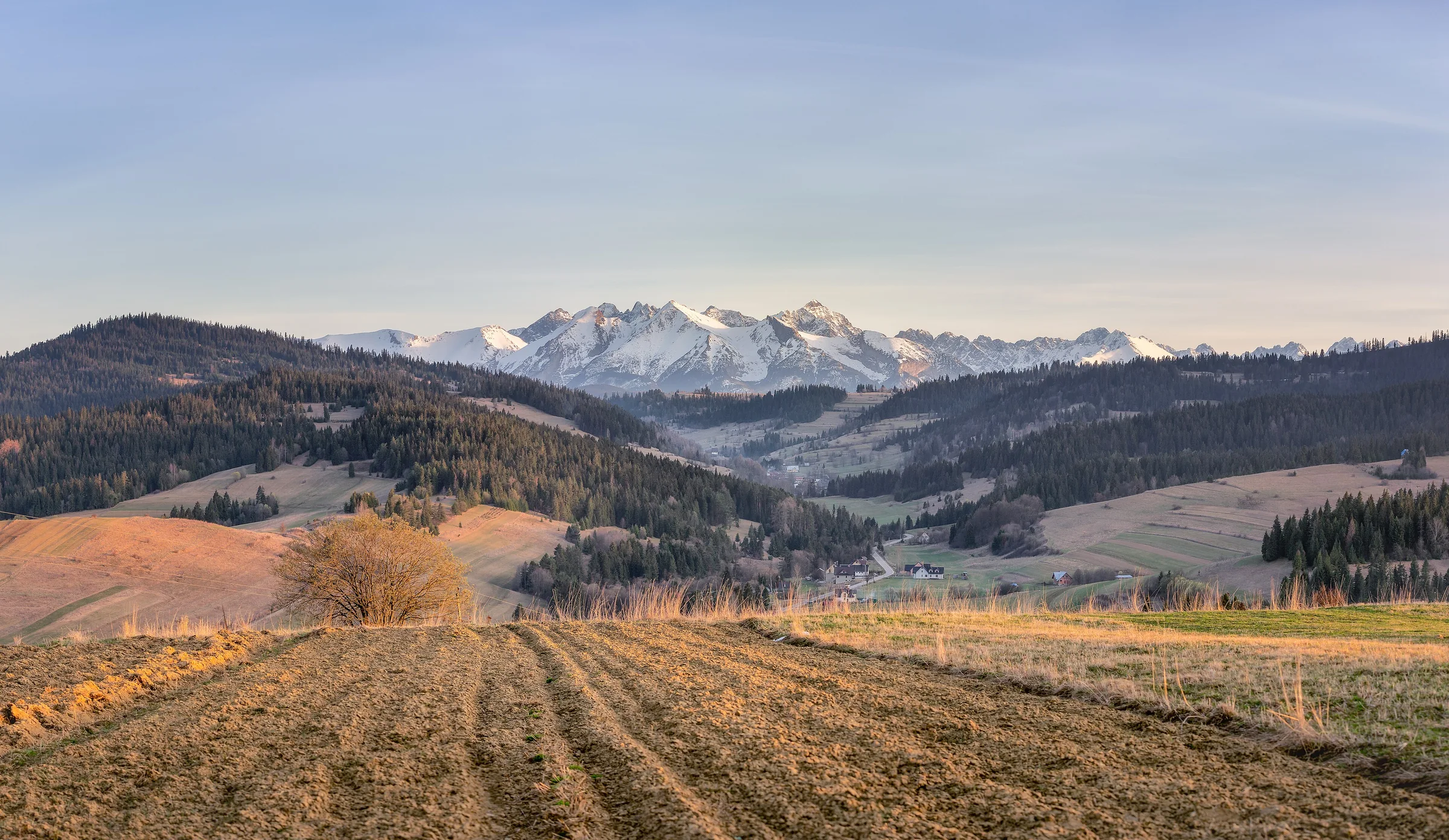
The Tatras from Spisz · photo by Qvidemus, CC BY 3.0
Rack cabinet with Motorola radios, controller panel and router
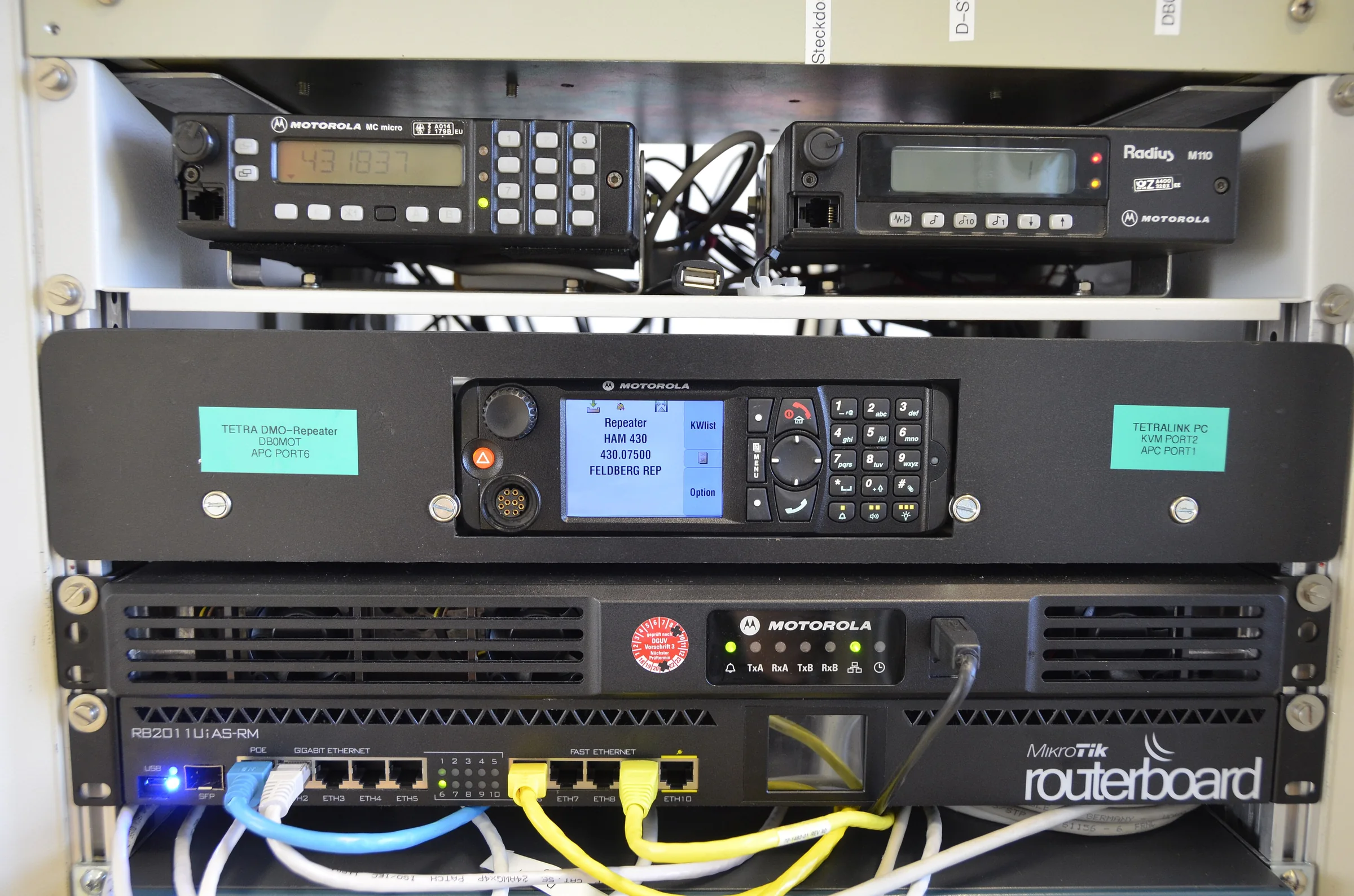
Repeater cabinet: Motorola radios and a router · photo by Ptolusque, CC BY-SA 4.0
1240–1300 MHz

23 cm: one floor up

Radio amateurs usually treat the 23 cm (1.2 GHz) band as the start of microwaves. Signals travel here almost like light: line-of-sight to the repeater antenna, height and every metre of cable all matter. Microwave folk prefer to talk about the upsides: small, high‑gain antennas, a quiet band, room for digital voice and data, and for wideband modes such as amateur TV.

Why now

For years 23 cm was a band for builders: transverters, plug‑in modules for older radios, home‑made antennas. That changed with radios that have 23 cm as standard. Icom IC‑9700, which we use at station SQ5CBA, in the European version covers 1240–1300 MHz and delivers up to 10 W on SSB, CW, FM, D‑STAR (DV) and DD (in AM up to 2.5 W). Only on 1.2 GHz does the DD mode — high‑speed D‑STAR data — work.

The older IC‑9100 and IC‑910 needed a 23 cm module. The band is also on, among others, the Kenwood TS‑2000X, the Icom ID‑1 (D‑STAR and FM), the Icom IC‑905 (10 W on 23 cm) and the handheld Alinco DJ‑G7E (FM, up to 1 W).

Note for holders of a category 3 licence: under the regulation of 19.03.2026 (Dz.U. 2026 poz. 406) category 3 covers twelve ranges: 160, 80, 40, 30, 20, 17, 15, 12 and 10 m as well as 2 m, 70 cm and 10 GHz, but not 23 cm. On 1240–1300 MHz you need category 1. In Poland the amateur service here is a secondary service: the band is shared with radionavigation, radars and satellite navigation, which have priority.

Transceiver Icom IC-9700 with a colour touchscreen and large tuning knob Icom IC‑9700: 2 m, 70 cm and 23 cm · Icom product photo
23 cm band: the IARU plan, Polish repeaters and Galileo E6 Axis from 1240 to 1300 megahertz. Top bar: the IARU Region 1 plan with segments for amateur TV, satellites, repeater inputs and outputs, narrowband modes and beacons. Middle bar: Polish 23 cm repeaters receive on 1270 megahertz and transmit on 1298, with a −28 megahertz offset. Red bar: the Galileo E6 navigation signal from 1258.29 to 1299.21 megahertz. Bottom bar: limits from CEPT decision ECC/DEC/(25)01 — from 1258 to 1296 megahertz only −17 dBW e.i.r.p., i.e. about 20 milliwatts. 1240–1300 MHz · IARU R1 plan · Poland · Galileo E6 · CEPT limits 1240 1245 1250 1255 1260 1265 1270 1275 1280 1285 1290 1295 1300 MHz IARU Region 1 plan ATV / DATV satellites ↑ ATV / DATV input 1270 input 1291 EME · SSB · beacons · output 1297 · 1298–1300 Polish repeaters (UKE, 20 licences) you transmit: 1270.0–1270.8 you listen: 1298.0–1298.8 offset −28 MHz Galileo E6 · 1258.29–1299.21 MHz CEPT ECC/DEC/(25)01 limits (Poland: not implemented, as at 13.02.2026) depending on sub‑band −17 dBW e.i.r.p. ≈ 20 mW 1296–1298: 17 dBW · 1298–1300: 22 dBW

← swipe sideways →

One band, three standards. The IARU Region 1 band plan specifies repeater outputs at 1297 MHz and inputs at 1291 MHz for FM and digital repeaters (−6 MHz offset). However, all Polish 23 cm repeaters, as in Germany and the Netherlands, use the 1298 / 1270 MHz scheme with a −28 MHz offset. Below that sit the Galileo E6 signal and the power limits from the 2025 CEPT decision (for narrowband emissions).
UKE register as of 30.09.2026

Twenty licences on 23 cm

The UKE (the Polish Office of Electronic Communications) register lists twenty repeaters with frequencies in the 23 cm band. Each has a category 5 licence for 15 W and the 1298 / 1270 MHz scheme. A licence, however, is not proof that the repeater is on the air. On 23 cm there is no DMR, and there are no FM‑POLAND or EchoLink nodes you can check live. So for each repeater we note what is known.

Map of 23 cm repeaters in Poland Map of Poland with twenty repeaters for the 23 cm band that have a UKE licence according to the register of 30 September 2026. The point colour shows what is known about their activity: a dated source from 2025–2026, only a register entry, or information that it is off air. Most repeaters are in Silesia and in Zagłębie, in Warsaw and nearby, and in Szczecin. SQ5CBA
dated source 2025–2026register and databases onlyoff air

Click a point or a place on the map.

On the repeater map we show nine of them: those the vhf.com.pl database lists as active, or those with a dated source from 2025–2026. We omit three marked as off air.

CallsignWhereOutput / input MHzModeWhat is knownUKE until

The same frequency pairs are used by several repeaters, but they are far apart: 1298.6 MHz is used by SR4LM (Miłki), SR23E (Myślenice) and SR6LWB (Chełmiec). Besides repeaters, UKE has issued licences for eleven 23 cm beacons (1296.805–1296.984 MHz, the beacon segment in the IARU plan), including SR9XNS on Przehyba and SR9LHK in Siemianowice Śląskie.

Galileo E6

Who else is in this band

The European Galileo navigation system transmits the E6 signal in 1258.29–1299.21 MHz. It encompasses all the input and output frequencies of Polish 23 cm repeaters. That is why in recent years 23 cm has been discussed not only by radio amateurs but also by the ITU and CEPT.

In 2023 the ITU adopted Recommendation ITU‑R M.2164 with guidance for amateur stations in 1240–1300 MHz. In June 2025 CEPT issued decision ECC/DEC/(25)01 with the same technical conditions, which national administrations can implement in their regulations. The preferred implementation date is 27.12.2025, with a possible transition period of up to three years. The key limits for narrowband emissions (up to 150 kHz):

  • 1258–1296 MHz: at most −17 dBW e.i.r.p., i.e. about 20 mW radiated power (including antenna gain); separate limits apply to satellites in 1260–1270 MHz;
  • 1296–1298 MHz: transmitter power up to 17 dBW (about 50 W);
  • 1298–1300 MHz: transmitter power up to 22 dBW (about 160 W), and for EME with an antenna of 30 dBi or more up to 27 dBW;
  • ATV and other wideband emissions in 1258–1300 MHz: −17 dBW per 1 MHz.

For Polish repeaters that would mean this: outputs on 1298 MHz stay fine, but inputs on 1270 MHz fall into the 20 mW e.i.r.p. zone. With that power you can hardly work a repeater. Switching to the 1297 / 1291 scheme from the IARU plan would not help either, because 1291 MHz also lies in that zone.

According to CEPT’s implementation table Poland has not implemented the decision (entry of 13.02.2026, no remarks). It has already been implemented by, among others, Denmark, Finland, France, Spain and Slovakia. The Czech Republic plans this for 2027, and Germany, Austria and Sweden are analysing the issue. We could not find a position from UKE or PZK (the Polish Amateur Radio Union). If one appears, we will update the article.

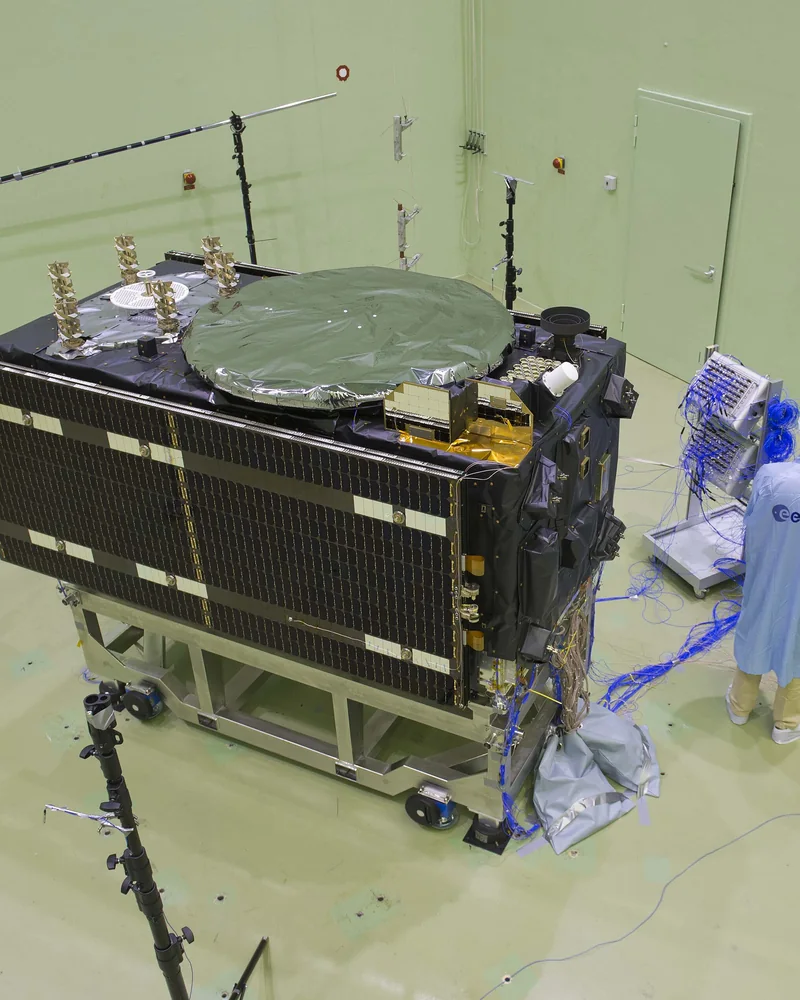
Galileo satellite in a test hall, with microphones around and technicians in overalls A Galileo satellite during tests at ESA ESTEC · photo by European Space Agency, CC BY-SA 3.0 igo, crop

What is 20 mW e.i.r.p.? Calculate your station

Enter the radio power, antenna gain and cable losses. The calculator will compare the result with the limit from the CEPT decision for the chosen frequency: below 1296 MHz e.i.r.p. applies, above that — transmitter power. In Poland this limit does not yet apply.

—station e.i.r.p.
—CEPT limit
—margin / excess
The physics of the band

What a shorter wavelength costs

Between isotropic antennas, free‑space path loss increases by 20 dB for a tenfold rise in frequency. At 1298 MHz it is therefore about 19 dB higher than at 145 MHz and about 9.5 dB higher than at 435 MHz. Move the slider and see how it looks for different distances.

Free‑space path loss FSPL = 20·log₁₀(d) + 20·log₁₀(f) + 32.44 dB (d in km, f in MHz), with no obstructions and no antenna gain.

What this means in practice

  • The antenna more than makes up for it. The figure alongside refers to isotropic antennas. A directional antenna of the same dimensions has proportionally higher gain on 23 cm. That’s why a one‑metre Yagi or a small dish is standard fare at 1.2 GHz.
  • Coax is the enemy. At 1.2 GHz every metre of thin coax steals much more power than on 2 m. Microwave operators mount a preamplifier at the antenna and use thick, low‑loss coax.
  • Line of sight above all. Foliage, buildings and slopes attenuate the signal more than on the lower bands. A hilltop repeater, like SR9NJ on Jaworzyna Krynicka (1114 m a.s.l.), has a huge advantage.
  • But also DX. According to the PZK (the Polish Amateur Radio Union) guide “Najpopularniejsze pasma mikrofalowe”, with good tropo on 23 cm you can make contacts over 1,000 km, aircraft scatter works mainly on 23 and 13 cm, and in 1296.000–1296.025 MHz EME stations operate, bouncing signals off the Moon. The same guide gives the 23 cm activity day: the third Tuesday of the month, 18–22 UTC.
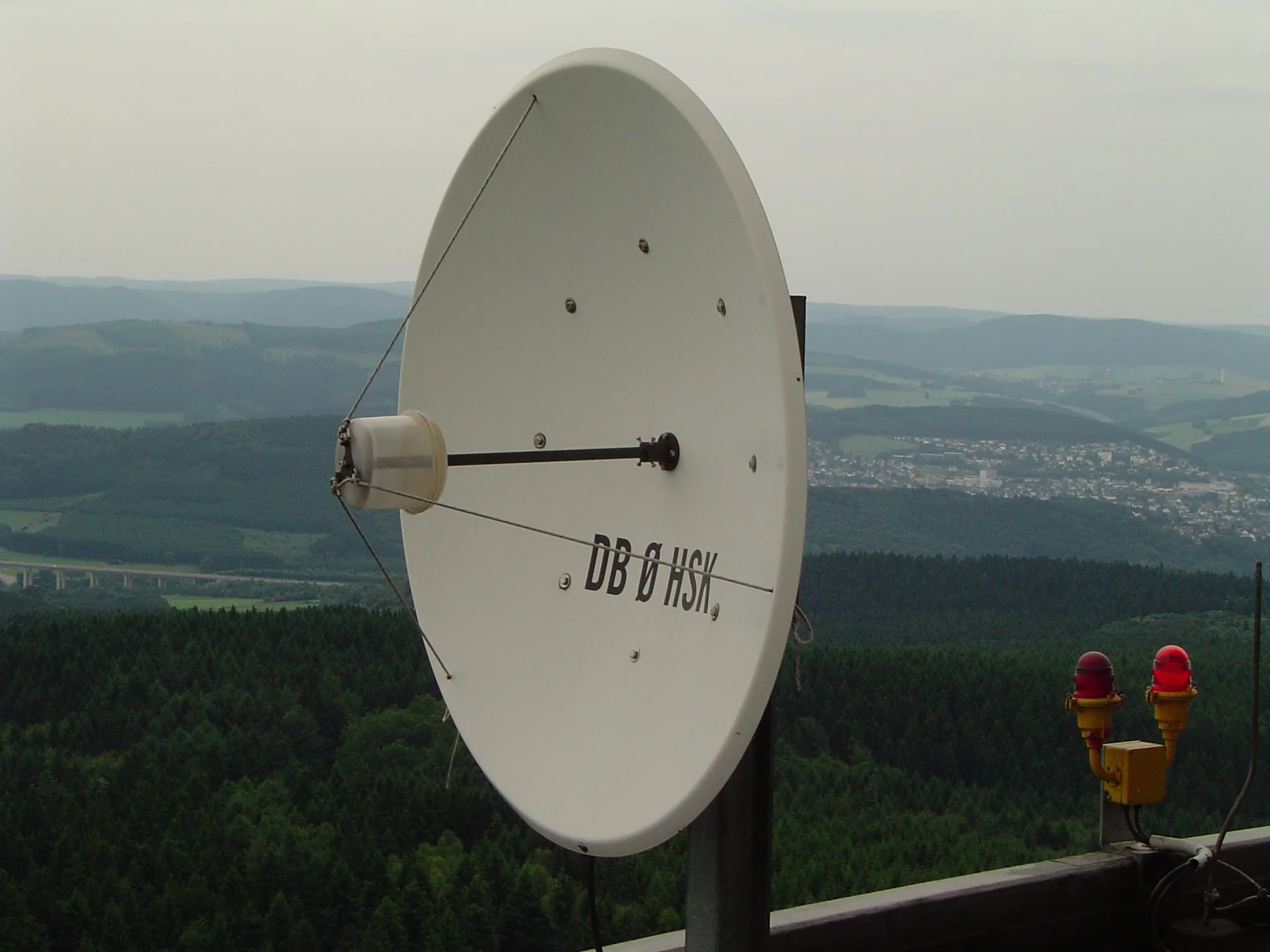
Small white parabolic antenna with ‘DB0HSK’ on it, wooded hills behind
Small dish on the DB0HSK repeater in Germany · photo: Axel Schwenke, CC BY-SA 2.0
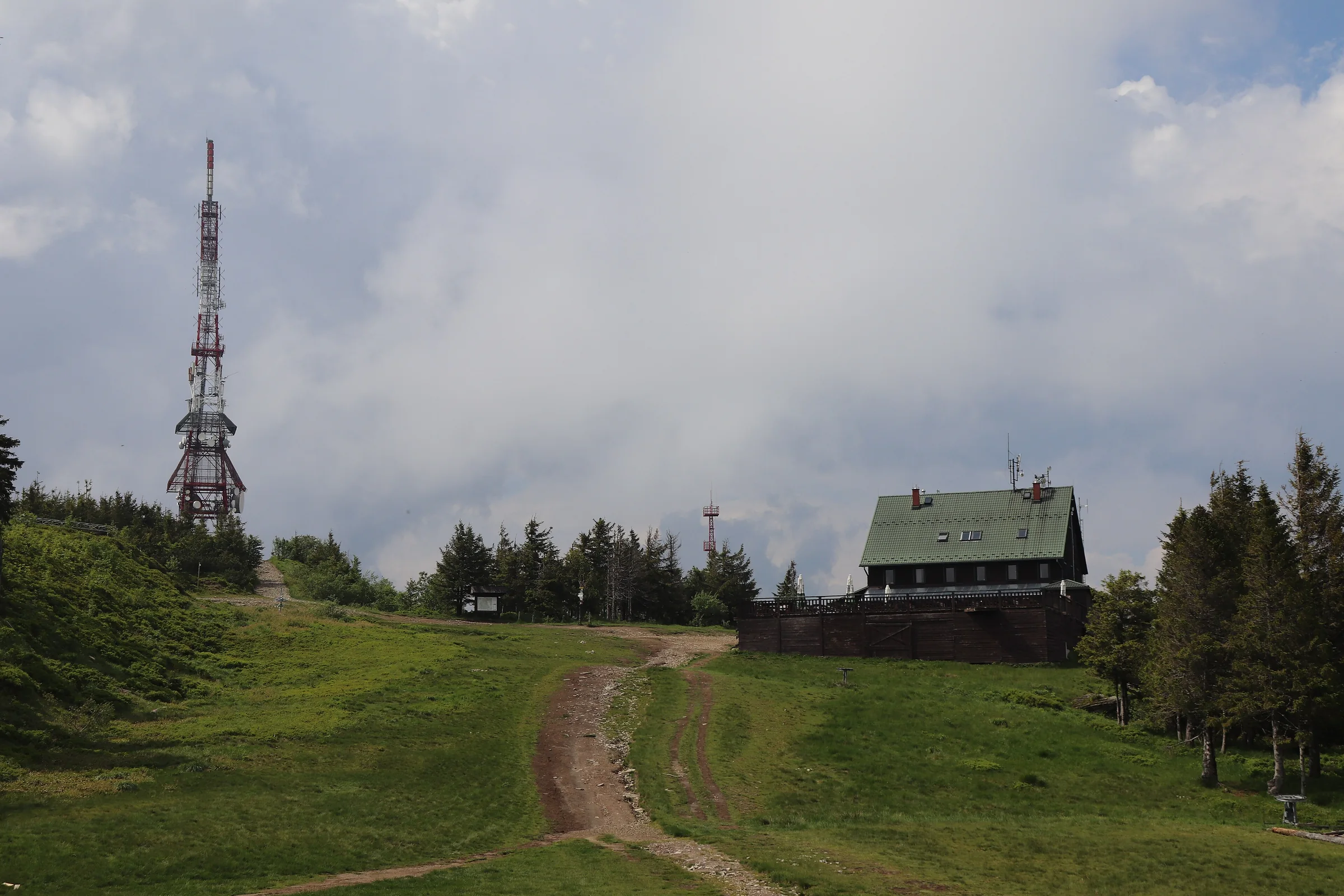
Lattice mast on the summit and a refuge building, a track across a meadow, clouds
Skrzyczne: SR23CM, currently off the air · photo: Andrzej Otrębski, CC BY-SA 4.0
Relay tower with antennas above a wooden refuge, winter, blue sky
Jaworzyna Krynicka: according to the UKE register, SR9NJ on 23 cm is located here · photo: Wlodek k1, CC BY-SA 4.0
Metal resonant cavities of a duplexer linked by cables, a spectrum analyser alongside
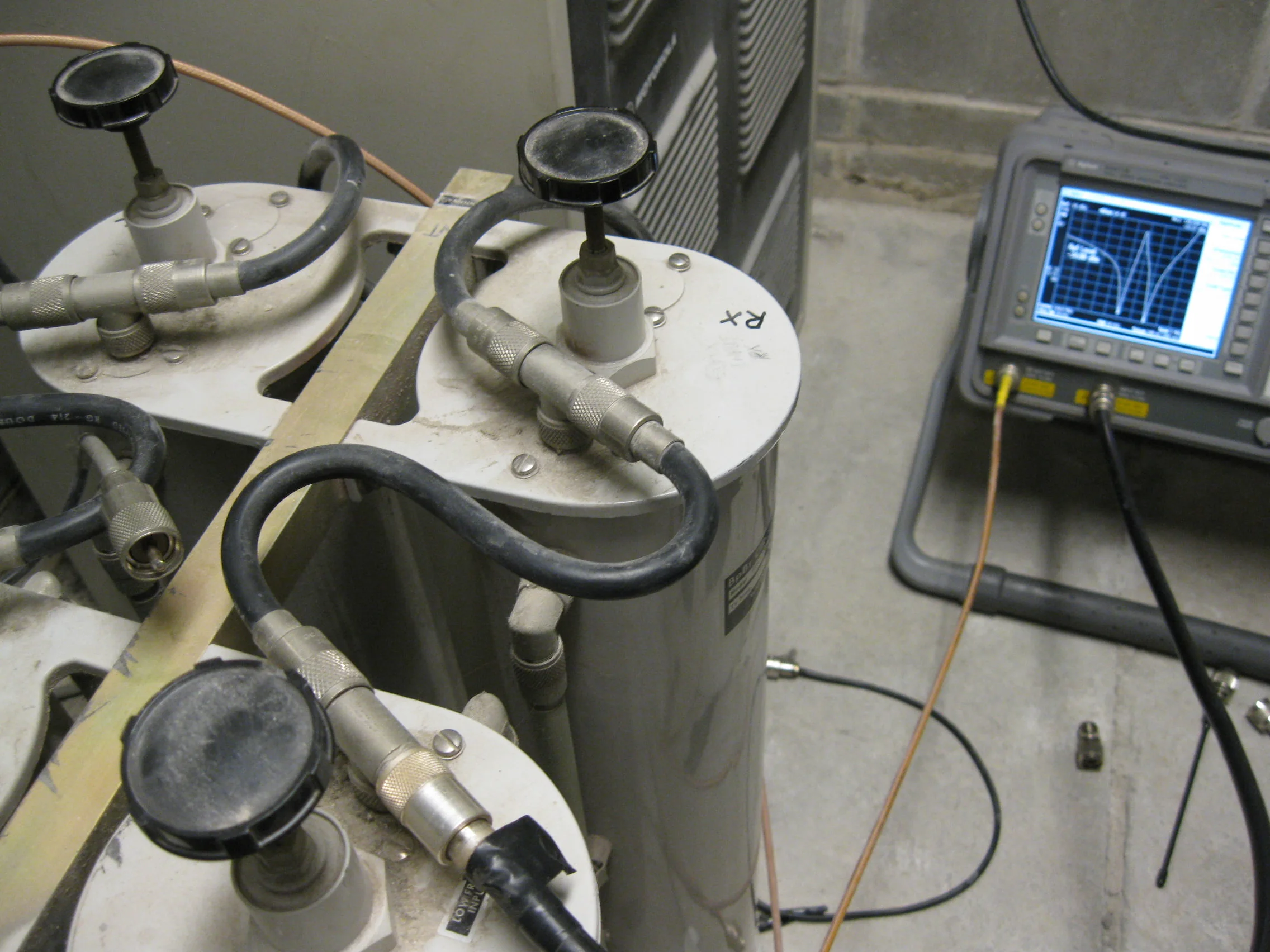
Tuning a duplexer with a spectrum analyser (2 m) · photo: Sterling Coffey, CC BY 2.0
Step by step

IC‑9700 on a 23 cm repeater

Using SR23E in Myślenice (1298.600 MHz) as an example. The same setup works for any Polish 23 cm repeater, because they all have a −28 MHz offset.

  1. Select the 1200 MHz band and set the receive frequency to 1298.600.
  2. Set the shift direction to DUP− and the offset to 28.000 MHz. On 2 m and 70 cm the offset is different (0.6 and 7.6 MHz), so check the radio hasn’t kept the old value.
  3. Select FM and check how the repeater opens: with a CTCSS tone (e.g. 82.5 Hz on SR1UVS in Szczecin), a 1750 Hz tone burst (SR1LS) or carrier access. SR3PO in Poznań opens after holding PTT for 2 seconds. Each repeater’s details are in its card on the map.
  4. For D‑STAR (SR1UVS, SR5WRX, SR23DG, SR5LA) switch to DV and use DR mode, or enter RPT1 and RPT2 manually, as per the repeater’s description.
  5. Start with low power and listen. On 23 cm people often don’t answer straight away, so it’s worth arranging with someone beforehand, e.g. in a group or on a 70 cm repeater.

Ready‑made file for the radio

On the repeater map enable the 23 cm filter, then download the radio file in CHIRP format: the entries have frequency, shift direction, 28 MHz offset and tone set. The file includes FM repeaters. Details in the radio programming guide.

If you have an IC‑9700 on the network, you can also control it from a browser. How we built our own panel for the IC‑9700 is described in the article Claude Code and programming the IC‑9700.

Do you hear any of these repeaters? Use the “Report a repeater” button on the map: when, from where, with which radio. A dated listening report is the best proof today that a 23 cm repeater is on the air.

Sources

Where the data come from

  1. Krzysztof SP9SVH: message to SQ5CBA (October 2026), quoted with permission
  2. KPGK: site of the SP9KPK group and club and its archived copies from 2008–2024 · www.kpgk.pl · web.archive.org
  3. Gość Krakowski: a remembrance of Fr. Szczepan Gacek SP9VRJ · krakow.gosc.pl
  4. BrandMeister: device and talkgroup APIs (retrieved 16.10.2026) · brandmeister.network
  5. D‑STAR reflector REF032 (list of connected stations, 16.10.2026) · ref032.dstar.radom.pl
  6. UKE: register of radio licences in the amateur service, edition dated 30.09.2026 · dane.gov.pl
  7. Regulation of the Minister of Digital Affairs of 19.03.2026 on licences in the amateur service, Dz.U. 2026 poz. 406 · eli.gov.pl
  8. National Frequency Allocation Table, item 341 (1240–1300 MHz), Dz.U. 2023 poz. 1621 · eli.gov.pl
  9. IARU Region 1: UHF/microwave band plans (2020) · www.iaru-r1.org
  10. ITU‑R M.2164‑0 (11.2023): guidance for the amateur service in 1240–1300 MHz · www.itu.int
  11. CEPT ECC/DEC/(25)01 and implementation table (retrieved 16.10.2026) · iaru-r1.org · docdb.cept.org
  12. OE1KDA: “Najpopularniejsze pasma mikrofalowe”, 2nd ed. (2019), Polish Radio Amateur’s Library · bpk.pzk.org.pl
  13. Icom: IC‑9700 specifications · www.icomjapan.com
  14. Repeater databases: przemienniki.eu (API), mapy73.pl (data repository), vhf.com.pl, club pages of SKZD (radioamatorzy.pl) and SP3YOR · przemienniki.eu
  15. Wikipedia: RTCN Chorągwica, Gubałówka, Gliczarów Górny, Koskowa Góra (elevations) · pl.wikipedia.org
Next step

Call on 26093 or 1298

What the KPGK network needs most right now is activity and people. The 23 cm band needs listening reports. If you can help with one or the other, write — we’ll pass the message to Krzysztof SP9SVH.