
Linear or switching
Linear uses a large transformer. It’s heavy and runs warm, but doesn’t generate interference. A switching unit is lighter and cheaper, but its converter can be audible on HF as a whine. On VHF/UHF it usually isn’t a problem.
Home / Guide / Power supplies for radios
Base and mobile radios need 13.8 V and a fair amount of current. I’ve chosen 10 power supplies that are easiest to buy in Poland: linear and switching, from 400 to 1850 PLN. A short description, pros and cons with each.
Linear uses a large transformer. It’s heavy and runs warm, but doesn’t generate interference. A switching unit is lighter and cheaper, but its converter can be audible on HF as a whine. On VHF/UHF it usually isn’t a problem.
The big number on the front is often the momentary current. What counts is the continuous current: with FT8 or a long call the radio transmits at full power for many seconds. In the manual, look for the word continuous.
It shifts the converter’s operating frequency. If you hear a whine on the band, turn it until it goes away. Only switching supplies have it. More about noise sources in the article on interference.
A 13.8 V lock switch protects your radio from accidentally turning the voltage up. Also check the sockets: 30 A terminals, Anderson PowerPole, a cigarette-lighter socket for small devices, sometimes USB.
Current draw at full transmit power according to manufacturers’ data from our transceiver comparison. My rule: the power supply should have a 20–30% continuous-current margin.
| Radio | Power | Current draw | Power supply continuous rating |
|---|---|---|---|
| Yaesu FT-991A | 100 W HF | 23 A | min. 28–30 A |
| Icom IC-7300 | 100 W HF | 21 A | min. 25–28 A |
| Kenwood TS-590SG | 100 W HF | 20.5 A | min. 25 A |
| Icom IC-9700 | 100 W 2 m | 18 A | min. 22–25 A |
| Icom ID-5100E | 50 W 2 m / 70 cm | 13 A | min. 16–18 A |
| Yaesu FTM-200DE | 50 W 2 m / 70 cm | 11 A | min. 14–15 A |
Ordered by how often I see them in Polish ham radio shops. Indicative prices as of 9.11.2026.
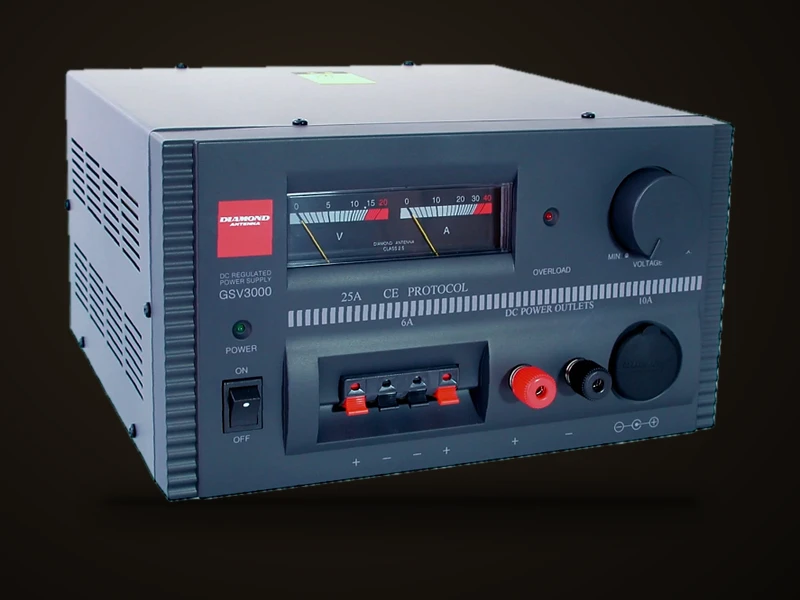
A classic transformer power supply for HF stations. It delivers clean output without a switching converter, and has two meters: voltmeter and ammeter. In Europe the CE version is sold with 25 A continuous; the Japanese one has 30 A.
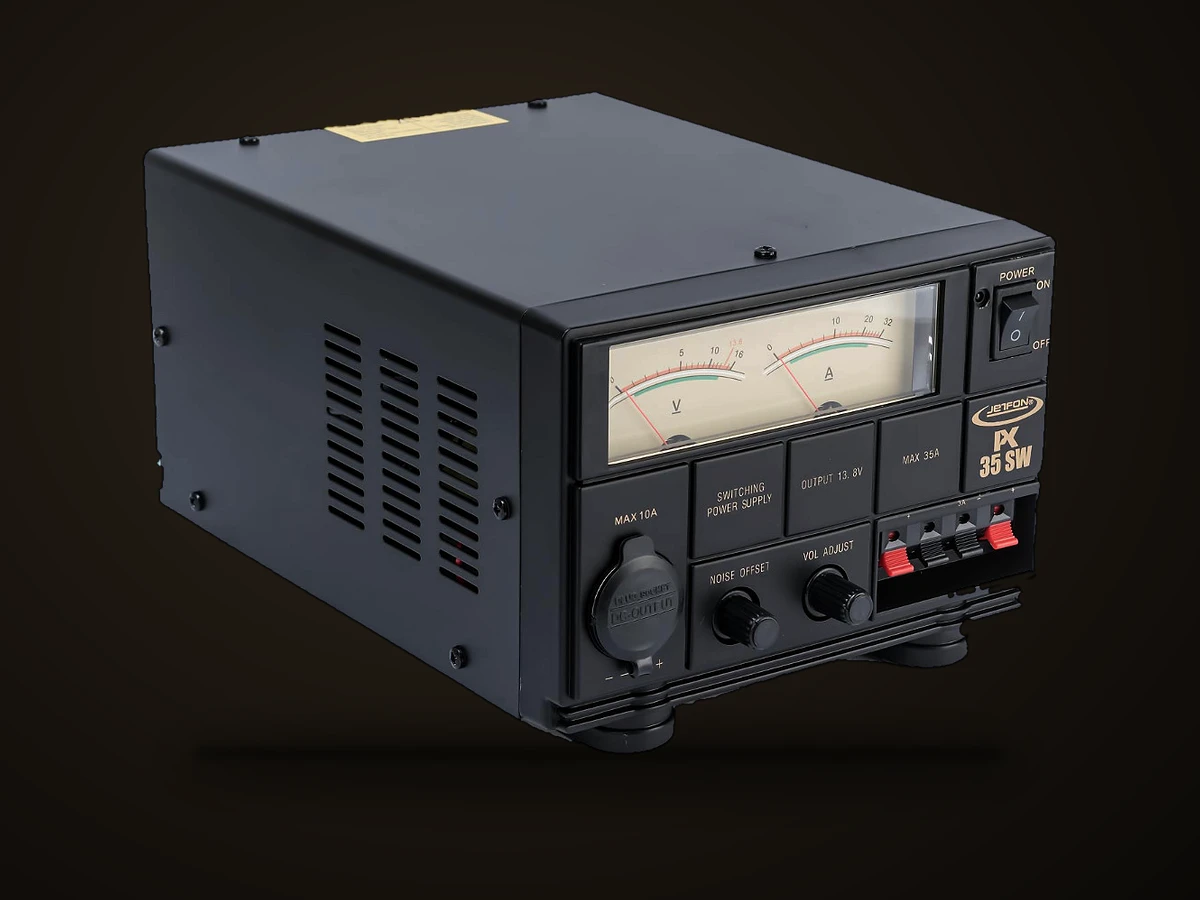
The cheapest 30 A power supply in the line-up and a bestseller in Polish shops. Previously sold as MAAS SPS-30-II. It has V and A meters, noise offset and a front cigarette-lighter socket.
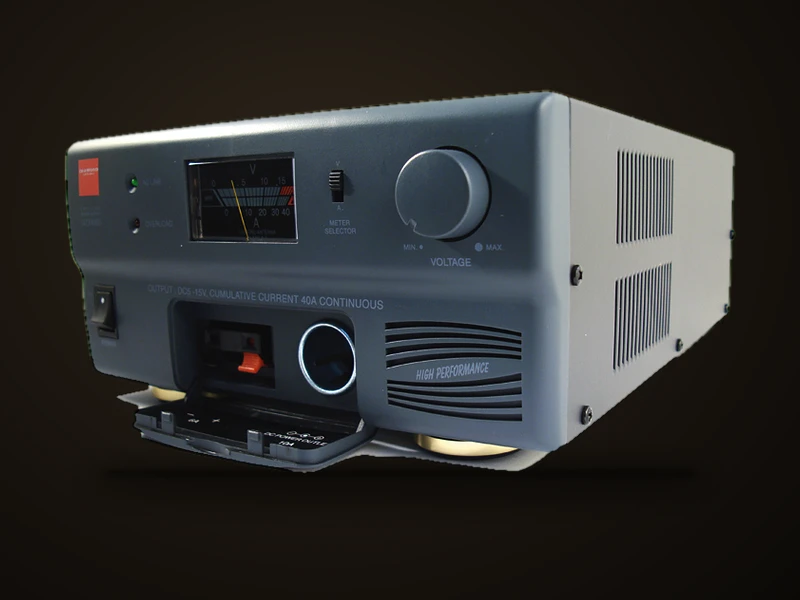
A strong switch-mode Diamond: 40 A continuous for 8 hours according to the manufacturer. Enough for a 100 W HF radio with plenty in reserve, or two radios at once. The GZV-4000D version has digital meters (approx. 1400 PLN).
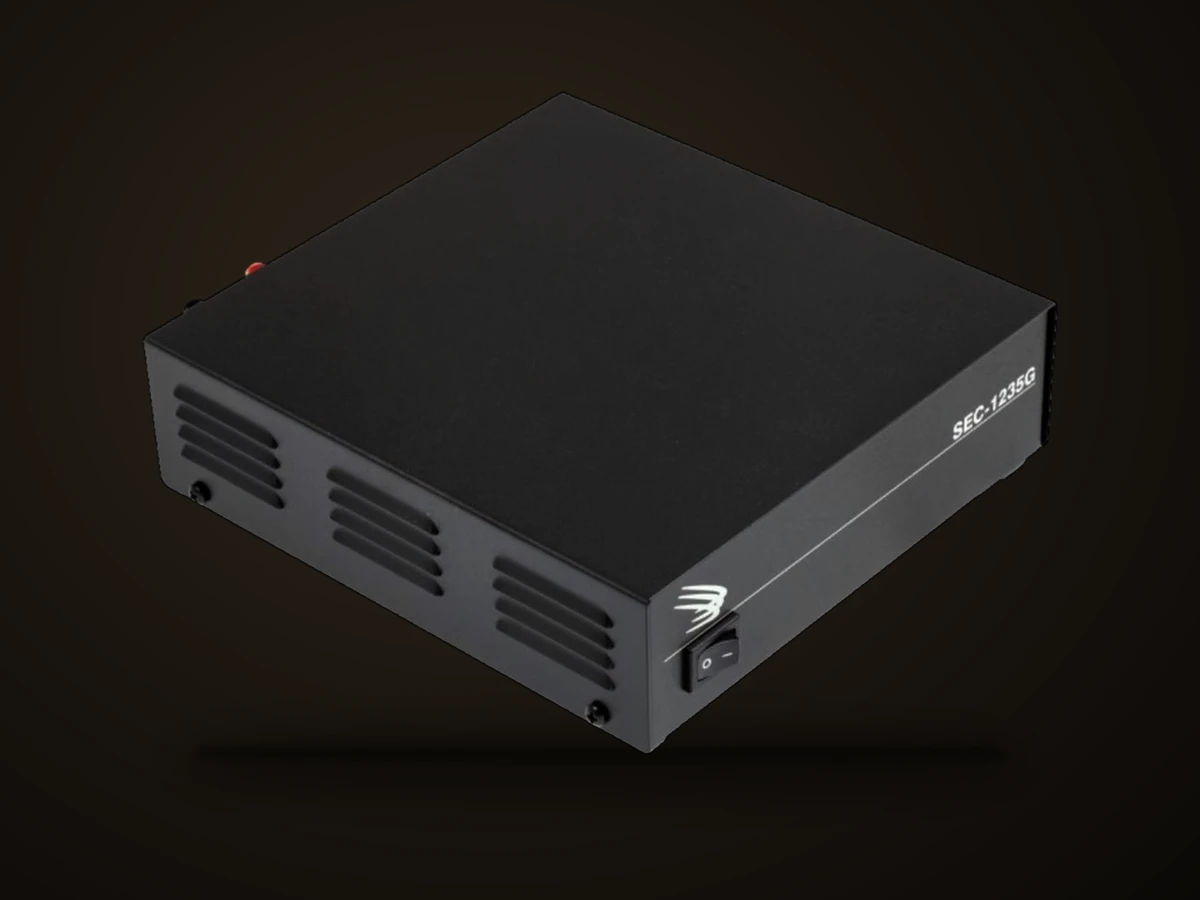
A simple box with no knobs: fixed 13.8 V and 30 A continuous. Runs off 115–230 V mains, so it’s good for trips abroad as well. Light and compact.
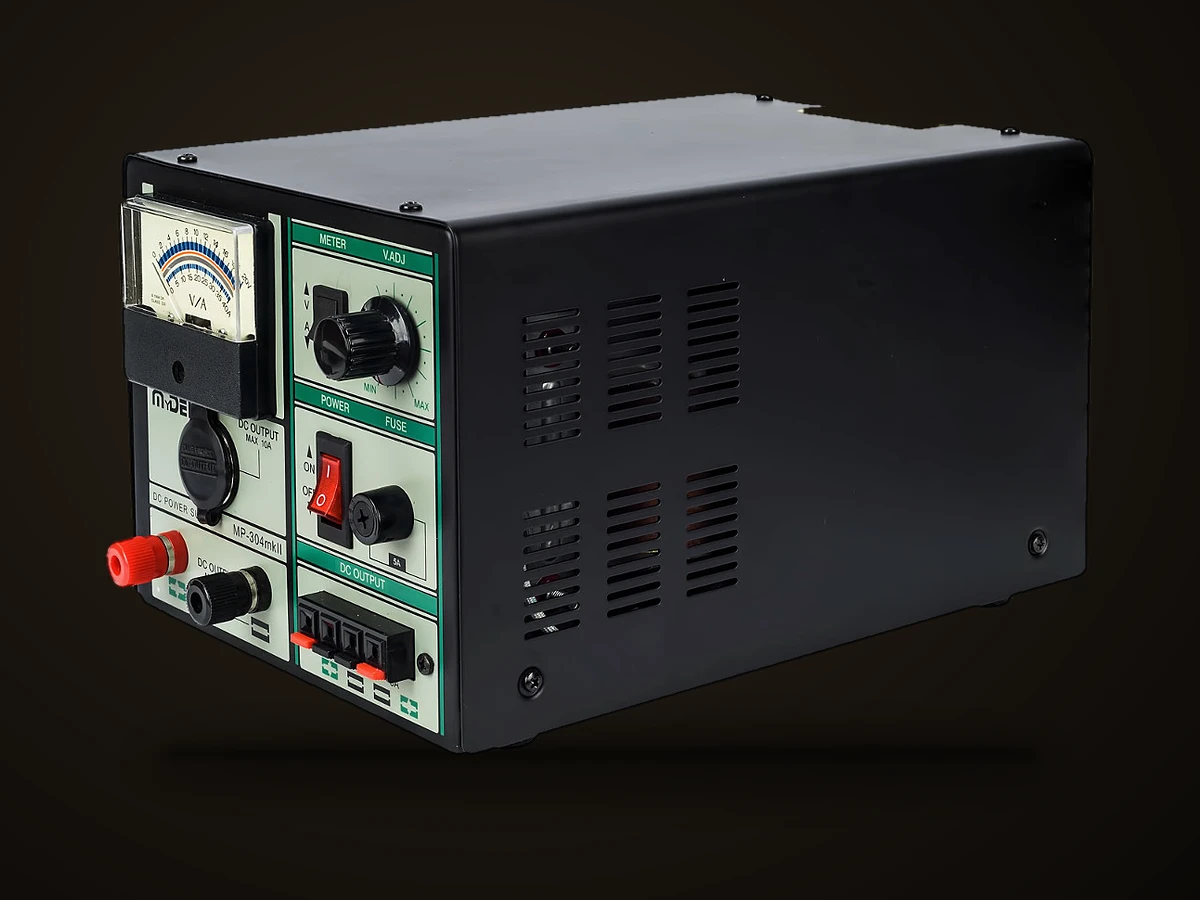
Linear supply with a clear meter and a cigarette-lighter socket. Beware the “30 A” on the front: that’s for up to 2 minutes. Continuous is 15 A, and 20 A for 15 minutes.
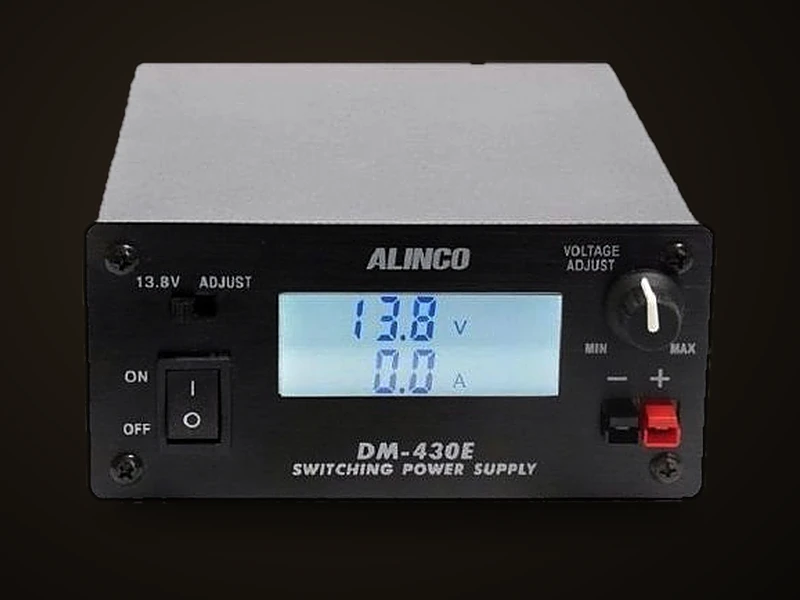
A very small Alinco supply with a digital voltage and current meter. Good for a VHF/UHF radio or as a spare. Alinco only quotes “30 A max”, with no continuous rating.
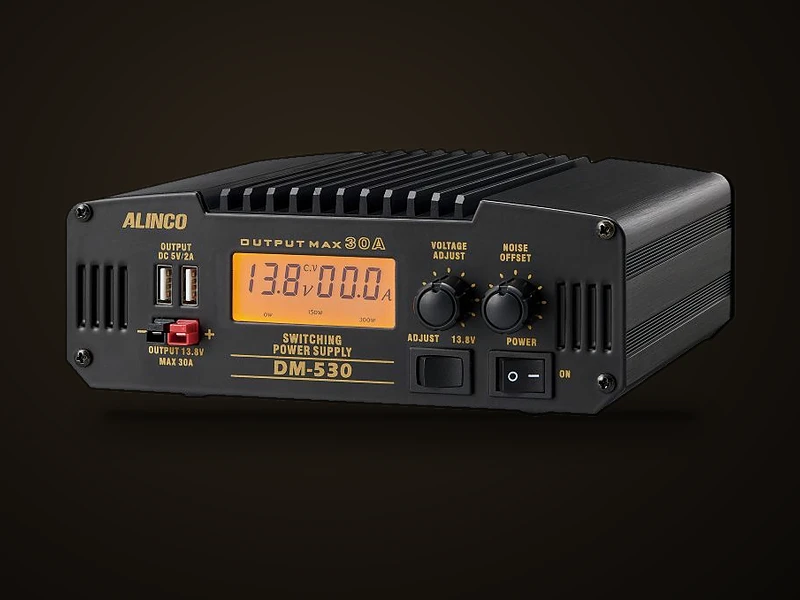
Bigger brother to the DM-430E: digital meter, noise offset, Anderson PowerPole sockets and two USB ports for charging. Again, Alinco only quotes “30 A max”.
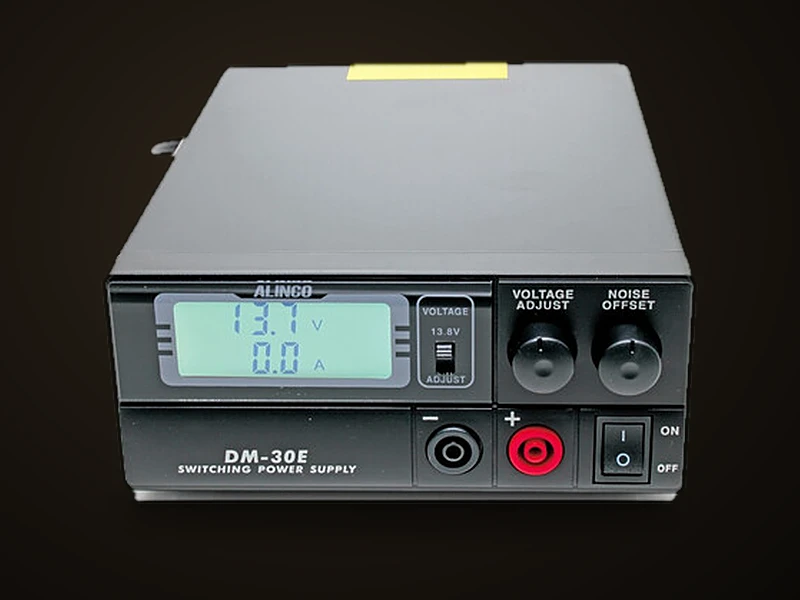
A lightweight supply where Alinco states it plainly: 20 A continuous, 30 A intermittent. It has noise offset and a digital meter. As of November 2026 it’s hard to buy in Poland.
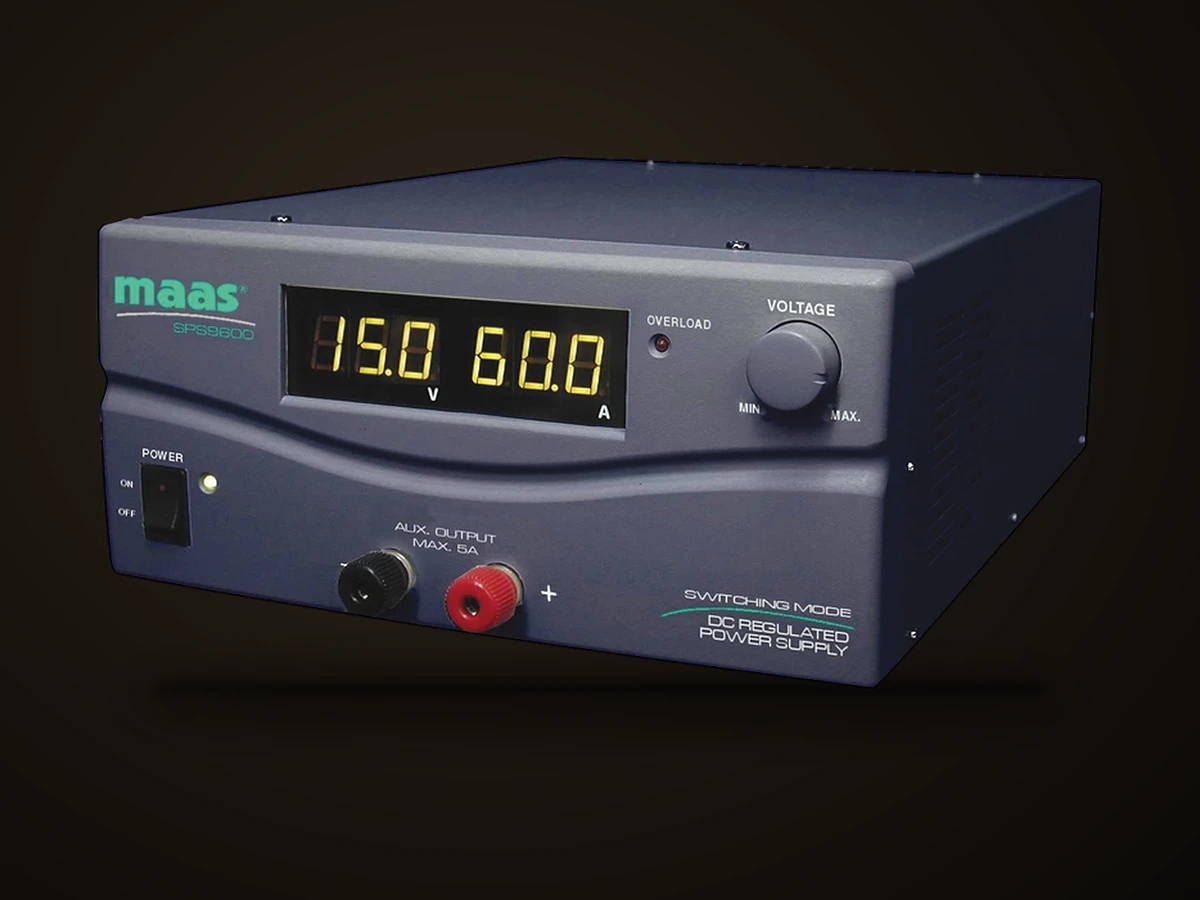
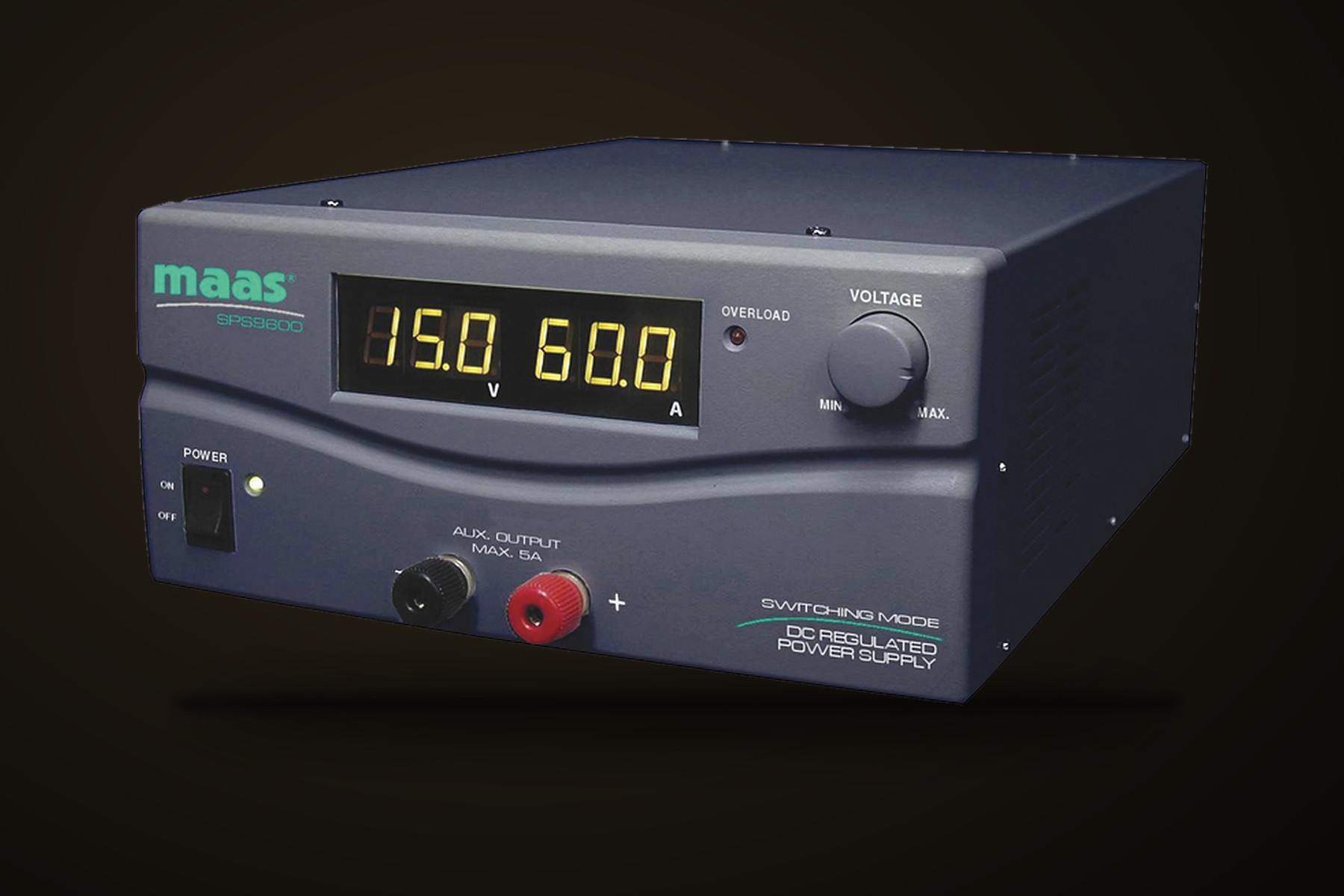
A supply for the whole station: 60 A continuous, digital meters, remote control. In Poland it’s also sold under the MAAS brand. It makes sense if you have several radios or an amplifier.
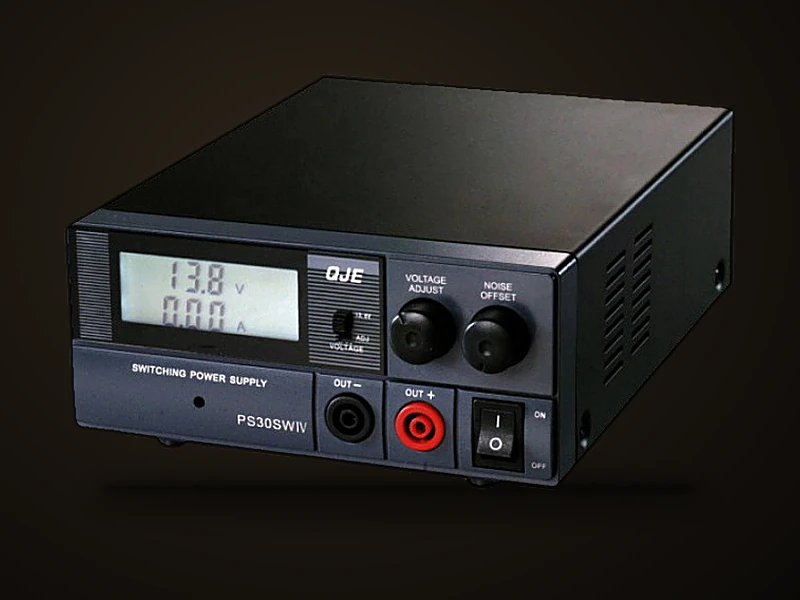
A cheap 30 A supply with a digital meter and noise offset. The manufacturer doesn’t publish a datasheet, so we only have the shop description: 25 A continuous, 30 A peak.
Data from manufacturers’ datasheets. Figures for Jetfon and QJE, and the peak time for the GSV-3000 and MP-304 MKII, are from shop descriptions. A dash: no data.
| Model | Type | Voltage | Continuous current | Peak | Weight | Price |
|---|---|---|---|---|---|---|
| Diamond GSV-3000 | linear | 1–15 V | 25 A | 27 A (60 s) | 9.5 kg | approx. 1400 PLN |
| Jetfon PC-35-SW | switch-mode | 9–15 V, 13.8 V lock | 30 A | 35 A | 2 kg | 400–670 PLN |
| Diamond GZV-4000 | switch-mode | 5–15 V, 13.8 V lock | 40 A | 43 A | 3.5 kg | approx. 1185 PLN |
| Samlex SEC-1235G | switch-mode | fixed 13.8 V | 30 A | 35 A | 1.85 kg | approx. 1015 PLN |
| MyDel MP-304 MKII | linear | 1.5–15 V | 15 A | 30 A (up to 2 min) | 9 kg | approx. 850 PLN |
| Alinco DM-430E | switch-mode | 5–15 V, 13.8 V switch | — | 30 A | — | approx. 725 PLN |
| Alinco DM-530E | switch-mode | 5–15 V, 13.8 V switch | — | 30 A | — | approx. 875 PLN |
| Alinco DM-30E | switch-mode | 9–15 V, 13.8 V preset switch | 20 A | 30 A | 1.6 kg | approx. 589 PLN |
| Manson SPS-9600 | switch-mode | 1–15 V | 60 A | — | 5.8 kg | approx. 1850 PLN |
| QJE PS30SWIV | switch-mode | 8.2–14.9 V | 25 A | 30 A | — | approx. 650 PLN |
My suggestions.
| Scenario | What to choose | Why |
|---|---|---|
| VHF/UHF radio up to 50 W | Alinco DM-430E, Jetfon PC-35-SW or MyDel MP-304 MKII | the radio draws 11–13 A, any of them will do |
| HF radio 100 W, reasonable price | Jetfon PC-35-SW or Alinco DM-530E | 30 A, noise offset to avoid whine |
| HF radio 100 W, quiet on receive | Diamond GSV-3000 | linear, no SMPS, 25 A continuous |
| Several radios or an amplifier | Diamond GZV-4000 or Manson SPS-9600 | 40 A and 60 A continuous |
| Trips, little space | Samlex SEC-1235G or Alinco DM-30E | under 2 kg |